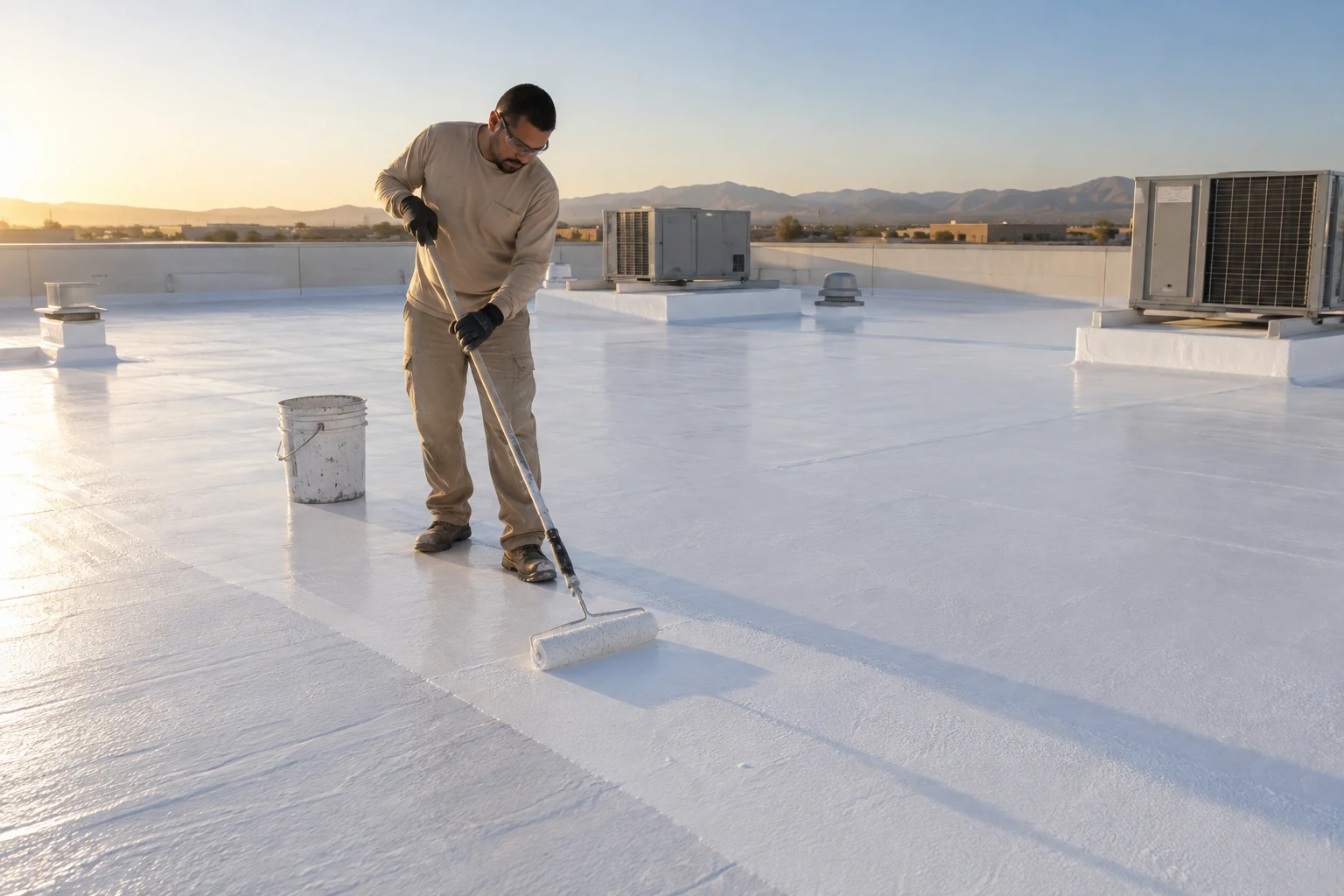
Where Silicone Fits
Silicone systems are used on a range of existing commercial roof materials, but approval belongs to the particular coating and substrate combination. An aged membrane, a metal panel, and an asphaltic roof do not all need identical preparation. Existing coatings add another layer to that decision. Our assessment considers what is on the roof now and whether it provides a stable surface for the intended restoration.
Resistance to standing water is a reason some owners consider silicone. It should not be confused with correcting drainage. A coating does not move a drain, remove a low spot, or repair a sagging roof deck. Areas that repeatedly retain water still deserve investigation so that the project does not leave a separate roofing problem unresolved.
Establish A Dry, Sound Base
The inspection looks beyond surface appearance. A roof can seem intact while water remains in the insulation below it. Where moisture is suspected, further investigation may be needed to identify the affected area. Wet or damaged materials must be addressed in the restoration scope; covering them does not turn them into a sound base.
Bonding matters just as much. Adhesion checks help determine whether the specified coating system can attach to the prepared substrate. The result may point to cleaning, a compatible primer, different preparation, or a different solution altogether. Choosing a product before checking the surface can leave those questions unanswered until the work is underway.
Treat Seams And Transitions Separately
Rooftop units, pipes, drains and perimeter transitions interrupt the broad roof field. These areas can need sealants, reinforcement or flashing repairs that differ from the material used over the open surface. We consider them as individual details within the restoration, not as spots that automatically disappear under an extra pass of coating.
Previous patches also need review. A patch may be well bonded and compatible, or it may be separating at its edge. Some repairs contain materials that affect adhesion or cause discoloration through a new coating. Identifying those conditions first helps establish whether a repair can remain, needs preparation, or must be replaced.
Benefits of Coating Your Roof
For a suitable roof, silicone restoration may retain valuable parts of the existing assembly and reduce tear-off waste. It can also avoid some of the removal work associated with replacement. Those practical advantages are strongest when the underlying roof is serviceable and the required repairs are limited enough to make restoration worthwhile.
Future recoating may be possible when the surface remains eligible and compatible materials are used. That possibility is a maintenance option, not a guaranteed extension of life. Roof condition, drainage and service traffic continue to matter after the coating has cured, particularly around frequently accessed equipment.
Application And Ongoing Use
The coating needs appropriate surface and weather conditions during installation. Moisture-curing chemistry does not mean a wet roof is ready to coat. The product's application requirements determine when the surface is suitable and how the material must be applied. Coverage must be established by the system requirements rather than by how much material seems to hide the original color.
Let us know about rooftop maintenance routes and regular equipment access. A coating is not a substitute for a designed walking surface. Access planning helps protect the completed work and keeps future service visits from concentrating avoidable wear in the same locations.
Request A Silicone Coating Assessment
Start with the building address, approximate size and any roof history you have available. If you know the existing coating or membrane, include that information; if you do not, an inspection can help identify it. Our Casa Grande silicone coating service begins with evaluating suitability, including whether repairs or a different roofing approach are needed before restoration can proceed.