Building owners and facility managers need a clear line between a roof that can be prepared for coating and a roof that needs repair, drying, drainage work, or another path. This approach keeps the decision tied to visible conditions, access, and the intended scope. It also gives the property decision-maker useful information before scheduling work.
For an owner comparing a commercial roof coating company in Casa Grande, roof inspection planning shows how that decision is built. The useful starting point is the roof's condition and the building's operating needs.
A Roof-First Commercial Decision
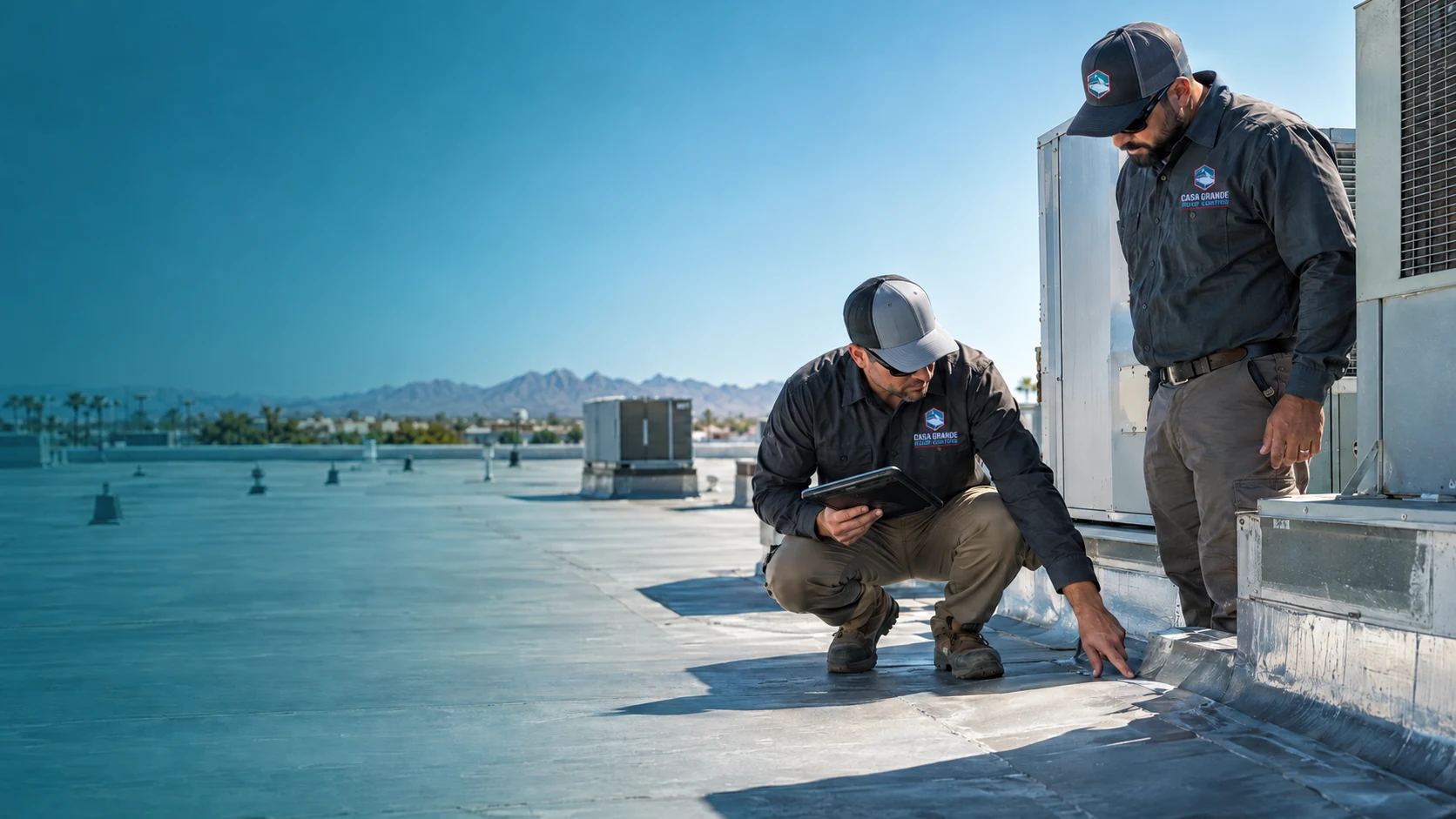
A commercial roof can look serviceable from a parking lot and still have details that change the project. Water may enter at a penetration, collect near a drain, or travel below a membrane before appearing inside. A worn surface can conceal an open seam. A previous repair can affect adhesion. The first review brings these questions into the same conversation.
The review considers active leaks, wet insulation concerns, membrane attachment, drains, and flashing or penetration details. Each condition has a different consequence. An active leak calls for source investigation and repair planning. Wet insulation raises a drying or replacement question. A drain problem can continue to affect a finished surface. A flashing detail may require careful preparation before any coating work begins.
This process is designed for commercial buildings where roof work must fit around people, equipment, deliveries, tenants, and daily operations. The goal is a scope that describes what the roof needs and what the property can support during the work. That scope is more useful than a broad coating promise made without looking at the roof system.
What The Initial Roof Review Looks At
The initial review focuses on the conditions that determine suitability and preparation. It can organize the roof decision around questions such as:
- Where are the active leaks, and can their likely entry points be traced?
- Are there signs that insulation or another roof layer is holding moisture?
- Is the membrane attached and stable enough for the proposed preparation?
- Do drains, scuppers, or drainage paths allow water to leave the roof as intended?
- Are flashing, curbs, seams, penetrations, and edge details ready for repair or treatment?
- Which roof areas have safe, practical access for inspection and future work?
- What rooftop equipment, service routes, or occupied areas need to remain protected?
These questions help separate a roof-wide decision from a detail-specific repair. They also create a useful record of areas that should be addressed before coating begins. A roof review is therefore a planning step, not a shortcut around preparation.
The condition record should be understandable to the person responsible for the building. It should describe observed concerns in plain language, identify items that need additional investigation, and distinguish a repair boundary from a coating boundary. When a condition cannot be confirmed from an initial review, the scope should say that further evaluation is needed instead of treating an assumption as a fact.
Condition Comes Before Material Selection
The coating material is only one part of the decision. The roof substrate, existing layers, moisture condition, seams, penetrations, and drainage pattern all affect whether a proposed system makes sense. A product name alone cannot answer those questions.
A roof with active leaks needs attention to leak sources and related details. A roof with wet insulation needs a moisture decision before a surface is enclosed. A membrane with attachment concerns needs an evaluation of movement and stability. Drains and low areas need a drainage review when water remains after normal weather conditions. Flashing and penetrations need preparation that matches their condition.
A coating can protect a prepared roof surface, but it does not correct a structural defect, dry wet insulation, or solve a drainage problem simply because it is applied. Those boundaries should be visible in the scope. They protect the property owner from paying for a surface treatment that leaves the underlying concern in place.
The same reasoning applies when an existing coating is present. The review should consider whether the old layer is sound, whether it is bonded, and whether repairs or cleaning are required before a new application. The right preparation may involve more than washing a surface. It may include detail work, removal of failed material, or a decision to leave a particular area outside the coating scope.
Choosing A Commercial Coating Path
Once roof condition and repair boundaries are understood, the next decision is system fit. Metal roofs, low-slope membranes, aging coated surfaces, foam assemblies, and shingle roofs present different preparation and compatibility questions. The useful choice is the one that matches the roof that exists, the work the building requires, and the condition that can be verified.
Metal roof work can involve corrosion, loose fasteners, panel movement, seams, and penetration flashing. Low-slope coating discussions may involve adhesion, moisture, ponding, drains, and curb details. Water-based acrylic work brings attention to dry substrate conditions and the application window. Spray foam planning brings attention to substrate condition, equipment protection, overspray controls, and a protective topcoat. Shingle roofs require a narrow compatibility review before coating is considered.
These are different decision paths rather than interchangeable labels. The commercial roof coating services overview explains how to compare them after the roof condition is understood. A property owner can use that comparison to identify the questions that should be answered during a review and to keep an unsuitable system from becoming the default choice.
System selection also depends on what the building must keep doing during the project. A warehouse with active loading activity, a facility with rooftop equipment, and an occupied commercial building may need different access controls and work sequencing. The scope should account for those practical conditions before material and application discussions become final.
Preparation Sets The Work Up For A Fair Review
Preparation is where a roof condition becomes a workable scope. It may include cleaning, removal of failed material, detail repair, seam treatment, correction of loose components, and protection of areas that should remain untouched. The exact work depends on what the review finds.
A prepared surface needs to be evaluated for dryness, soundness, and access before application. Moisture concerns should be addressed rather than covered. Loose or damaged details should be assigned a repair decision. Penetrations and flashing should be treated as their own inspection points because they often require different attention from the field of the roof.
The preparation plan should also state what falls outside the coating work. That boundary may include a structural issue, a wet area that requires another remedy, or a roof section that cannot be confirmed as compatible. Clear exclusions help owners compare scopes accurately and ask better questions before approving work.
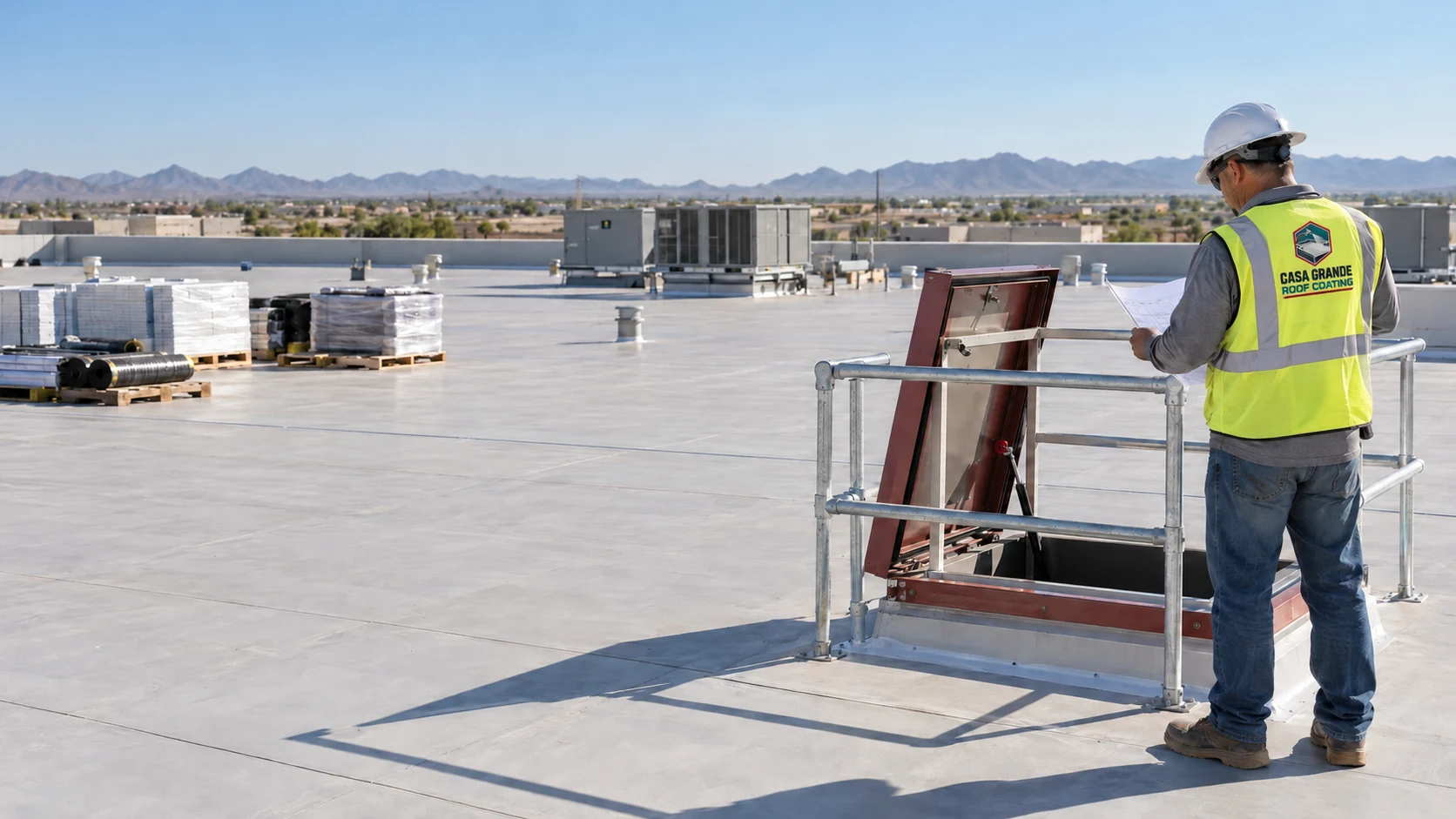
A practical review accounts for the building as well as the roof. Walk paths, staging areas, roof hatches, ladders, rooftop equipment, and service access can affect how inspection and preparation are carried out. The building operator should know which areas may need to remain clear and which operations may need to be coordinated around the roof work.
Access And Operations Are Part Of The Scope
Commercial roof work takes place above an operating property. Access planning should identify how people, tools, materials, and equipment reach the work area without creating avoidable conflict with normal building activity. It should also consider areas where falling material, overspray, foot traffic, or temporary closure could affect operations.
The roof review should identify equipment curbs, penetrations, drains, edges, and other locations that need attention or protection. It should record practical access limitations when they affect inspection quality or preparation. If an area cannot be safely or adequately reviewed, that limitation belongs in the decision record.
Property managers can make the process clearer by sharing roof access information, known leak locations, repair history, equipment schedules, and any restrictions around tenants or deliveries. These details help the review focus on the actual operating environment. They also give the final scope a better chance of matching the building's daily needs.
The objective is a roof plan that can be discussed with the people responsible for the property. A coating decision should account for the roof surface and the work zone around it. That connection is especially important when a building must remain in service during preparation and application.
Casa Grande Review And Permit Coordination
Casa Grande Building Division has a role in commercial and industrial construction plan review and inspection. That local role matters when a building owner is organizing a roof scope, because permit and inspection questions belong in the project planning conversation.
The jurisdiction determines project-specific requirements. A roof owner should confirm whether the proposed work calls for a permit, plan review, inspection, or another city process for the actual scope. The answer can depend on the work being considered and the building conditions involved. A coating discussion should never present a city requirement as automatic without that confirmation.
Safe inspection access matters as well. The person responsible for the property should identify roof entry points, restricted areas, rooftop equipment, and operating conditions that affect access. When review information is incomplete, the scope should preserve that uncertainty and identify the next item to confirm.
Coordination is easier when the condition record, access plan, and project questions are assembled before work is scheduled. The Casa Grande commercial service area information can help place the property in the broader service discussion. Project-specific jurisdiction questions still need to be confirmed with the appropriate authority for the property.
What A Clear Roof Scope Should Tell You
A useful scope should give a building decision-maker enough information to compare the roof's needs with the proposed work. It should explain the observed condition, the areas considered for coating, the repairs or preparation required, the access assumptions, and the items that remain outside the current decision.
It should also identify questions that cannot be answered from the initial review. Examples include concealed moisture, uncertain membrane attachment, compatibility of an existing layer, or a drain condition that needs further investigation. Naming an open question is more useful than quietly building an assumption into the work.
A clear scope connects each proposed action to a roof condition. It can say that a detail needs repair, that a surface needs preparation, or that a section needs a different evaluation. It can also identify operational considerations such as equipment protection, restricted access, or timing around building activity.
For the owner, this creates a practical sequence: understand the roof, define the repair boundary, choose a suitable path, coordinate access and jurisdiction questions, then decide whether the proposed coating work fits the property. That sequence keeps the decision grounded in conditions that can be reviewed.
Frequently Asked Questions
Is Casa Grande Roof Coating A Commercial Roof Service?
Yes. The service is planned for commercial properties, building owners, property owners, and facility managers. The review is centered on commercial roof conditions, access, operations, preparation, and project-specific coordination.
What Does A Roof-First Review Examine?
It examines active leaks, wet insulation concerns, membrane attachment, drains, flashing, penetrations, seams, access, and nearby rooftop equipment. The findings help separate areas that may be considered for coating from areas that need repair or more investigation.
Can A Coating Correct Wet Insulation Or A Drainage Problem?
No. A coating does not dry wet insulation, repair a structural defect, or correct drainage simply through application. Those conditions need their own evaluation and remedy before a coating scope is treated as suitable.
How Is The Coating System Chosen?
System choice follows roof condition and compatibility questions. Metal, low-slope, existing coated, foam, and shingle roofs can require different preparation and review. The material conversation should follow the condition record rather than replace it.
Does Casa Grande Decide Whether A Permit Or Inspection Is Needed?
Project-specific requirements are determined by the jurisdiction. Casa Grande Building Division has a commercial and industrial plan-review and inspection role, so the property owner should confirm the applicable process for the actual roof scope and building.
What Should A Property Manager Share Before The Review?
Useful information includes known leak locations, prior repairs, roof access instructions, equipment schedules, restricted areas, delivery patterns, tenant activity, and any condition that has changed recently. These details help the review reflect how the building operates.
What Happens When A Roof Area Cannot Be Confirmed?
The uncertainty should be recorded and assigned for further evaluation. A roof section should not be treated as coating-ready when moisture, attachment, access, or compatibility remains unresolved. A clear open question supports a better decision than an unsupported assumption.