Roof Coating Planning For Maricopa Commercial Properties
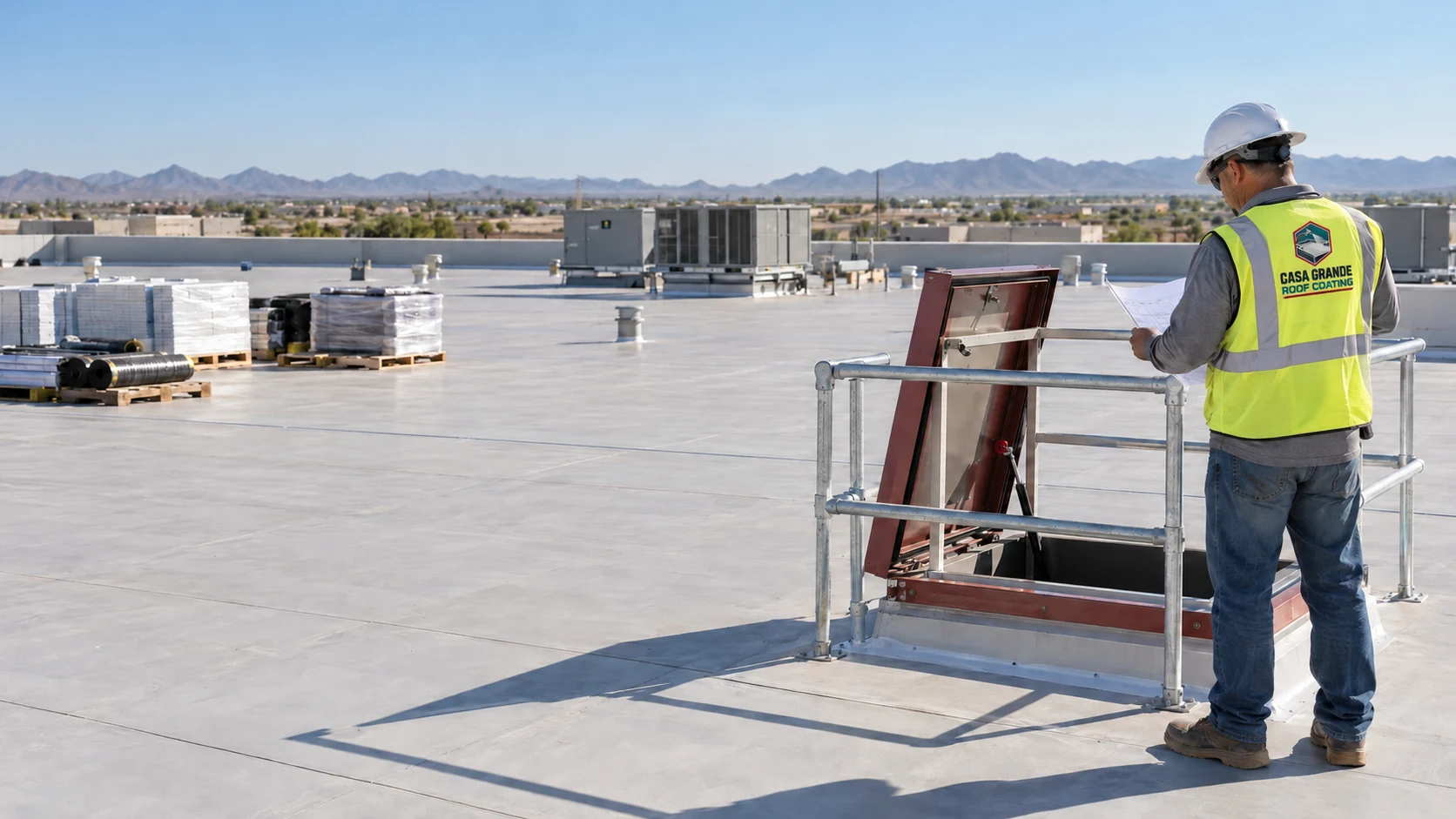
A coating scope works best when the building record and the roof record are considered together. Gather prior repair notes, photographs, roof plans, maintenance invoices, and information about leaks or recurring trouble areas. Mark rooftop units, service paths, drains, penetrations, and places where employees, tenants, deliveries, or customers need to move below the work area.
The Maricopa angle is coordination. The City’s Building Safety department administers current code requirements, and the City provides a Digital Permit Center for permit-related activity. The City determines project-specific requirements. A roof owner should confirm the applicable review path before work is scheduled, especially when the scope includes repairs, changes to roof assemblies, penetrations, equipment support, or other work beyond surface preparation and coating.
A useful preconstruction record answers practical questions. Which roof areas have sound surfaces? Where has water entered the building? Which repairs are recent, and which have failed more than once? Can a worker reach the roof safely without crossing an occupied area? Where can materials arrive and be staged? Clear answers make the eventual scope easier to review and easier to manage.
Start With The Existing Roof Condition
The first decision is to separate coating-ready areas from areas that need repair, further investigation, or a different roofing path. Existing coating wear may be suitable for renewal after adhesion and substrate checks. Open seams, failed fasteners, damaged flashing, deteriorated curbs, and repeated patches need individual attention before a uniform surface can be expected.
A commercial roof review should document:
- Existing coating type and areas where it has worn thin, cracked, blistered, or released from the surface.
- Seams, fasteners, penetrations, edge metal, curbs, drains, and transitions that may allow water entry.
- Signs of trapped moisture, wet insulation, interior staining, or recurring leaks.
- Roof access points, ladders, hatches, service paths, and areas that cannot carry routine work traffic.
- Repair history, including patches that may affect adhesion or hide a deeper condition.
- Rooftop equipment and clearances that affect movement, masking, protection, and inspection.
The record should distinguish a visible symptom from its cause. A discolored ceiling may point to a roof opening, a condensation issue, or an interior source. A ponded area may involve slope, blocked drainage, settlement, or a surface irregularity. Coating covers a prepared roof surface. It does not correct structural defects, wet insulation, or a drainage problem simply because material is applied over it.
Benefits of Coating Your Roof
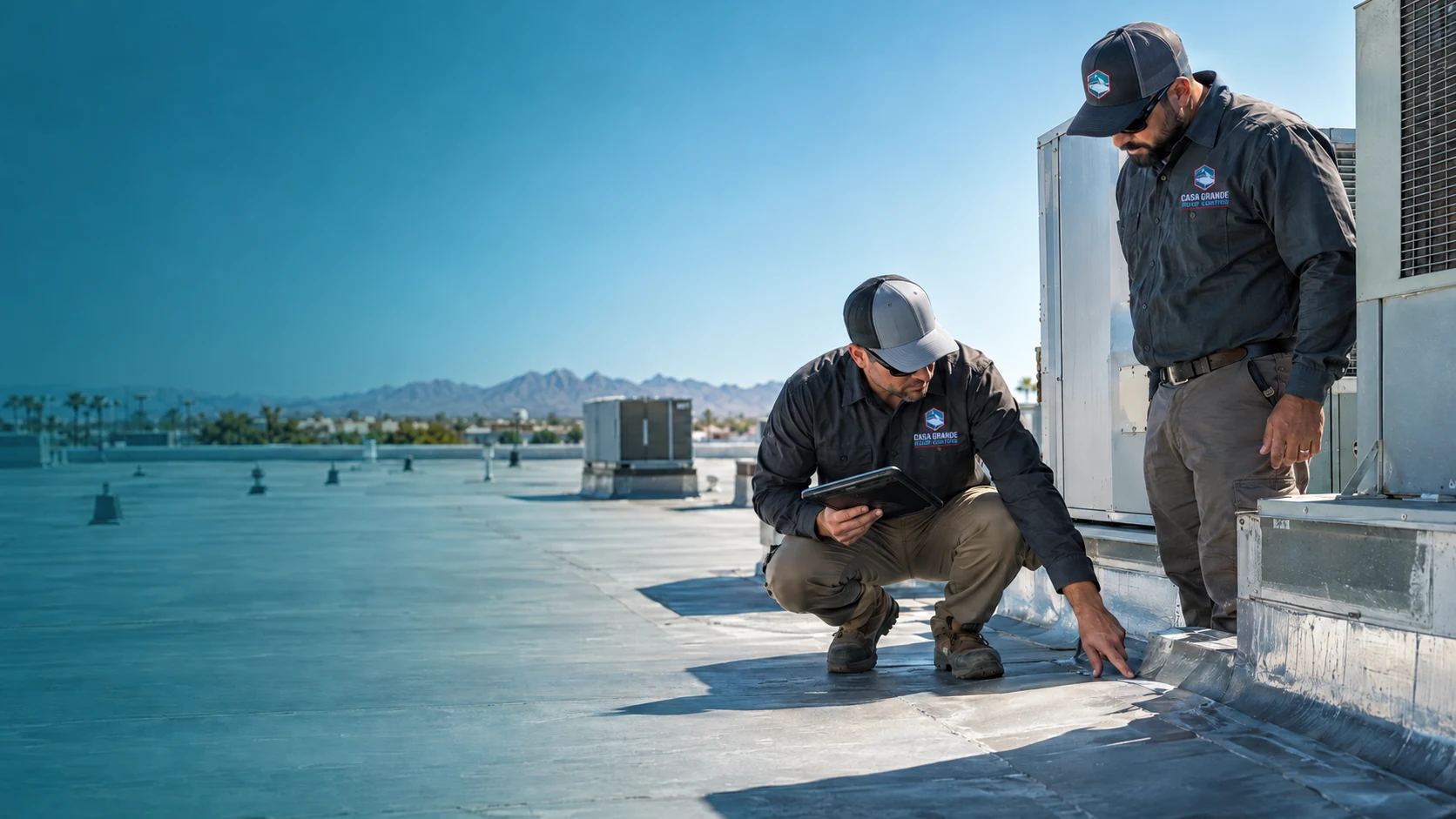
A suitable coating scope can give a commercial owner a defined way to address widespread surface wear while preserving a sound roof assembly. The benefit depends on preparation, repair quality, substrate compatibility, and ongoing observation. A written scope should identify what the coating will address and which roof conditions remain outside that scope.
Potential benefits include:
- A clearer maintenance surface. A consistent finished surface can make later visual reviews easier when the owner tracks seams, penetrations, drains, and repair areas.
- Focused renewal of worn areas. When the existing roof is stable and compatible, coating can provide a planned response to broad wear instead of treating every area as an isolated patch.
- Better detail visibility. Marked and repaired transitions, curbs, penetrations, and seams are easier to monitor when the scope records them before application.
- More organized work zones. A phased plan can define access routes, equipment protection, staging areas, and daily cleanup around an operating facility.
- A decision record for future work. Photos, repair notes, product documentation, and final roof maps help the owner evaluate maintenance needs over time.
These benefits are qualified by the condition review. A roof with wet insulation, unstable panels, active movement, failed drainage, or widespread structural deterioration may need a different scope. The right outcome is a defensible roof decision, even when coating is not selected for every area.
Commercial Roof Coating Options for Maricopa
Maricopa commercial roofs can present different substrates and detail conditions, so the material choice follows the roof review. System names describe paths for discussion, not a promise that one coating fits every building. Compatibility, preparation, moisture, access, and the condition of the existing assembly must be checked before a scope is finalized.
Silicone For Low-Slope Roof Conditions
Silicone Roof Coating may be considered for a low-slope roof with aging coating, seams, or areas where drainage needs close investigation. The review should cover moisture in the substrate, adhesion of existing layers, seams, curbs, penetrations, and drains. Ponding water deserves a cause review before any coating decision. A material choice does not replace drainage evaluation or repair of an opening beneath the surface.
Spray Foam For Recovery Discussions
Spray Foam Roofing calls for a different conversation about substrate dryness, roof shape, equipment protection, and work-zone control. A foam recovery scope may require careful planning around rooftop units, vents, parapets, and overspray-sensitive property. The owner should identify neighboring surfaces, air intakes, access limitations, and operations that must continue during preparation and application.
Metal Roof Coating For Panel Details
Metal Roof Coating centers on panel movement, corrosion, fasteners, seams, and penetration flashing. Loose components and failed details need attention before a coating is considered. A review should identify where panels expand or contract, where rust has reduced the sound surface, and where previous sealants or patches may affect preparation. Metal conditions deserve a detail-led scope rather than a broad surface statement.
The three paths can lead to different preparation plans. A low-slope membrane with uncertain moisture, a metal roof with active panel movement, and an uneven roof that needs recovery planning should not be grouped under one generic specification. The roof record should show which areas are included, which are excluded, and why.
Maricopa Permit And Plan-Review Coordination
The City of Maricopa’s Building Safety department manages current code administration, while its Digital Permit Center provides a current online starting point for permit-related steps. Project requirements depend on the actual work. Confirm the City’s determination for the planned scope before relying on a schedule, ordering materials, or limiting the work description to coating alone.
A useful coordination packet can include the property address, roof plan or sketch, photos of representative conditions, proposed repair areas, access information, equipment locations, and a description of preparation and coating work. Keep the packet aligned with the work that will occur. If the roof scope changes after review, pause to determine whether the change affects documentation or approval.
The permitting conversation belongs early in the process because roof access and operations can change the plan. A building may require a defined work zone, a protected route, or coordination around occupied areas. City review and property operations are separate decisions, but both should be represented in the project record. A jurisdiction determines project-specific requirements, so the owner should use current City instructions rather than rely on a past roof job or a general assumption.
Access And Temporary Operations Plan
A roof coating project needs a practical route from delivery point to roof, plus a way to keep people and equipment clear of the work. Map the access point, loading area, lift or hoisting location, roof entry, staging zone, and daily cleanup path. Identify doors, air intakes, vents, skylights, fragile surfaces, and rooftop equipment that need protection or restricted access.
For an occupied commercial property, plan around the business calendar. Note receiving hours, employee entrances, customer movement, tenant activity, service visits, and any work that cannot stop. Establish who can authorize roof access and who needs notice before a work zone changes. Keep emergency egress and required building circulation clear according to the property’s operating plan.
Weather and surface conditions also affect the sequence. Preparation must leave the substrate suitable for the planned material. Moisture, dust, residue, and unstable old coating can change the workday. A schedule should leave room for inspection of prepared areas, repair of newly exposed defects, and confirmation that protected equipment and access routes remain secure.
A Practical Roof Review Process
A Maricopa roof coating review should produce a scope that a building owner can understand and a project team can follow. These steps keep condition, code coordination, and operations connected.
Inspect Your Roof
Walk accessible roof areas and review representative conditions. Photograph existing coating wear, seams, curbs, penetrations, drains, edges, repair patches, and equipment clearances. Check interior reports against exterior observations. Mark areas that require further investigation instead of assuming the visible surface tells the whole story.
Document The Scope
Organize findings by roof section. Record coating-ready areas, repair areas, exclusion areas, access limits, and conditions that require a separate decision. Include the repair history and note where previous materials or patches may affect preparation. A roof plan, annotated photographs, and a plain-language work description can reduce ambiguity.
Confirm The System Path
Compare the roof condition with the potential system path. Low-slope conditions may lead to silicone review. Uneven or recovery-oriented conditions may lead to spray foam discussion. Metal panel conditions may lead to a metal coating review. The selection should follow substrate, moisture, detail, and access findings. Keep alternate areas separate when their preparation needs differ.
Prepare Repairs And Work Areas
Complete the repairs defined by the scope before broad coating work begins. Clean and prepare surfaces according to the approved material requirements. Protect equipment, air intakes, walls, vehicles, landscaping, and adjacent work areas. Keep roof access controlled and maintain a daily record of changed conditions.
Coordinate Review And Access
Confirm the City’s current project-specific requirements through the appropriate Building Safety and Digital Permit Center process. Separately confirm property access, staging, deliveries, occupied-area notices, and equipment protection. Put changes in writing so the owner can see how the final scope differs from the initial roof review.
Apply And Check Details
Apply the selected material only to prepared, included areas. Pay close attention to seams, penetrations, curbs, edges, transitions, and repaired sections. Inspect the work as it progresses rather than waiting until every roof area is complete. Photograph completed details and record areas that require follow-up.
Plan Ongoing Observation
Keep the final roof map, photographs, product information, repair record, and access notes with the building files. Schedule visual reviews after significant weather or maintenance activity. Watch drains, seams, curbs, penetrations, and recurring interior symptoms. Early documentation gives the owner a better basis for deciding when a repair or another roof review is needed.
When Coating Is Not The Right Scope
Coating should be set aside for an area when the roof condition cannot support a reliable prepared surface. Structural movement, wet insulation, extensive substrate loss, unresolved drainage, severe corrosion, or recurring water entry may call for repair, replacement, or a more detailed investigation. A coating scope should identify those boundaries plainly.
A roof can contain both suitable and unsuitable areas. One section may have stable existing coating and repairable details, while another has movement or moisture that requires a separate plan. Dividing the roof by condition can create a more accurate decision than treating the entire building as one uniform surface.
Ask for supporting documentation when a proposed scope depends on compatibility, primer selection, substrate moisture limits, or a specific assembly. Keep product decisions tied to the actual roof record. The goal is a roof plan that states what is known, what must be checked, and what work is appropriate for each area.
Frequently Asked Questions
Maricopa commercial roof questions usually center on suitability, City coordination, access, and the limits of coating. The answers below describe the decisions that should be made before work is scheduled.
Is Roof Coating Suitable For Every Maricopa Commercial Roof?
No single coating fits every commercial roof. Suitability depends on the existing substrate, moisture condition, coating compatibility, seams, penetrations, drainage, movement, and repair history. A review should separate coating-ready areas from areas that need repair, investigation, or a different roofing path.
Does Roof Coating Correct Ponding Water?
Coating does not correct a drainage problem by itself. The cause of ponding should be investigated, including drains, slope, settlement, obstructions, and surface irregularities. The scope can then state whether drainage work, repair, monitoring, or exclusion is appropriate before a coating decision.
What Does The City Of Maricopa Review For Roof Work?
The City determines project-specific requirements under its current code administration. Building Safety and the Digital Permit Center are appropriate starting points for confirming the current permit and plan-review path. The owner should provide the actual address and scope rather than assume that a previous project had the same requirements.
Can Roof Coating Work Continue At An Occupied Business?
It can be planned around an occupied facility when access, staging, equipment protection, delivery timing, and work zones are addressed in advance. The property team should identify entrances, air intakes, tenant activity, service routes, and restricted areas. The final sequence depends on the building and the roof conditions.
Should Repair History Be Included In A Roof Review?
Yes. Previous patches, sealants, leak locations, and recurring repairs can affect preparation and compatibility. A repair record helps distinguish a stable detail from a repeating failure and gives the scope a better basis for deciding which areas need attention before coating.
Which Option Should A Maricopa Owner Consider First?
Start with the roof system and condition rather than a material label. Silicone may fit a low-slope review, spray foam may fit a recovery discussion, and metal coating may fit panel and detail work. Each path still requires substrate, moisture, access, and repair checks before selection.
What Should Be Ready Before Requesting A Roof Review?
Have the property address, roof plans or sketches, photographs, leak history, prior repair records, access limits, rooftop equipment information, and operating constraints available. These details help define the roof sections, identify questions for inspection, and prepare a more useful discussion about the next step.