Coolidge Commercial Roof Coating Starts With Scope Planning
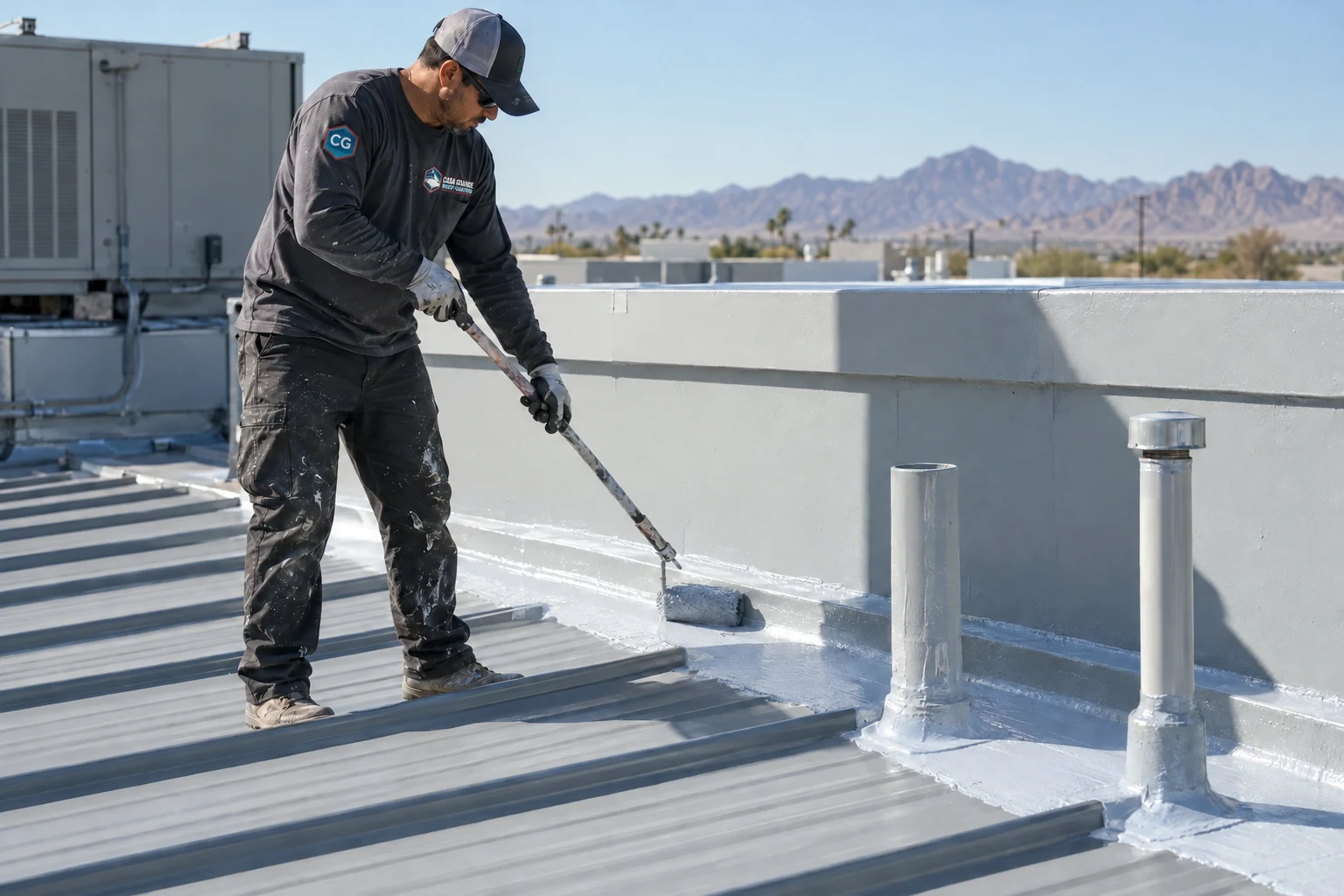
A useful Coolidge roof coating scope identifies the roof areas that can receive a coating, the repairs that must happen first, and the access conditions that control the work window. That record gives an owner something practical to review with facility staff, tenants, property managers, and the applicable jurisdiction.
Begin with the roof system and its current condition. Look for exposed or loose fasteners on metal panels, open low-slope seams, failed detail work around curbs, and patches from earlier repairs. Mark rooftop units, vents, drains, walk pads, and other equipment that could affect movement across the roof. A coating may protect a prepared surface, but it does not correct a structural defect or dry wet insulation. Those conditions belong in the scope before application begins.
Coolidge properties can have different operating demands. A warehouse may need a delivery lane kept open. A commercial facility with rooftop equipment may require advance notice before access around units. A property tied to Coolidge Municipal Airport may have business or lease considerations that affect who approves access, when work can occur, or how a work area is controlled. Treat those details as planning inputs rather than assumptions.
Conditions That Affect Coating Fit
Coating suitability depends on the condition of the existing roof, the substrate beneath it, and the details that receive the most movement or water exposure. A roof review should separate coating-ready areas from areas that need repair, testing, or a different roof decision.
For a metal roof, examine panel movement, fastener heads, laps, penetrations, and corrosion. Rust may require preparation and repair before a coating can be considered. Loose fasteners need attention at the connection, while an open seam needs detail work that reaches the actual leak path. Covering these points without correcting them leaves the weak area inside the finished assembly.
For a low-slope roof, review seams, drains, ponding areas, curbs, and the adhesion of any existing coating. Water that remains after ordinary drainage time deserves investigation. The roof may need drainage work, substrate testing, or localized repair before coating. Surface moisture and trapped moisture can also change the preparation plan.
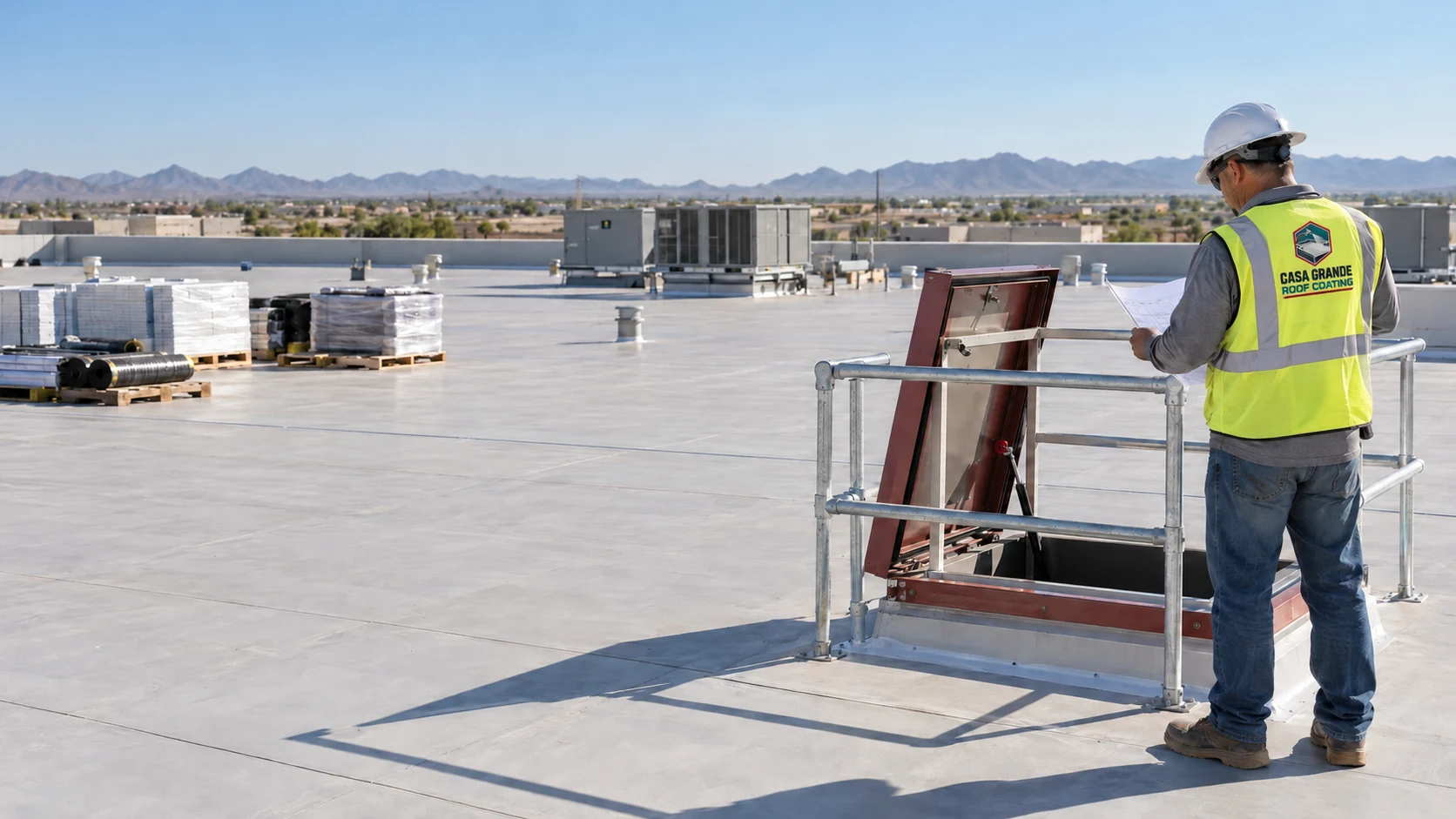
Access matters as much as the roof surface. A review should note ladders, hatch locations, roof edges, electrical equipment, HVAC units, fragile coverings, and the path used to bring tools and materials to the work area. A written access plan helps keep the roof decision tied to the way the facility actually operates.
Benefits of Coating Your Roof
A properly selected and prepared coating can create a continuous protective layer over eligible roof areas and extend the useful service plan for an existing commercial roof. The benefit comes from matching the coating to the substrate and correcting conditions that would undermine adhesion or drainage.
Coating work can help an owner manage several practical concerns:
- Covering prepared seams and detail areas with a uniform protective surface.
- Reducing exposure of sound roof materials to weather and daily wear.
- Giving maintenance staff a clearer surface to inspect after repairs and future service visits.
- Limiting the amount of tear-off when the existing assembly is suitable for restoration.
- Creating a defined maintenance boundary for coated areas, repaired areas, and excluded conditions.
These benefits depend on the roof record. Structural movement, wet insulation, serious corrosion, failing attachment, and drainage defects require their own decisions. A coating is one part of a roof plan, and the inspection should show where that part fits.
Commercial Roof Coating Options for Coolidge
Coolidge commercial roofing decisions should begin with roof-system fit, then move to material selection and access planning. The following paths cover common conditions while keeping the final choice tied to the actual roof.
- Metal Roof Coating fits a review centered on panel laps, fasteners, corrosion, movement, and penetration details. The scope should identify repairs and primer or preparation needs for the existing metal.
- Silicone Roof Coating can be considered for a low-slope roof after moisture, adhesion, seams, drains, and curb details are reviewed. Areas with persistent ponding need a drainage decision alongside any coating decision.
- Spray Foam Roofing follows a different path when the roof surface, insulation concerns, or uneven areas call for a foam assembly review. Equipment protection and overspray controls deserve special attention at an occupied facility.
Material choice also affects scheduling. A water-based or moisture-sensitive application needs a suitable dry work window, while detail repairs may require extra preparation time before the main application. Product-specific requirements should be confirmed for the substrate and the planned conditions before a scope is finalized.
Plan Access Around Equipment And Operations
The work plan should show how people, tools, and materials reach the roof while the facility continues to operate. This is especially important when rooftop equipment must remain available or when a property has controlled access.
Map the route from the staging point to the roof access point. Identify doors, gates, loading areas, lifts, and areas that must stay clear. Confirm who can authorize access and who needs notice before a crew enters a roof zone. Rooftop HVAC units, electrical components, exhaust systems, and service paths deserve marked boundaries so preparation and coating do not interrupt routine maintenance.
Coolidge Municipal Airport business and lease context may matter when a commercial property is associated with airport facilities. A property owner should confirm the governing access process and any property-specific airport or FAA requirements before making a work commitment. Airport association alone does not establish those requirements for a particular parcel or project.
A practical schedule also accounts for tenants, deliveries, customer traffic, and inspection windows. When access is planned early, the roof scope can state which areas are available, which areas require a restricted window, and which details need a separate coordination step.
Coordinate Coolidge Permits And Inspection Timing
Coolidge’s published codes and permit information should be reviewed for the actual commercial roof scope before work is scheduled. The applicable jurisdiction determines project-specific requirements, including whether a permit, inspection, or other review applies to the proposed work.
Start by describing the work accurately. A scope that includes repairs, changes to roof components, equipment support work, or other permitted construction may receive a different review from a limited maintenance activity. The property owner or authorized representative should confirm the current requirement with the appropriate Coolidge office rather than relying on a general coating assumption.
Inspection timing belongs in the schedule. Leave room for required reviews before preparation is hidden by subsequent work. Keep approved documents, roof plans, access notes, and repair descriptions together so facility staff can answer questions consistently. If the property relates to Coolidge Municipal Airport, coordinate the building review with the separate property access or lease contact identified for that facility. Airport-related coordination and municipal permit review are separate questions, even when both affect the same schedule.
A clear record should include the roof areas, planned repairs, access route, rooftop equipment boundaries, anticipated work windows, and any open jurisdiction questions. That record supports a more useful conversation with the people responsible for the property.
A Practical Roof Coating Process
A roof coating process works best when each step produces information for the next one. The sequence below keeps condition, repair, access, and review decisions together.
Inspect Your Roof
The first step is a visual and hands-on review of accessible roof areas, details, seams, fasteners, penetrations, drains, curbs, existing patches, and rooftop equipment. Record wet areas, corrosion, movement, failed coating, and locations that need safer access before closer inspection. The inspection should also identify conditions that fall outside a coating scope, such as structural defects or wet insulation.
Define Repairs And Preparation
Use the inspection record to mark repairs, cleaning, surface preparation, seam treatment, fastener work, and detail preparation. Confirm which areas can receive the selected coating and which areas need a different recommendation. Preparation should follow the existing substrate and the approved material requirements rather than a city-name template.
Plan Application And Access
Set the work sequence around facility operations, equipment service needs, delivery routes, and the available weather window. Establish protected areas around rooftop units and sensitive equipment. For an airport-associated property, confirm property-specific access contacts and requirements before tools or materials are scheduled.
Review Work Boundaries
Before application, review the roof plan with the owner or authorized facility representative. Confirm included areas, excluded conditions, repair responsibilities, access windows, inspection timing, and maintenance paths. A defined boundary helps future roof inspections distinguish a coated surface from an area that still needs repair or monitoring.
Commercial Roof Coating FAQs
Is Coolidge Roof Coating Suitable For Every Commercial Roof?
No. Suitability depends on the roof system, substrate condition, moisture, drainage, attachment, existing coating, and detail condition. A review should identify repair or replacement boundaries before a coating is selected.
Can Coating Fix Loose Metal Roof Fasteners?
Coating can cover prepared metal areas after loose fasteners and related detail problems receive appropriate attention. The fastener condition should be evaluated and corrected as part of preparation. Application over an unresolved connection does not repair the connection.
What Should A Low-Slope Roof Review Include?
It should include seams, drains, ponding areas, curbs, penetrations, existing coating adhesion, and signs of moisture below the surface. Persistent ponding needs a drainage decision, and wet insulation needs its own investigation.
Does Coolidge Require A Permit For Roof Coating?
The applicable jurisdiction determines project-specific requirements. Review Coolidge’s current codes and permit information for the actual scope, including repairs or related construction, and confirm whether inspection timing applies before scheduling work.
How Does Airport Association Affect A Roof Project?
A property associated with Coolidge Municipal Airport may have business, lease, or controlled-access considerations. Confirm the property-specific airport or FAA requirements and the correct access contact before committing to a schedule. The airport context does not establish one rule for every property.
Can Rooftop Equipment Stay In Service During Coating Work?
That depends on the equipment, work zone, access route, and facility operations. The scope should mark units and service paths, identify protected areas, and coordinate any restricted access with the person responsible for the facility.
How Should Existing Repairs Be Handled?
Existing patches should be inspected for adhesion, edge condition, moisture, and compatibility with the proposed preparation. Some repairs can be incorporated after preparation. Others may need removal, replacement, or a separate repair decision.
What Information Helps Start A Roof Review?
Useful information includes roof type, approximate age if known, leak or ponding locations, repair history, equipment locations, roof access points, facility operating hours, and any airport or lease contact. Photos and existing roof documents can help organize the first discussion.