When Eloy Commercial Roof Coating Fits
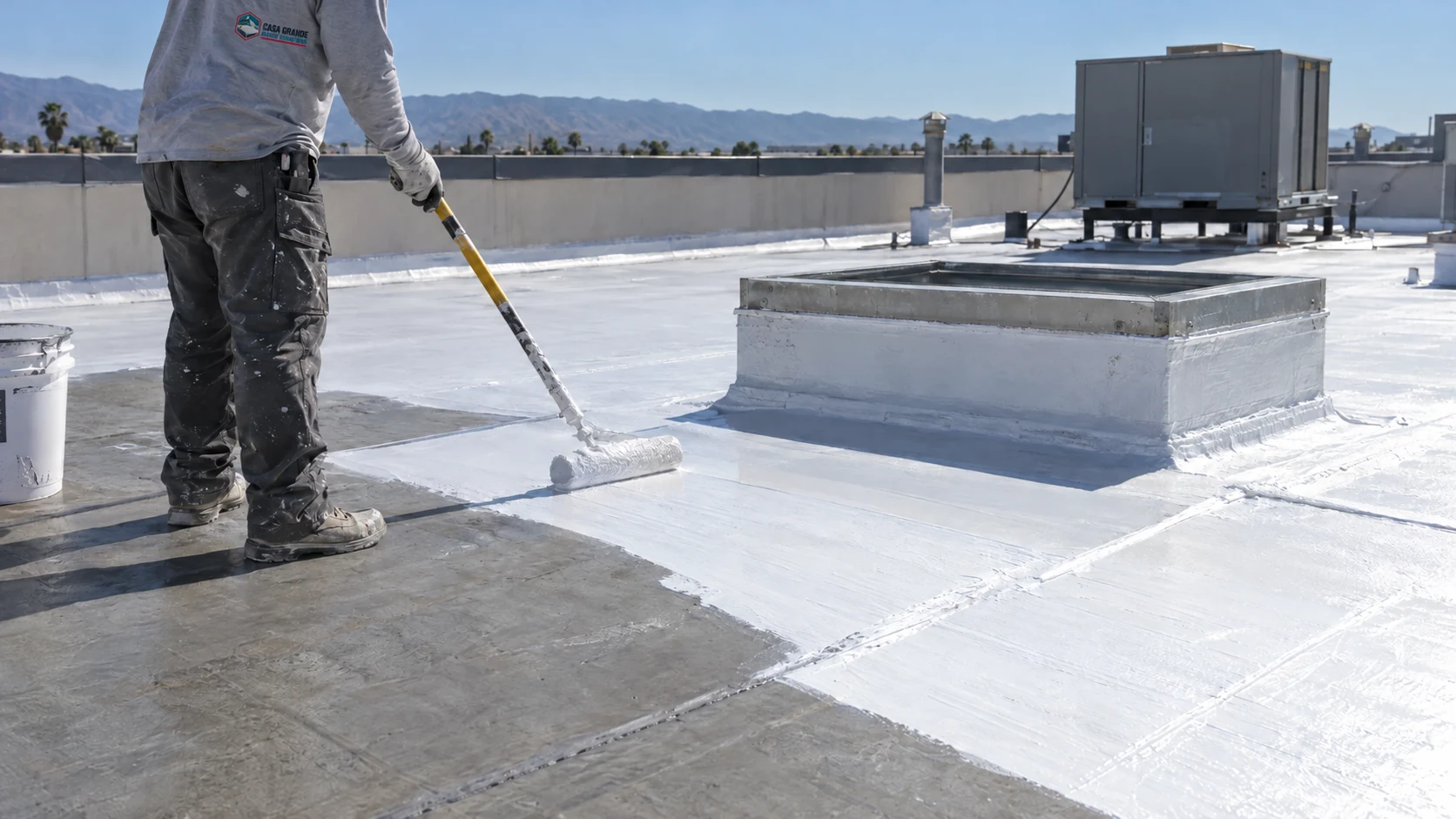
Eloy roof coating can fit a commercial roof with a sound, coating-ready substrate, manageable detail repairs, and a work window that supports dry preparation. A roof review should identify the areas that can receive a coating, the areas that need repair first, and conditions that call for another roofing path.
A useful review looks across the whole roof system rather than judging the surface by color or age. Ponding areas deserve attention because standing water can point to drainage, slope, membrane, flashing, or substrate concerns. A coating may protect a prepared surface, but it does not correct a drainage problem by itself. The roof plan should describe how drains, low areas, scuppers, edge details, and discharge paths will be handled before material is applied.
Moisture also changes the decision. Wet insulation, trapped moisture, or a damp substrate can interfere with adhesion and conceal deterioration. Preparation should include a practical way to identify moisture-sensitive areas and isolate them from coating work. When a section cannot support the intended assembly, repair or replacement planning belongs in the scope before coating begins.
Seams, penetrations, curbs, and transitions need their own review. These details move, collect debris, and experience different exposure than the field of the roof. Wind-exposed details deserve particular attention during access planning and preparation. A strong scope describes detail treatment, access limits, and the order of work instead of treating the entire roof as one uniform surface.
Plan Around Eloy Review Timing And Weather
Commercial roof work in Eloy should be planned with City review timing and current weather conditions in the same schedule. Eloy Building Safety provides the local reference for building safety and permit review information. The City determines project-specific requirements, so the actual roof scope should be confirmed before work is scheduled or represented as permit-ready.
Start by writing down the roof work in practical terms. Include the existing roof type, areas proposed for coating, repairs to seams and penetrations, access points, rooftop equipment, staging needs, and any changes that could affect the building. A concise scope gives the City a clearer basis for review and gives the property team a shared record of what is being considered. Review timing should be treated as a planning input rather than an afterthought.
Weather-sensitive preparation needs the same discipline. Before a preparation or application date, recheck the National Weather Service forecast for Eloy for precipitation and thunderstorm conditions. The forecast is a planning reference, not a promise about the conditions at roof level. The person coordinating the work should also consider the actual surface condition, wind exposure, drying time, and protection of equipment and occupied areas.
A forecast check can change the order of work. Dry detail repairs may be scheduled ahead of a coating window, while moisture-sensitive cleaning and application wait for suitable conditions. A property manager can use that flexibility to protect deliveries, tenant activity, rooftop service access, and inspection availability. The result is a roof schedule built around the work that can safely happen on the day, with room to recheck conditions before each moisture-sensitive phase.
Benefits of Coating Your Roof
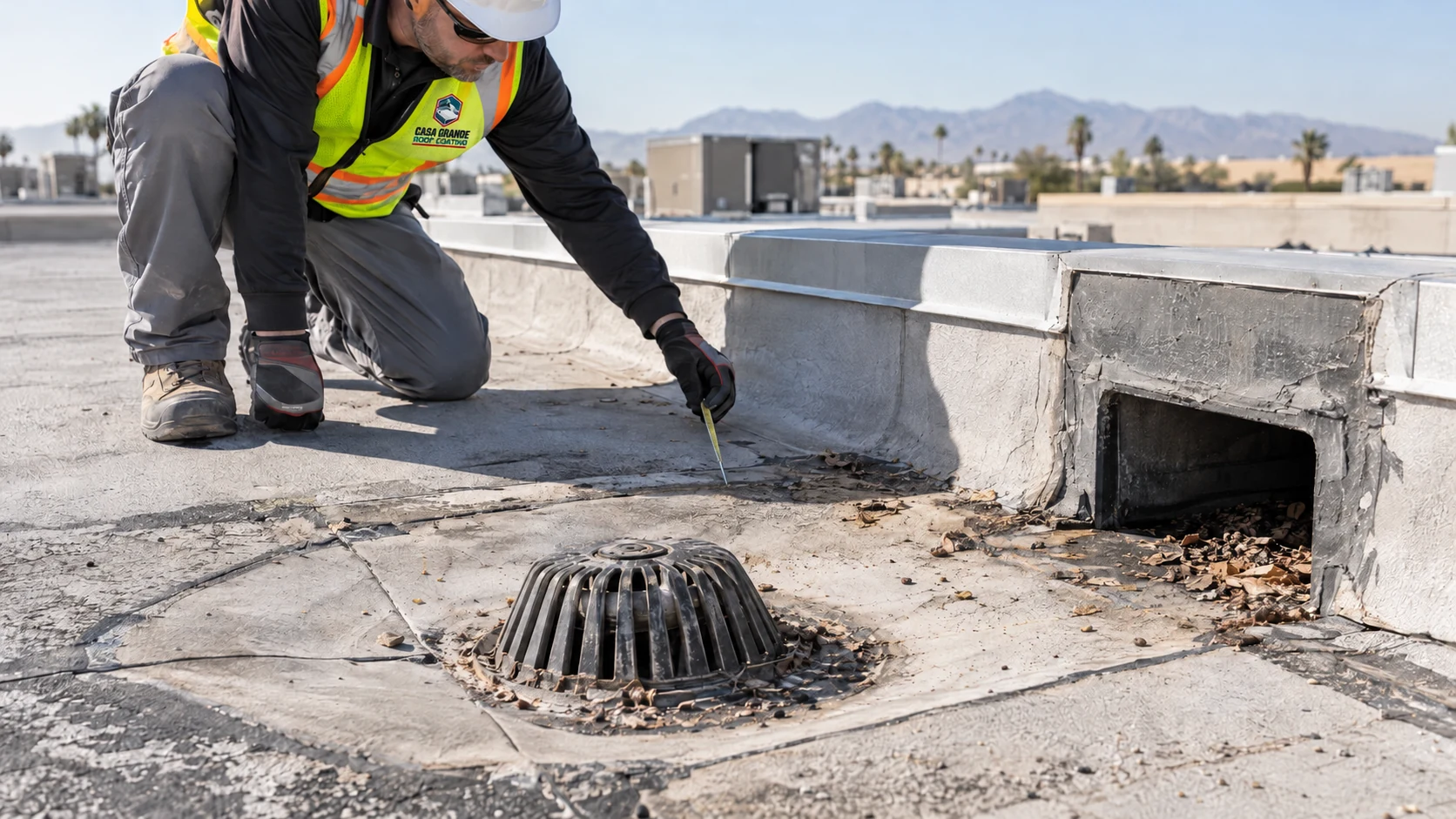
A suitable coating plan can create a maintainable protective surface over prepared roof areas, reduce exposure at treated details, and give the facility team a clearer way to track future roof conditions. Those benefits depend on substrate condition, preparation quality, drainage, product fit, and weather at the time of work.
Keep Repair Decisions Visible
A coating scope can separate coating-ready areas from areas that need repair. That distinction helps a building owner see where funds and access time are going. Open seams, failing flashing, corroded metal, and damaged curbs can be listed as detail work instead of buried under a broad coating allowance. The roof record becomes more useful for future inspections because it identifies the conditions addressed before application.
Protect Prepared Details
Roof coating performs as part of an assembly. When seams, penetrations, fasteners, edges, and transitions receive appropriate preparation, the finished surface can provide added protection over those treated areas. Detail work must follow the selected system and the existing substrate. A coating layer cannot substitute for a loose attachment, failed flashing, structural movement, or an unresolved leak source.
Support Planned Maintenance
A coated roof still needs inspection and upkeep. A planned maintenance rhythm can track surface wear, new openings, ponding, edge movement, equipment work, and damage from later trades. Keeping those observations together helps the facility team decide when a small repair is appropriate and when a larger roof review is needed. Access planning matters because roof observations should happen without creating avoidable hazards or disrupting building operations.
Match Work To A Real Window
A coordinated coating project can make the application window part of the scope. The team can identify dry preparation tasks, protect sensitive areas, confirm access, and recheck precipitation and thunderstorms before moisture-sensitive work. This approach matters in Eloy because a forecast change can affect surface readiness, drying, material handling, and the protection of equipment or occupied spaces.
Commercial Roof Coating Options for Eloy
The right coating option depends on the roof system and the condition record. Silicone, acrylic, and metal roof coating each call for a different conversation about moisture, details, preparation, and application conditions.
Silicone Roof Coating For Low-Slope Conditions
Silicone may be considered for a low-slope commercial roof where ponding investigation, moisture review, adhesion, and detail preparation support the proposed assembly. The review should map low areas and determine whether water remains after ordinary drainage opportunities. It should also examine the existing coating, seams, curbs, penetrations, and any sections with uncertain substrate condition.
A silicone scope should state which repairs occur before coating and how the prepared surface will be checked. Existing layers can affect adhesion and compatibility, so the proposed system needs a substrate-specific review. The silicone roof coating service explains the low-slope decision in more detail.
Acrylic Roof Coating For Weather-Window Planning
Acrylic coating may suit a commercial roof when the substrate is dry, the existing surface can accept the proposed system, and the work can be organized around an appropriate application window. Preparation should address worn acrylic, flashing cracks, detail failures, bleed-through concerns, and areas that remain damp after cleaning or repair.
Acrylic work benefits from a written sequence. Dry preparation can be completed first, followed by detail treatment and field application when conditions support the work. Recheck the Eloy forecast for precipitation and thunderstorms before scheduling moisture-sensitive stages. Review acrylic roof coating options when a water-based application path is under consideration.
Metal Roof Coating For Exposed Details
Metal roof coating calls for close attention to corrosion, fasteners, panel movement, seams, and penetration flashing. A visual pass should identify areas where corrosion needs treatment, fasteners need attention, or panels and details move differently. The scope should also account for wind exposure, roof access, and safe movement around edges and equipment.
A metal roof coating plan should name the detail work before the field surface. Loose or deteriorated conditions need a repair decision before coating. The proposed coating and primer approach must fit the actual metal substrate and existing layers. Read about metal roof coating for commercial buildings when exposed panels and seams drive the review.
A Practical Eloy Roof-Coating Process
A workable process moves from roof facts to preparation, then from preparation to a weather-aware application window. Each step gives the property team a decision point before the next commitment.
Inspect Your Roof
Begin with a roof review that records surface type, seams, penetrations, curbs, drains, low areas, access routes, equipment, prior repairs, and visible moisture concerns. The inspection should distinguish coating-ready areas from areas that need repair, testing, or another recommendation. Safe inspection access remains part of the scope, especially where wind-exposed details or rooftop equipment limit movement.
Map Moisture And Ponding
Record locations where water collects or where the substrate may hold moisture. Look at drainage paths, transitions, edges, and repairs that could redirect water. The map should show what needs correction before coating and what requires further investigation. This step keeps a coating from being used as a substitute for drainage work or wet-substrate decisions.
Define Detail Repairs
List repairs for seams, penetrations, curbs, fasteners, flashing, edges, and damaged coating. Detail repairs should be sequenced so preparation exposes the actual condition before final material selection. If the roof includes several substrates or old repair layers, the scope should preserve those distinctions rather than assuming one product will fit every area.
Confirm City Review Needs
Use the written scope to discuss project-specific requirements with Eloy Building Safety. The City determines whether the proposed work requires a particular review or permit path. Confirming that point early helps align documentation, inspection timing, site access, and the work calendar without promising an outcome before the City reviews the actual project.
Check The Forecast And Access Plan
Before preparation and application, recheck the National Weather Service forecast for Eloy for precipitation and thunderstorm conditions. Confirm that the roof can be accessed safely, that equipment and materials can be staged without blocking needed routes, and that occupied areas receive appropriate protection. If conditions change, keep dry preparation and other suitable tasks moving while holding moisture-sensitive work for a better window.
Prepare, Apply, And Review
Clean and prepare the approved areas according to the selected system and the substrate condition. Complete detail work before field coating, then review coverage, transitions, edges, and repaired locations as the work progresses. A final review should record remaining maintenance items, areas that were excluded, and conditions that deserve attention during future roof access.
Roof Conditions That Need Separate Decisions
Some roof findings call for repair, investigation, or replacement planning before a coating discussion can be complete. Clear boundaries protect the building owner from treating a surface layer as a cure for a deeper problem.
- Ponding: Trace the water path and review drainage, slope, low areas, and membrane condition. Coating can protect a prepared surface, while drainage correction remains a separate decision.
- Wet insulation or substrate: Identify moisture-sensitive areas and decide how they will be repaired or isolated. Coating over uncertain moisture can undermine the intended result.
- Structural movement: Review movement at panels, curbs, edges, and attachments. A surface coating does not correct structural defects or unstable components.
- Open seams and failed flashing: Detail repairs come before field application. Record the repair boundary so the scope remains clear.
- Wind-exposed details: Plan safe access, material handling, edge awareness, and protection for rooftop equipment. Wind conditions can affect the work window and site controls.
- Older coating layers: Evaluate adhesion and compatibility before selecting a new system. Existing layers should be part of the condition record.
Keep Eloy Commercial Operations Moving
Roof work should fit the building's operating needs as closely as the roof condition allows. Map roof access, equipment service routes, delivery paths, tenant activity, and areas that need protection before preparation begins. A facility manager can then decide which work belongs in the first window and which work should follow after an inspection or weather check.
Schedule communication should identify the planned inspection time, preparation period, application window, forecast recheck, and review point. The schedule can remain practical without treating every date as fixed. City review timing, roof access, surface readiness, and precipitation or thunderstorm forecasts may affect the order of work.
A written record also helps after the project. Keep the condition map, repair list, excluded areas, access notes, and follow-up observations with the building's maintenance records. When future trades access the roof, those records can point out sensitive details and reduce guesswork around prior repairs. The goal is a roof decision that remains understandable after the application crew has left the work area.
For nearby commercial roof planning, review the commercial service areas. For a project discussion that starts with the roof condition, use the commercial roof estimate request.
Frequently Asked Questions
Does Eloy Roof Coating Require City Review?
The City of Eloy determines project-specific requirements. Eloy Building Safety provides building safety and permit review information, so the actual scope should be discussed with the City before scheduling work or describing a permit outcome.
How Should Weather Affect An Eloy Coating Schedule?
Recheck the National Weather Service forecast for Eloy before moisture-sensitive preparation and application. Precipitation and thunderstorms can affect surface readiness, drying, material handling, and protection of occupied areas. The actual roof condition and wind exposure also belong in the day-of-work decision.
Can Coating Fix Ponding Water?
Coating alone does not correct a drainage problem. A review should identify where water collects, how it moves, and whether slope, drains, edges, or substrate conditions need attention before a coating is considered.
Can A Coating Cover Wet Insulation?
Wet insulation or an uncertain substrate requires a separate investigation and repair decision. The proposed coating area should be limited to surfaces that can support the selected assembly after appropriate preparation.
Which Coating Fits A Low-Slope Roof In Eloy?
Silicone or acrylic may be considered for a low-slope roof after moisture, adhesion, drainage, seams, curbs, and existing layers are reviewed. The roof condition and application window should guide the selection instead of a default material choice.
When Is Metal Roof Coating Worth Reviewing?
Review metal roof coating when corrosion, fasteners, panel movement, seams, or penetration flashing shape the maintenance decision. The metal substrate, existing layers, detail repairs, and safe access should be evaluated before a system is selected.
What Should A Facility Manager Prepare Before A Roof Review?
Gather roof plans or records, known leak locations, repair history, equipment access needs, tenant or operating constraints, and preferred inspection windows. A clear condition record helps organize the scope and supports a practical discussion of City review timing and weather-sensitive work.