For a property owner or facility manager, that order matters. Coating covers a prepared, suitable surface. It does not correct a structural defect, wet insulation, or a drainage problem simply because material is applied over the roof. The right scope keeps metal repairs and coating decisions connected, so the finished work reflects the actual condition of the building.
Start With The Metal Roof Details
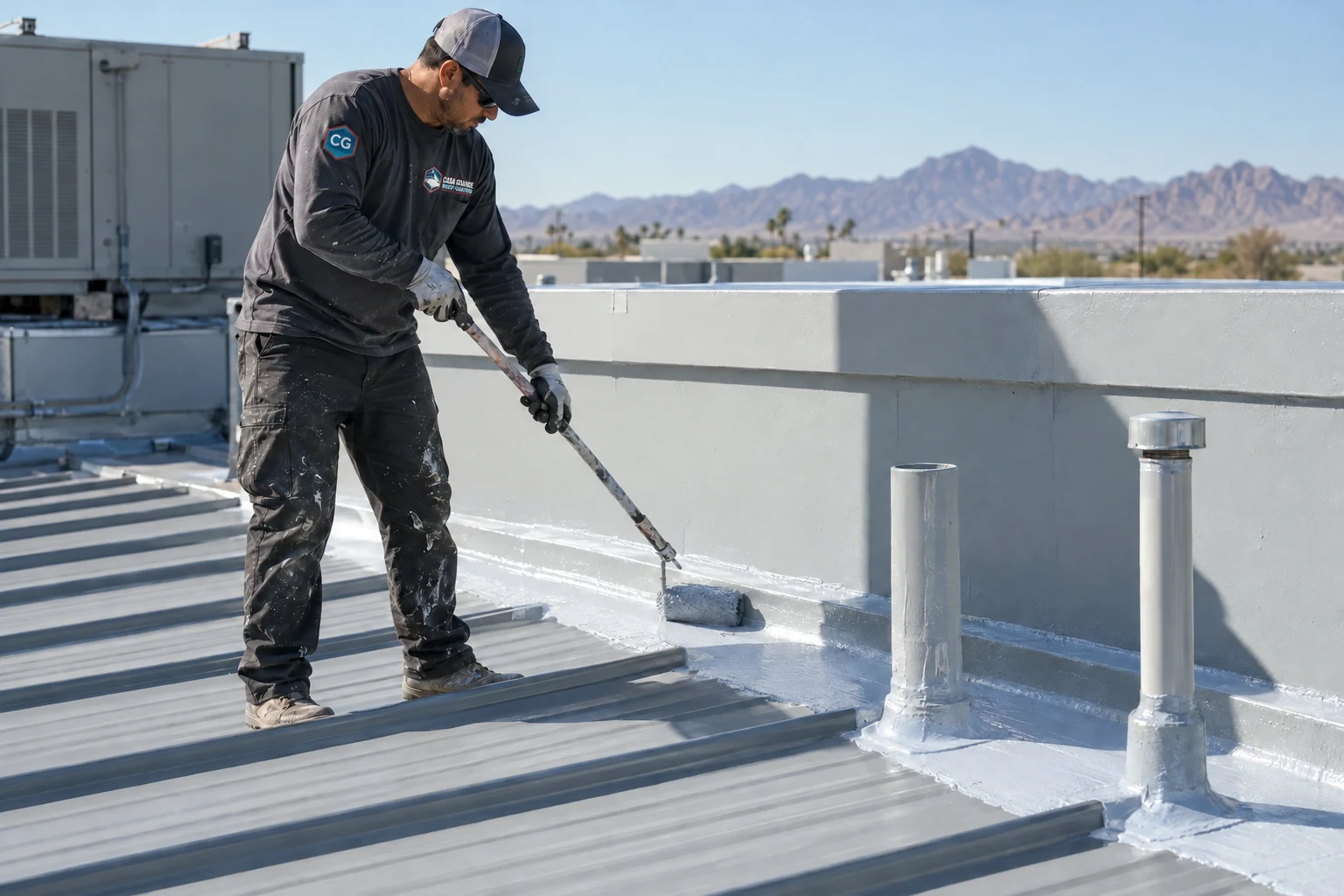
A commercial metal roof may look uniform from the parking area while its risk points sit at laps, fastener heads, curbs, vents, and pipe penetrations. A useful evaluation follows each of those points instead of treating the roof as one uninterrupted sheet. It also considers how panels move as the building and metal expand or contract through normal operating conditions.
Panel movement can stress seams, fastener holes, closures, and flashing transitions. Open seams can admit water at a joint that appears narrow from below. A loose or deteriorated fastener can leave a hole that needs a specific repair before coating. Corrosion can affect the panel surface, an attachment point, or an area around a penetration. Each condition changes the preparation plan.
Standing-seam roofs require careful attention to seam geometry and movement. Exposed-fastener systems require a close look at every fastener field, washer, and repaired opening. A coating discussion should identify the roof type, the areas with sound metal, and the details that need work first. That record gives the property decision-maker a clearer basis for comparing restoration with replacement or isolated repair.
When Metal Is A Coating Candidate
A metal roof may be a coating candidate when its panels remain suitable for preparation, the substrate can be made sound and dry, and the major water-shedding details can receive compatible repairs. The review should also account for existing coatings, surface contamination, rust, fastener condition, seam treatment, and access around rooftop equipment.
A coating plan can make sense for a roof with surface wear and localized detail problems when those problems have a defined repair path. Preparation may include removing loose material, cleaning the surface, treating corrosion where appropriate, securing fasteners, and reinforcing seams or transitions according to the selected system requirements. The exact primer and coating sequence depends on the metal substrate and existing materials.
A coating plan needs a clear boundary. Severe panel deterioration, movement caused by a structural issue, saturated insulation, widespread attachment failure, or drainage conditions that keep the roof wet can require work outside a coating scope. A careful review identifies those conditions early. It protects the building owner from treating a material application as a substitute for repairs that support the roof assembly.
When Repairs Come Before Coating
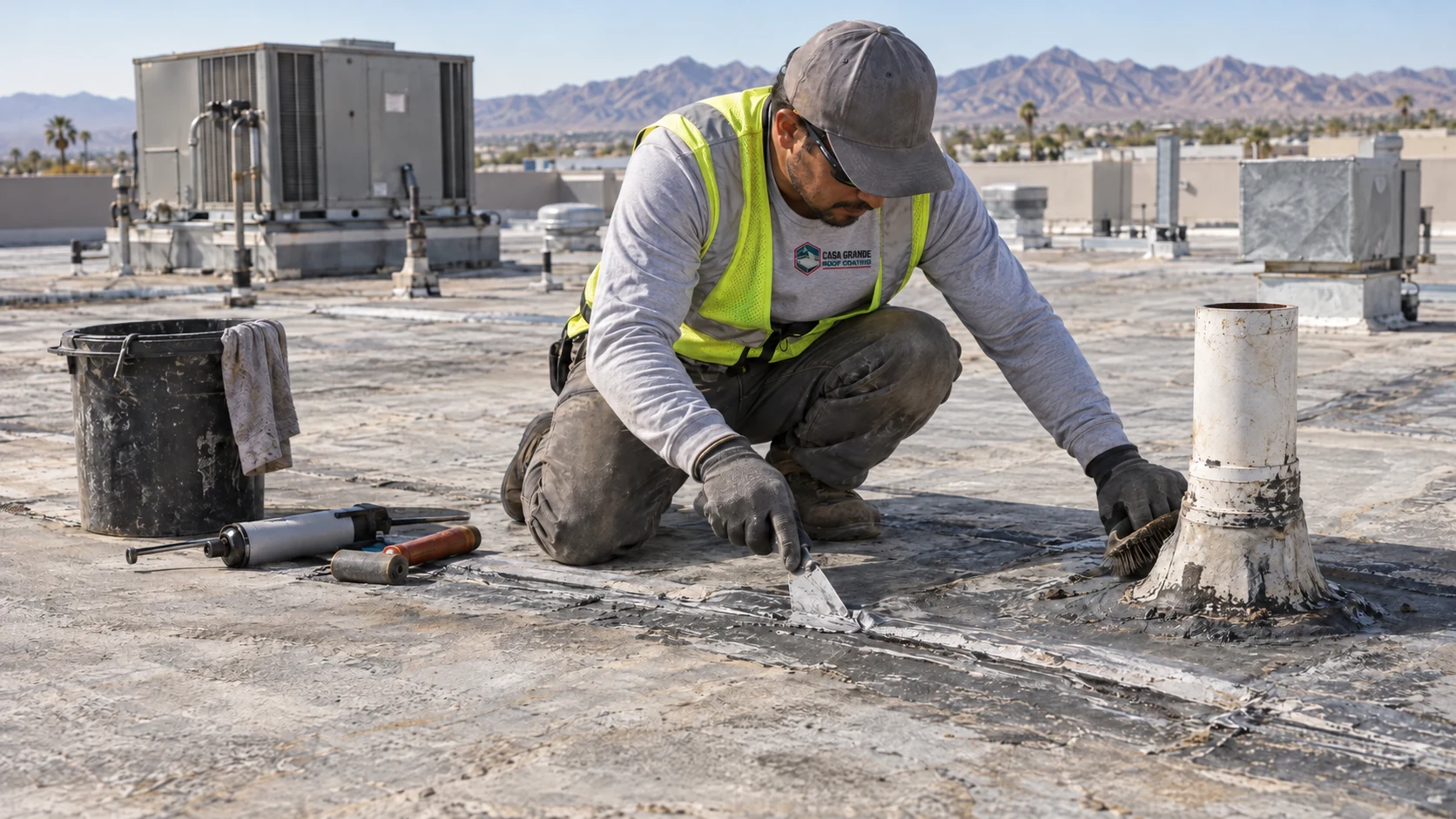
Repairs come first when the metal cannot provide a stable surface for preparation or when a detail can continue admitting water beneath a new film. Open seams need attention at the joint. Loose fasteners need an attachment decision. Corroded panels need an evaluation of remaining material and the surrounding connection. Penetration flashing needs a review of its shape, seal, and transition into the roof field.
Water stains inside the building can help identify a concern, but they do not locate every entry point on a metal roof. Water can travel along a panel, seam, purlin, or insulation layer before appearing indoors. The exterior review should trace likely paths and separate active leakage from old staining. If insulation has become wet, coating alone will not dry or restore it.
Panel movement deserves its own discussion. A moving sheet can reopen a seam or strain a repair after the surface receives a coating. The scope should account for attachment, laps, terminations, and movement at transitions. Coating belongs after the roof details can perform their basic water-shedding function. This sequence keeps the work focused on the metal assembly rather than on a uniform appearance.
Benefits of Coating Your Roof
A properly prepared and compatible metal roof coating can protect prepared surfaces, unify repaired details, and create a maintainable finish across eligible roof areas. The value comes from matching the material and preparation to the existing metal system. A coating is one part of a roof plan, and its benefits depend on sound substrate conditions and correct detail work.
For commercial owners, a coating scope may offer several practical benefits:
- A defined repair record: Documenting seams, fasteners, corrosion, and penetrations gives facility staff a clearer maintenance reference.
- A continuous protective layer: Eligible prepared areas can receive a consistent surface after repairs and detail treatment are complete.
- Better detail visibility: A planned finish can make later inspections easier when repaired areas and transitions are recorded before application.
- Less disruption than a full roof change in some cases: A coating discussion can keep the decision focused on eligible areas while larger replacement questions receive separate review.
- A maintenance conversation: The roof can be checked by condition, with attention to fasteners, seams, flashing, drains, and any areas that collect water.
These benefits have limits. A coating cannot restore severely deteriorated metal, replace missing structural support, remove wet insulation, or fix a drainage design. It also cannot make an incompatible surface suitable without the required preparation and system guidance. The roof condition sets the starting point for every benefit claimed.
Commercial Roof Coating Options for Casa Grande
Casa Grande commercial owners can compare metal roof coating with other coating paths only after identifying the roof system and its detail conditions. Metal panels call for a panel-and-seam review. Low-slope roofs with different substrates may call for a different evaluation, including moisture, adhesion, and drainage questions.
Silicone roof coating is a related option to discuss when a commercial roof has low-slope surfaces and the review supports that path. Its evaluation should address existing materials, moisture, seams, and drainage rather than assume that a metal-roof approach transfers unchanged.
Acrylic roof coating may be considered when the roof and application conditions support a water-based coating plan. Dry substrate requirements, detail preparation, existing coating condition, and the available application window belong in that review. Product-specific limits should be confirmed before a scope names an exact system.
The correct choice follows the roof. A standing-seam metal roof with movement at seams has a different decision boundary from a low-slope surface with ponding or a worn water-based coating. Keeping those conditions separate helps the property owner request a useful review instead of selecting a material from a label alone.
A Practical Metal Roof Coating Process
A practical process moves from condition evidence to repairs, preparation, system fit, and final review. Each step should leave the next decision clearer for the building owner or facility manager. The sequence below keeps detail work ahead of broad surface application.
Inspect Your Roof
The first step is an inspection of accessible roof areas and visible details. The review should identify the metal roof type, panel layout, seam condition, fasteners, corrosion, penetrations, curbs, drains, prior repairs, and signs of water entry. Access routes and rooftop equipment also matter because they shape how people can reach the work areas without interfering with building operations.
The inspection should distinguish a surface issue from a roof-assembly issue. It should record where coating appears worn, where metal has lost material, and where movement or attachment may affect a repair. If the roof cannot be safely or adequately evaluated, the next step is to resolve the access or information gap before defining a coating scope.
Map Panel And Detail Repairs
The next step is a repair map. Mark open seams, loose fasteners, corrosion, failed sealant, damaged closures, and penetration flashing concerns by roof area. Note details that need closer review, including equipment curbs and transitions where different materials meet. A map helps separate repair quantities from coating quantities and keeps the scope tied to observable conditions.
Prepare The Surface
Preparation should leave the selected areas clean, sound, and ready for the proposed system. Loose coating and surface contamination need attention. Corrosion treatment, fastener work, seam reinforcement, and flashing repairs should follow the requirements for the actual metal and existing surface. The substrate must be suitable for the planned application, and moisture concerns need resolution before coating proceeds.
Confirm The Coating Plan
The plan should identify the metal substrate, existing coating, required preparation, detail materials, primer guidance, application sequence, and areas that remain outside the coating scope. Manufacturer compatibility and primer guidance need verification before a specific metal system is named. The plan should also identify how rooftop operations and equipment will be protected during the work.
Apply Around Active Operations
Commercial roofs often sit above occupied spaces, mechanical equipment, deliveries, and scheduled business activity. The work plan should mark access routes, protected equipment, staging areas, and any timing limits supplied by the property. A clear circulation plan reduces avoidable conflicts and keeps the coating scope connected to the way the building operates.
Review The Finished Roof
A final review should compare the completed surface with the repair map and coating boundary. Look at seams, fasteners, penetrations, transitions, and areas that received separate treatment. Record items that need future observation. The property owner should leave the process knowing which areas were prepared and coated, which conditions remained outside the scope, and what roof details deserve routine attention.
Plan For Casa Grande Permit Questions
Casa Grande permit guidance is the starting point for determining whether a commercial metal roof project requires an application, inspection, or other City coordination. The City determines project-specific requirements. A roof review can provide the condition and scope information needed for that conversation, while the property owner or authorized project representative confirms the applicable path before work begins.
Permit questions can arise when a project includes more than surface maintenance, changes roof details, addresses structural conditions, or affects other building work. The exact answer depends on the proposed scope and the jurisdiction's current requirements. Keep the roof condition record, repair map, access plan, and material information available so the review can focus on the actual work.
Safe access also belongs in the early discussion. A commercial roof may include fragile areas, equipment, edges, or restricted routes. The scope should identify how the roof will be evaluated and how operations will continue during preparation and coating. A building manager can then coordinate the roof decision with the people who control access, equipment, and daily use of the property.
Roof Coating Questions For Commercial Owners
Commercial owners usually need clear boundaries before they approve a metal roof coating scope. These answers explain what a coating can address, what needs a separate decision, and which details deserve attention first.
Can Metal Roof Coating Cover Corrosion?
It can cover eligible prepared areas after corrosion is evaluated and treated as part of the approved scope. Surface rust, deep section loss, and corrosion around fasteners can represent different conditions. The review should determine whether the metal remains suitable, whether repairs are required, and which preparation and primer guidance applies.
Does Coating Stop Panel Movement?
Coating does not correct panel movement caused by attachment, structural, or detail problems. Movement can stress seams and repairs, so the roof needs an evaluation of panels, fasteners, laps, and transitions first. A coating plan should account for movement that the existing metal assembly is designed to accommodate.
Are Loose Fasteners Repaired Before Coating?
Yes, fastener condition belongs in preparation and repair planning. A loose fastener, failed washer, or enlarged opening can leave a water entry point beneath a new coating. The scope should identify the attachment issue and specify the appropriate repair before the surrounding area receives the finish.
Can A Coating Fix An Open Seam?
An open seam needs detail repair before broad coating application. The seam must be evaluated for movement, contamination, existing sealant, and adjacent panel condition. The chosen repair and reinforcement approach should match the metal roof and the coating system requirements.
What Happens Around Vents And Other Penetrations?
Each penetration needs a flashing review. Check the transition between the penetration and the metal panel, the condition of sealants and fasteners, and any movement at the assembly. A penetration with damaged or incomplete flashing may need repair outside the general roof-field application.
Should A Commercial Owner Ask About A Permit?
Yes. Casa Grande's jurisdiction determines project-specific permit and inspection requirements. Ask early, describe the actual roof scope, and keep the condition record available. A coating application may sit within a broader project that changes the review, so the City should provide the controlling answer.