Commercial Roof Coating In Florence Starts With Scope Coordination
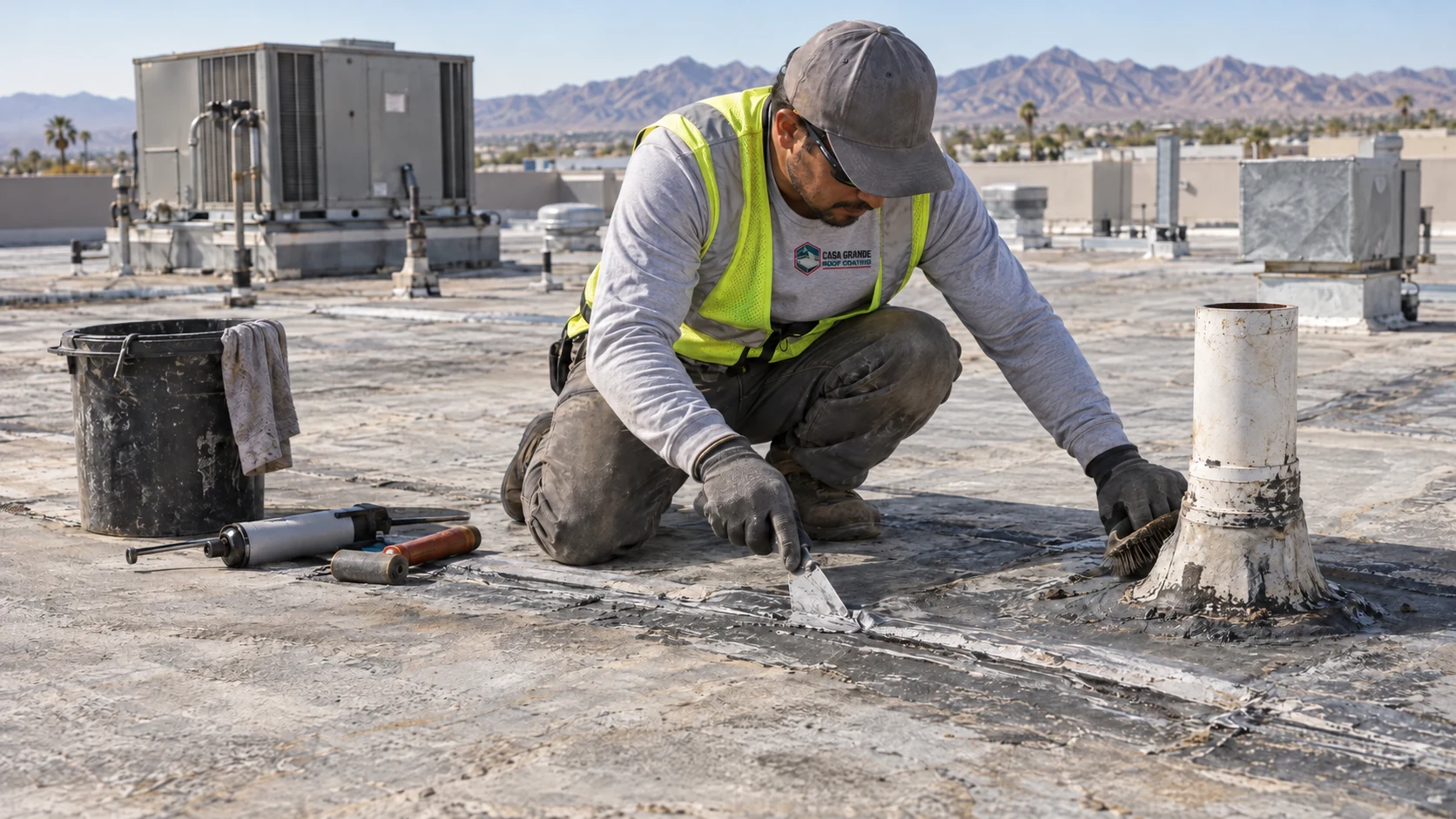
A commercial roof project affects more than the roof surface. It can change how people move around a property, where equipment is staged, when tenants use entrances, and how rooftop work fits the building’s daily schedule. In Florence, begin by documenting the intended work and coordinating with the Town’s Community Development resources before materials are moved or a crew is scheduled.
The Town provides an adopted-code directory for building-related reference and Community Development tools for permits and inspections. Those resources are useful starting points for understanding the review path. A jurisdiction determines project-specific requirements, so the actual roof scope should be presented for the Town’s direction before anyone describes a permit as required or unnecessary.
Commercial-development coordination also deserves a place in the early plan. A roof coating scope may involve an existing building, rooftop equipment, tenant areas, loading activity, or access routes that require practical sequencing. Write down the areas to be repaired, the areas to be coated, the locations of curbs and penetrations, and the operating constraints that could affect safe access. This gives the roof discussion a usable boundary.
A useful scope record can include:
- Roof areas included and excluded from the proposed work.
- Existing detail repairs at seams, flashings, curbs, and penetrations.
- Rooftop equipment that needs protection or scheduled access.
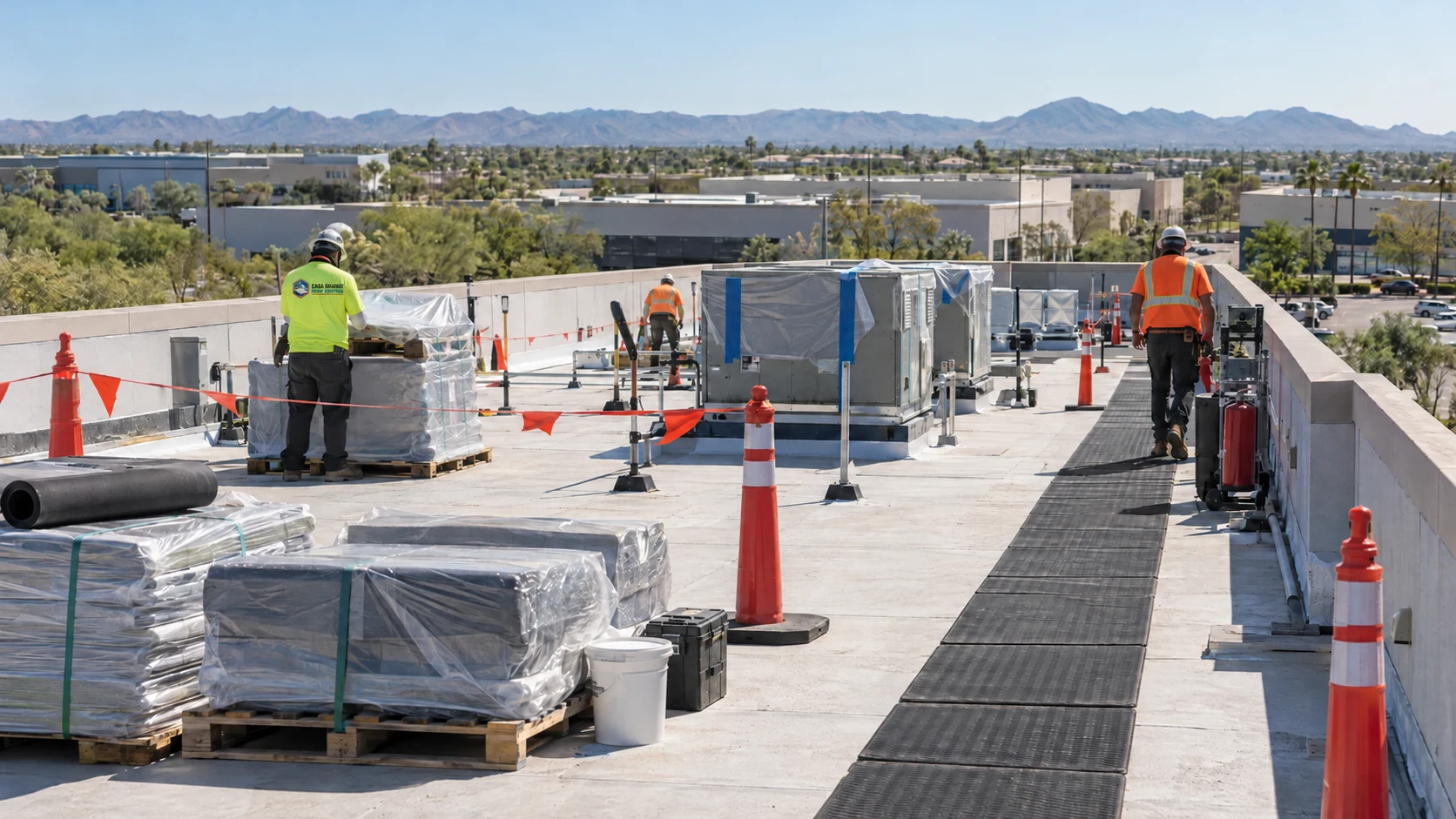
- Ground-level staging, delivery, and work-zone limits.
- Tenant activity, occupied areas, and preferred work windows.
- Questions for Community Development about permits, inspections, or adopted-code review.
These details help building owners compare a commercial roof coating path with repair or replacement decisions. They also reduce last-minute changes caused by an overlooked curb, a busy entrance, or a roof area that cannot be reached safely during normal operations.
Roof Conditions That Shape A Florence Coating Scope
A coating is suitable only when the roof assembly and its details can accept the planned preparation and application. A roof review should locate open seams, failed flashing, loose or damaged details, previous patches, surface contamination, and areas where water may remain after precipitation. The review should also account for how equipment and people reach the work area.
Detail repairs often determine the quality of the finished scope. A coating can cover a prepared surface, but it does not correct a structural defect, replace compromised materials, dry wet insulation, or solve a drainage problem simply because it is applied. Those conditions need their own decision and, where appropriate, repair before coating work proceeds.
Equipment curbs deserve close attention because they create changes in plane, seams, fasteners, and flashing transitions. HVAC units, vents, pipes, and other rooftop penetrations can also shape access and preparation. Record each detail that needs cleaning, sealing, reinforcement, or a separate repair review. A written detail list gives the property owner a clearer basis for discussing the work with the Town and for sequencing the job around building operations.
Existing-building condition matters at the edges as well as in the field of the roof. Look at parapet transitions, perimeter metal, drains, walk paths, and locations where past repairs meet older materials. A coating discussion that focuses only on the broad roof field can miss the small transitions most likely to interrupt the scope.
Work-zone access is another condition to document. The roof may be physically reachable while the safest route is limited by tenant activity, deliveries, locked areas, or rooftop equipment. Identify entry points, areas that must remain open, and surfaces that should not carry staging or foot traffic. This information supports a more realistic sequence for preparation, repairs, inspections, and application.
Benefits of Coating Your Roof
A well-defined coating project can give a commercial owner a focused way to address an aging roof surface when the substrate, details, moisture condition, and system compatibility support that approach. The benefits come from disciplined evaluation and preparation, followed by a scope that matches the roof rather than from applying material over every visible problem.
A coating can help create a continuous protective surface over prepared areas. That may simplify future observation because repaired details and coated field areas can be reviewed as part of a defined maintenance plan. It can also give a property owner a practical opportunity to organize roof information, including detail locations, access limits, and areas that need recurring attention.
Coating work can support operational planning when the scope is documented before the job starts. Owners can identify tenant-sensitive zones, coordinate rooftop equipment access, and set work boundaries around entrances or delivery activity. A clear sequence can make it easier to keep building operations informed while preparation and inspection work take place.
The benefit depends on the roof condition. A coating is a poor substitute for correcting wet insulation, active structural damage, failed drainage, or unstable materials. Moisture investigation, repair boundaries, surface preparation, and adhesion or compatibility review should guide the decision. When those checks support coating, the result is a defined restoration scope with fewer assumptions.
For a Florence commercial property, the planning benefit extends to local coordination. A written scope gives the owner something concrete to discuss with Community Development when asking about permit and inspection tools, adopted-code references, and the review path for the actual work. The Town makes the project-specific determination, while the property owner retains a clear record of what is being considered.
Commercial Roof Coating Options for Florence
The roof system and its existing details should determine which coating path deserves review. Florence commercial roofing decisions can involve low-slope surfaces, metal panels, or a water-based detail-preparation approach. Each option requires a condition review before it is described as suitable.
Silicone Roof Coating For Low-Slope Conditions
Silicone can be considered for a low-slope roof when the surface, seams, curbs, and drainage conditions are understood. Start with a moisture review and a close look at areas where water may remain. Ponding investigation belongs in the scope because coating alone does not change a drainage pattern. Existing coating layers also need adhesion and compatibility review before a new system is selected. Read more about silicone roof coating for commercial low-slope decisions.
Metal Roof Coating For Panel Details
Metal roof coating requires attention to panel movement, fasteners, laps, corrosion, and penetration flashing. Preparation should distinguish surface corrosion from conditions that call for material repair or replacement. Open seams and loose fasteners need a documented repair boundary before coating is considered. A commercial metal roof also needs access planning around ridges, equipment, and areas that may be unsafe to cross. Review the metal roof coating approach for panel and seam conditions.
Acrylic Roof Coating For Detail Preparation
Acrylic roof coating can be evaluated when a water-based system fits the roof condition and the application window can support proper preparation. The substrate must be ready for the selected product, and detail work such as flashing cracks, edge transitions, and prior repairs should be addressed first. Weather, drying time, roof access, and tenant scheduling influence the work plan. See the acrylic roof coating discussion for detail preparation.
The option choice should follow the inspection record. A material name by itself does not establish compatibility with an existing roof. Keep the scope specific about substrate, repairs, preparation, access, and inspection points so the owner can make a decision based on the actual building.
A Practical Florence Roof Coating Process
A commercial roof coating process should move from observation to scope, then from scope to coordinated work. Each step gives the property owner a chance to resolve a condition before it becomes a scheduling problem.
Inspect Your Roof
Review the roof field, seams, flashings, curbs, penetrations, drains, perimeter details, previous patches, and access routes. Note moisture concerns, unstable materials, corrosion, equipment conflicts, and tenant-sensitive areas. The inspection should identify questions that require a separate repair or drainage decision.
Document The Existing Building
Create a condition record that connects roof locations to practical building constraints. Mark equipment curbs, ladders or access points, staging limits, occupied areas, delivery paths, and places where work could affect tenant activity. Photos, measurements, and a simple roof plan can make the discussion more precise without turning the scope into a promise about a final system.
Define Repairs And Preparation
Separate repairs from coating work. List seam treatment, flashing work, fastener attention, surface cleaning, removal of unsuitable material, and any area requiring moisture investigation. This step establishes what must be ready before coating begins and what remains outside the proposed scope.
Coordinate With Florence Community Development
Use the Town’s adopted-code directory and Community Development permit and inspection tools as part of the planning conversation. Ask about the actual scope, review path, and inspection considerations for the property. The Town determines project-specific requirements. Keep that determination separate from the contractor’s roof-condition observations.
Plan Access Around Operations
Set work zones and access windows around tenant activity, equipment servicing, entrances, deliveries, and other building needs. Identify who controls rooftop access and how protected areas will be kept clear. A practical plan should describe where workers and materials can move while keeping the property’s routine activities in view.
Review The Coating Decision
Compare the prepared roof condition with the selected coating path. Confirm that unresolved structural, moisture, drainage, and compatibility questions have an owner and a next action. If the roof does not support coating, record the reason and discuss the alternative scope rather than forcing a material choice.
Florence Commercial Roofing Questions
Is Florence roof coating suitable for every commercial roof?
Suitability depends on substrate condition, moisture, detail repairs, drainage, existing materials, access, and system compatibility. A roof review should identify unstable or wet areas and separate them from surfaces that can be prepared for coating. The final scope should reflect those findings.
Does a coating repair structural roof damage?
A coating covers prepared roof surfaces. It does not correct structural defects, wet insulation, or a drainage problem by itself. Those conditions require their own investigation and repair decision before a coating scope is accepted.
Should equipment curbs be included in the review?
Yes. Equipment curbs create seams, flashing transitions, access limits, and protection requirements. Document each curb and nearby penetration so detail repairs and work-zone controls are included in the discussion.
How should tenant activity affect commercial roof work?
Tenant activity should shape access routes, staging, delivery timing, protected areas, and work windows. Identify entrances, occupied spaces, rooftop equipment service needs, and other operating constraints before the sequence is set.
What should a Florence owner ask the Town about the project?
Ask Community Development about the project-specific review path, permit and inspection tools, and adopted-code references that apply to the actual roof scope. The Town determines the requirements for the property and proposed work.
Which coating material is right for my building?
The roof system and condition should answer that question. Low-slope surfaces may call for a silicone review, panel details may call for a metal roof coating review, and a water-based application path may call for an acrylic review. Substrate, preparation, moisture, weather, and access remain part of every decision.
What should be ready before requesting a roof review?
Gather the property address, roof history, known leaks or repairs, equipment locations, access restrictions, tenant scheduling concerns, and any prior roof documents. A clear description of the intended work helps define a useful inspection and a focused conversation about local coordination.