Silicone Roof Coating For Low-Slope Commercial Roofs
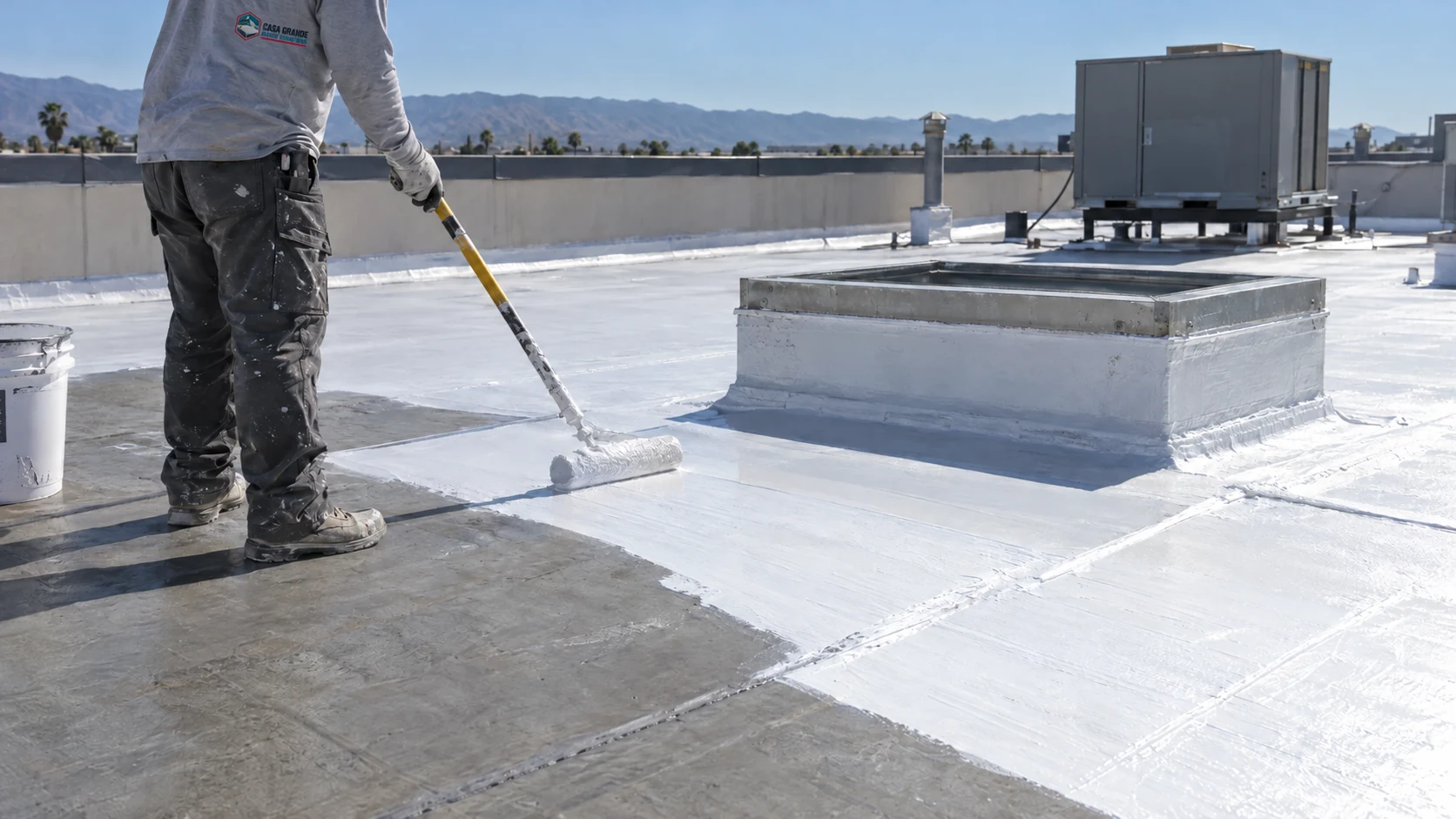
A silicone coating is a surface treatment. It can renew a prepared roof surface and seal prepared details, while structural defects, wet insulation, and drainage problems require their own investigation and corrective scope. A facility manager gets a more useful roof plan by separating coating-ready areas from repairs and from conditions that call for a different roof decision.
The goal is a documented path for the building, roof system, access needs, and daily operations. Casa Grande Roof Coating can review the roof condition, explain where silicone may fit, and outline the next step for a commercial property in Casa Grande, AZ.
When Silicone Coating Fits A Casa Grande Commercial Roof
Silicone is worth evaluating when an existing low-slope roof has enough sound substrate for preparation and a coating can follow the roof’s existing geometry. The review should account for the existing coating, seams, penetrations, drains, curbs, rooftop equipment, and areas where water remains after normal weather.
Common starting conditions include:
- A worn or weathered coating that still has a stable surface in at least some areas.
- Low-slope seams that need close inspection, preparation, and detail treatment.
- Ponding water that needs a drainage review before a surface system is specified.
- Suspected substrate moisture that could affect adhesion or the condition below the roof surface.
- Curb details, penetrations, and transitions where small failures can expose larger scope questions.
A roof can contain several conditions at once. One section may be ready for preparation while another needs repair or a separate evaluation. A roof review should identify those boundaries instead of treating every square foot as the same. That approach helps an owner or facility manager compare the coating scope with the roof’s actual condition.
Benefits of Coating Your Roof
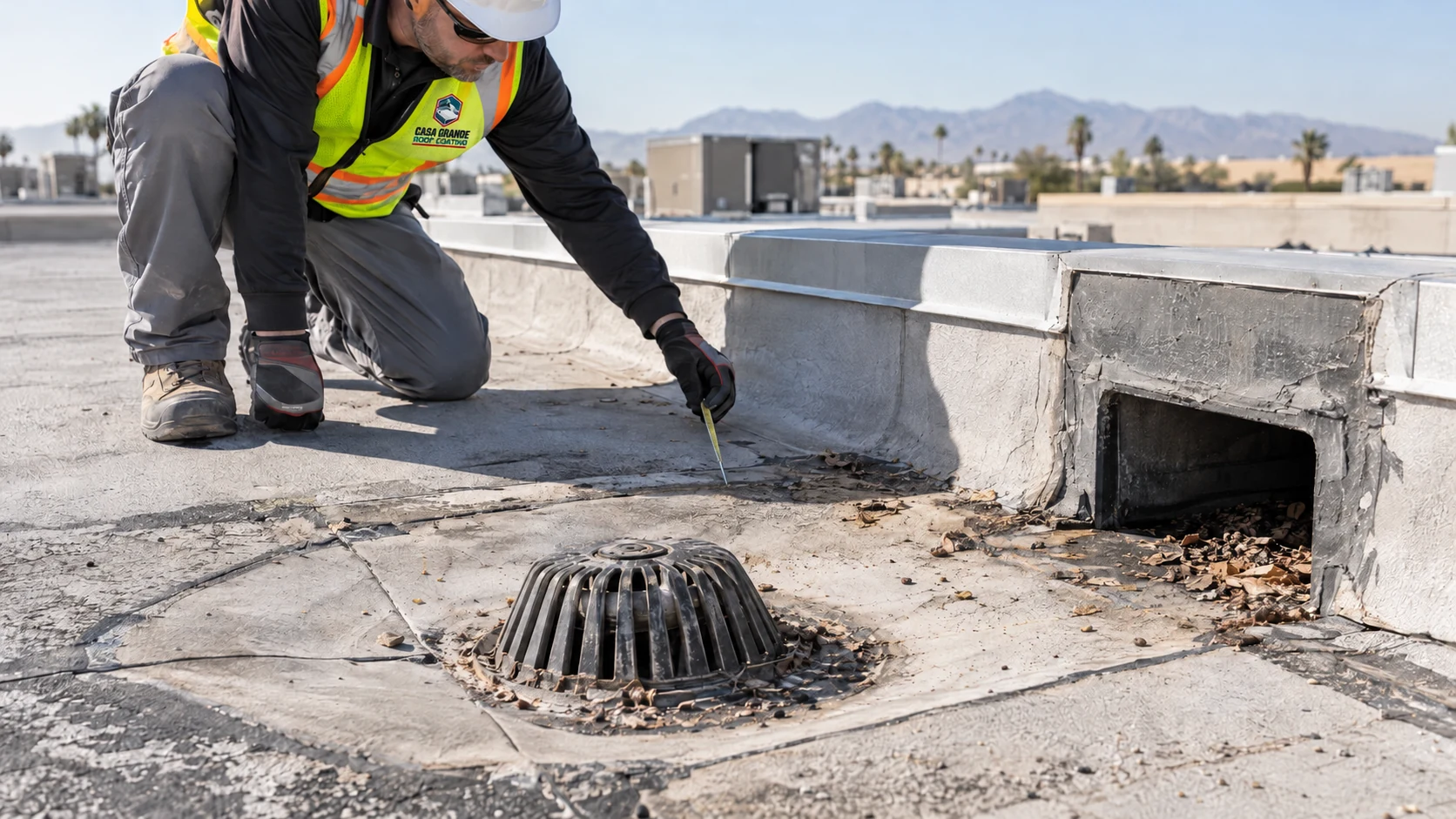
A properly prepared silicone roof coating can give a commercial owner a defined surface-renewal option when the existing roof assembly is appropriate. Its benefits come from the completed preparation and detail work as much as from the coating itself.
Extends A Repair-Based Decision
Coating can support a restoration decision when the roof still has a serviceable base and the required repairs are understood. It may allow an owner to focus funds on seams, penetrations, curbs, and surface preparation rather than choosing a full replacement before the roof condition has been separated into manageable areas.
Creates A Continuous Surface Treatment
A coating forms a new surface layer across prepared roof areas. The result depends on coverage, adhesion, detail treatment, and the condition of the roof below. Open seams, failed flashing, and loose materials remain scope items that need attention before the coating is considered complete.
Clarifies Future Maintenance Areas
A defined coating scope gives the facility team a clearer record of treated sections, repaired details, access concerns, and areas that were excluded. That record can make later inspections more focused. It also helps maintenance staff report changes at drains, curbs, seams, and equipment transitions.
Supports Low-Slope Roof Planning
Low-slope roofs often concentrate decisions around water movement and rooftop details. Silicone coating planning keeps those items in view. Drainage paths, water-holding areas, surface moisture, and detail transitions can be discussed as part of the roof decision instead of left for application day.
Keeps The Scope Tied To Roof Condition
The most useful benefit is a roof plan that matches actual conditions. Coating is considered where it fits, repairs are identified where they are needed, and a different system path remains available where the substrate or drainage condition calls for it.
Commercial Roof Coating Options for Casa Grande
Silicone should be compared with the roof’s condition, the desired scope, and the preparation requirements. A product name alone cannot determine fit. Casa Grande Roof Coating can help organize that comparison around the roof assembly and the problems visible during review.
Silicone For Low-Slope Restoration Review
Silicone is the focus when an existing low-slope commercial roof has aging coating, seams, possible ponding, or curb details that need a careful restoration assessment. Moisture, adhesion, substrate condition, and drainage receive priority before application planning. Product-specific substrate and primer requirements should be confirmed for the actual roof assembly.
Acrylic For A Different Application Decision
Acrylic can be an alternate path when the roof condition and application window support a water-based coating approach. The surface must be evaluated for dryness, detail condition, and compatibility. See Acrylic Roof Coating in Casa Grande for a separate review of that system choice.
Spray Foam For A Different Roof System Path
Spray foam is a different roof-system decision. It may warrant discussion when the roof profile, insulation concerns, or uneven surface requires a broader assembly review. Equipment protection and overspray controls also affect planning. Compare that route through Casa Grande Spray Foam Roofing.
The right comparison is conditional. A roof with wet insulation, significant structural movement, unresolved drainage, or poor adhesion may need corrective work before any coating option is evaluated. A coating review should make those limits visible.
Preparation Matters More Than The Product Name
Preparation establishes whether a silicone coating can perform as a roof-surface treatment. The review should document what is on the roof, how the existing surface is attached, where water travels, and which details need repair or reinforcement before coating work can proceed.
Check Surface Condition And Adhesion
A stable substrate gives the coating a reasonable base. Loose coating, chalking, debris, failed patches, and weak areas can interfere with adhesion. The preparation scope should identify areas that need removal, cleaning, repair, or a separate decision. A product recommendation should follow that review rather than replace it.
Investigate Moisture Before Covering The Roof
Moisture can change the roof decision. Wet insulation, trapped moisture, and water entering through failed details deserve investigation before a new surface layer is placed over the area. A coating can cover a visible symptom while leaving a concealed condition unresolved, so moisture findings belong in the scope discussion.
Trace Ponding And Drainage Paths
Ponding water deserves more than a quick visual note. The review should identify where water collects, whether drains and outlets remain usable, and whether the roof surface has a drainage problem. Silicone may be considered only after the water condition is understood. Coating alone cannot create a slope or repair a blocked drainage path.
Detail Seams, Curbs, And Penetrations
Seams and transitions need focused preparation. Curbs, pipes, equipment supports, drains, and other penetrations interrupt the roof plane and can concentrate movement or water exposure. The plan should call out these areas individually so they receive the repair and detail treatment their condition requires.
Our Silicone Roof Coating Process
A commercial silicone coating project should move from observation to scope, then from preparation to application review. Each step keeps roof condition and facility use in the same conversation.
Inspect Your Roof
The first step is a roof inspection focused on the existing coating, low-slope seams, ponding areas, substrate moisture indicators, drains, penetrations, curbs, rooftop equipment, and access routes. The review should record areas that appear coating-ready and areas that need repair or additional investigation.
Map Moisture And Drainage
Next, identify water-related conditions that could change the scope. Review ponding locations, drainage paths, roof edges, penetrations, and any signs that moisture may be below the surface. A facility manager can then see which questions must be answered before a coating is applied.
Prepare The Roof Surface
Preparation can include cleaning, removal of unsound material, repair of identified defects, and treatment of areas that may affect adhesion. The exact work depends on the existing roof assembly and selected system. Surface preparation should be complete enough for the coating decision to be evaluated honestly.
Treat Seams And Curb Details
Seams, penetrations, curbs, and transitions receive detail work based on their condition. Open joints, failed flashing, loose materials, and damaged areas need a defined repair boundary. Detail work is part of the waterproofing scope, not an afterthought at the end of a broad roof application.
Apply And Review The Coating Scope
Application planning should account for access, equipment, surface condition, and current site operations. After the coating scope is reviewed, the owner should have a clear understanding of treated areas, repair areas, exclusions, and maintenance observations. The final plan remains tied to the actual roof rather than a generic coverage assumption.
Working Around A Commercial Facility
A low-slope roof sits above an operating building, so access and daily use belong in the early conversation. Facility managers should identify roof access points, tenant or employee movement, rooftop HVAC equipment, service routes, deliveries, restricted areas, and times when roof access creates the least disruption.
The work zone may need separation from building entrances, loading activity, stored materials, and equipment service areas. Rooftop units and penetrations should be mapped before surface preparation begins. A practical access plan also gives the property team a way to report changes in roof condition without sending people into unplanned areas.
Weather-sensitive preparation deserves the same care. Surfaces must be suitable for the selected system and current conditions. Project-specific application limits, substrate requirements, and maintenance documentation should be confirmed before the work scope is finalized. A roof review can identify those documentation needs without making a manufacturer-specific promise.
Casa Grande Permit And Inspection Context
Casa Grande’s Building Division handles commercial and industrial construction permitting and inspection functions. The City determines whether a particular roof coating scope requires a permit, what information is needed, and which inspection steps apply. Those requirements should be confirmed for the actual building, scope, and jurisdiction before work is scheduled.
Permit review and roof condition review answer different questions. City coordination addresses project requirements and inspections. The roof assessment addresses moisture, adhesion, seams, drainage, curbs, penetrations, and the boundary between coating and repair. Keeping those tracks separate helps a facility manager prepare a complete project discussion.
Safe inspection access also needs to be considered. Roof ladders, hatches, fall-protection arrangements, occupied areas, and equipment zones can affect how the roof is evaluated. Any access plan should reflect the property’s conditions and the requirements that apply to the work.
When Silicone Is Not The Complete Roof Scope
A coating scope should pause for a deeper roof decision when the substrate is wet, the roof has structural defects, drainage remains unresolved, or existing materials cannot support the proposed system. Those conditions can require repairs, moisture evaluation, replacement planning, or another roof-system path.
A worn coating alone does not establish that silicone is appropriate. The roof may have several layers, prior patches, damaged flashing, or areas where the surface no longer provides a stable base. Each condition should be identified so the owner can compare the likely work with the building’s operational needs.
The review should also account for areas that are difficult to access or that need ongoing service. Rooftop equipment, curbs, drains, and penetrations can change the application sequence. A clear scope explains what can be coated, what must be repaired, and what requires a separate recommendation.
Silicone Roof Coating Questions
Is Silicone Roof Coating Suitable For Every Low-Slope Roof?
Silicone is not automatically suitable for every low-slope roof. Fit depends on the existing roof assembly, surface condition, moisture findings, adhesion, seams, drainage, curbs, penetrations, and access. A roof inspection should identify coating-ready areas and conditions that require repair or another system decision.
Can Silicone Coating Solve Ponding Water?
Silicone coating can be considered only after ponding has been investigated. It may protect a prepared surface selected for the project, but coating does not create slope or correct a blocked, undersized, or poorly functioning drainage path. Water collection should be mapped and addressed within the roof scope.
What Repairs Come Before A Silicone Coating?
Repairs may include unsound coating removal, open seam treatment, failed flashing work, damaged curb details, penetration repairs, and other defects found during inspection. The exact list depends on the roof. Structural defects and wet insulation require separate evaluation before a coating is placed over the area.
Can Silicone Be Applied Over An Existing Roof Coating?
It may be possible when the existing coating is stable and the new system is compatible with the prepared surface. Adhesion, cleanliness, loose areas, prior repairs, and substrate moisture should be reviewed first. Product-specific substrate and primer guidance must be confirmed for the roof being considered.
How Is Wet Insulation Handled During A Roof Review?
Wet insulation should be treated as a condition that can change the project scope. The affected area needs investigation and a corrective decision before it is covered. Applying a surface coating does not dry wet insulation or resolve the underlying source of moisture.
Can A Facility Continue Operating During Roof Coating Work?
A facility may be able to maintain operations with a site-specific access and work-zone plan. The plan should consider entrances, deliveries, rooftop equipment, service routes, occupants, and inspection access. Actual conditions determine the workable sequence and any temporary restrictions.
How Does Silicone Compare With Acrylic?
Silicone and acrylic represent different coating decisions. Silicone should be evaluated around low-slope condition, moisture, adhesion, ponding, seams, and curb details. Acrylic calls for its own review of substrate dryness, detail preparation, and application-window conditions. Compare the alternatives through Acrylic Roof Coating in Casa Grande.
Does Casa Grande Require A Permit For Silicone Roof Coating?
The City determines project-specific permit and inspection requirements. Casa Grande’s Building Division handles commercial and industrial construction permitting and inspection functions, so the actual scope should be reviewed with the applicable City requirements before scheduling work.