Acrylic Roof Coating For Casa Grande Commercial Buildings
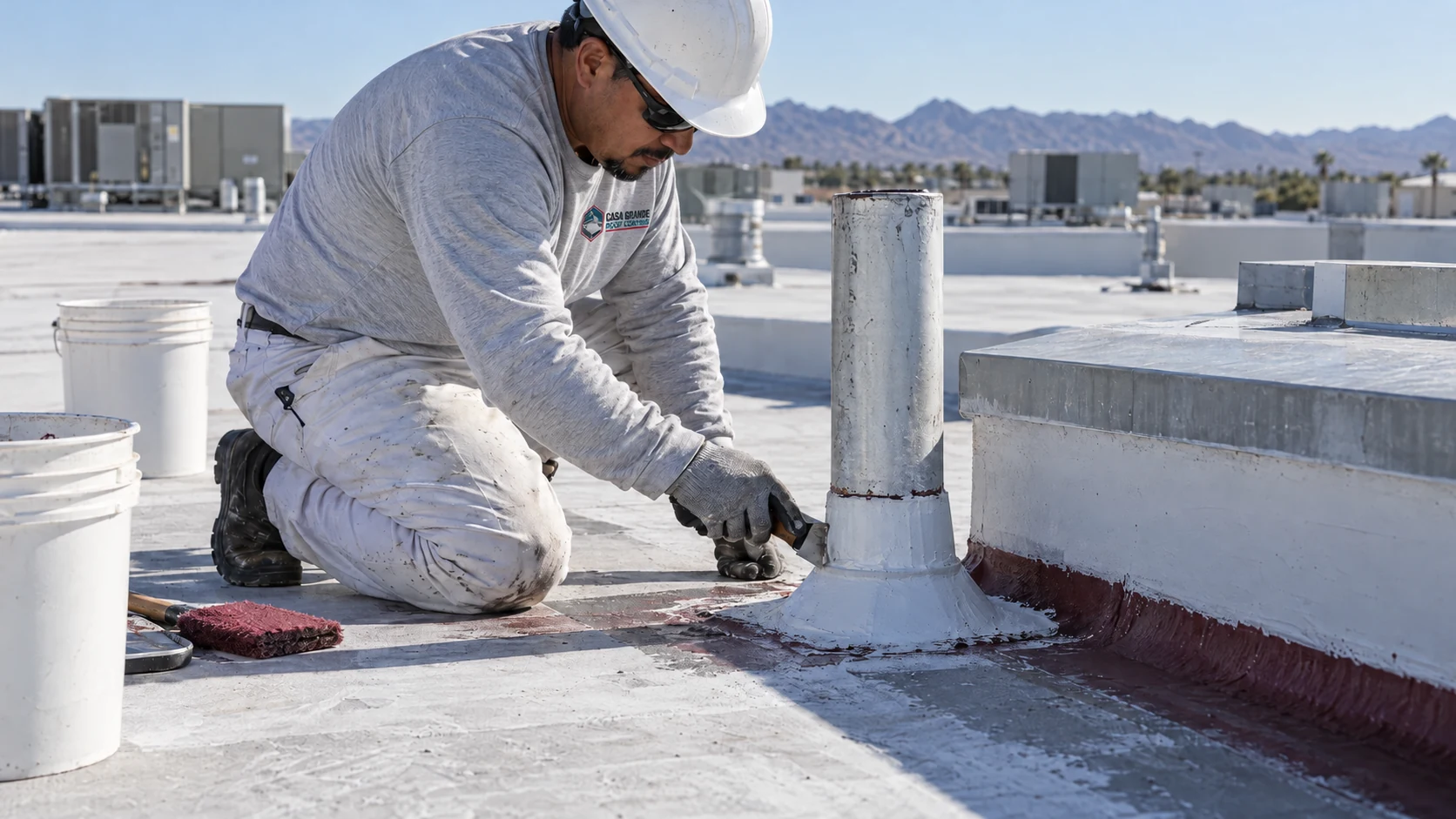
For a building owner or facility manager, the useful question is whether the roof can support a clean, well-bonded application within a workable weather window. That answer depends on the substrate, previous coatings, seams, penetrations, curbs, drains, and the way people and equipment use the roof. Casa Grande Roof Coating can discuss those conditions and outline a roof-specific next step for a commercial property in Casa Grande, AZ.
Acrylic coating is applied only after the surface has been evaluated and prepared. It does not dry out wet insulation, rebuild a failed deck, stop active structural movement, or correct a drainage problem simply because material is placed over the roof. A clear scope separates coating-ready areas from areas that need repair, additional investigation, or a different roofing approach.
How Acrylic Coating Fits A Commercial Roof
Acrylic is a water-based elastomeric coating option that may suit an existing roof when adhesion, moisture conditions, and detail integrity support the application. It is often considered for a roof with aging acrylic or another compatible surface where the owner wants to address surface wear and extend the useful decision window through planned preparation and maintenance.
The existing coating matters. A roof with several unknown layers can behave differently from a clean, compatible surface. Bleed-through, soft areas, trapped moisture, chalking, contamination, and patch materials can affect adhesion and the finished film. A review should identify those conditions before anyone treats the roof as ready for application. Product selection and any primer or repair step should follow the actual substrate and approved product documentation.
Details deserve the same attention as the field of the roof. Flashing cracks, penetrations, curbs, edge transitions, seams, and previous patches can become weak points if they receive the same generic treatment as an open roof field. These areas may need cleaning, reinforcement, sealant work, or other preparation before the acrylic layer is installed. The repair boundary belongs in the scope so the building owner knows what the coating is intended to address.
Acrylic also needs an application window that allows the prepared surface and coating to dry as intended. A schedule should account for current conditions, roof access, building operations, and the product-specific requirements selected for the project. Numerical weather or recoating requirements should come from the approved product information for the actual system instead of a general promise.
Benefits of Coating Your Roof
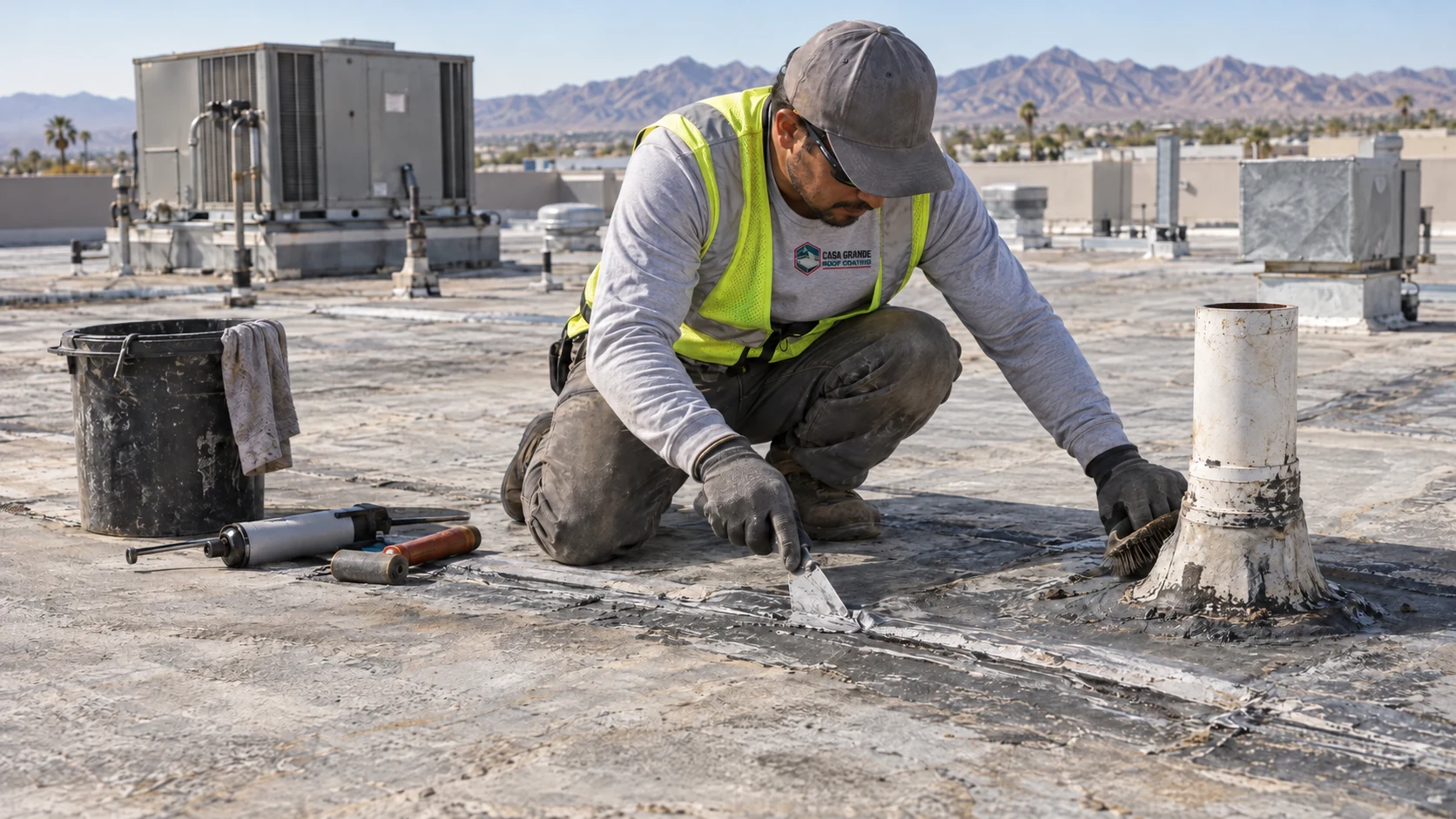
A properly prepared acrylic coating can give a commercial owner a defined surface-restoration strategy when the roof passes condition and compatibility checks. The benefits come from the complete system of inspection, repairs, preparation, application, and maintenance rather than from the coating material alone.
- A planned restoration scope: A coating review can organize worn field areas, detail repairs, access limits, and follow-up work into one roof decision.
- A renewed protective surface: Where the substrate and existing layers are suitable, a continuous acrylic layer can protect prepared roof surfaces from ordinary exposure and surface wear.
- Attention to details: The process puts flashing cracks, seams, penetrations, curbs, and other transitions into the scope instead of treating them as afterthoughts.
- A maintenance starting point: A documented application and follow-up inspection can help a facility team track changes, repairs, drainage observations, and areas that need attention.
- Less disruption than an undefined replacement discussion: A coating assessment can clarify which portions are candidates for restoration and which conditions call for another solution, helping operations plan around a known scope.
- A roof-specific decision: The owner receives guidance based on the actual roof assembly, prior repairs, moisture concerns, and access conditions instead of an automatic recommendation.
These benefits have boundaries. A coating cannot make an unstable roof stable, turn wet insulation into dry insulation, or replace investigation of standing water. It also cannot resolve an unknown compatibility issue through application alone. The value of acrylic work depends on a substrate that can accept the system and a scope that includes the preparation the roof requires.
When Acrylic Needs More Investigation
Acrylic should move to a closer review when the roof has wet areas, recurring leaks, soft or deteriorated materials, significant ponding, heavy contamination, or multiple coating layers with uncertain adhesion. Those conditions do not automatically rule out restoration, but they change the work needed before a coating decision can be made.
Active leaks should be traced to their source instead of covered as a shortcut. Water can enter at seams, penetrations, edge details, drains, or concealed transitions. A roof that appears dry at the surface may still contain moisture below the visible layer. If wet insulation or another concealed condition is suspected, the scope should address that uncertainty before acrylic application.
Bleed-through and detail failure also need specific attention. Staining, discoloration, soft patches, exposed reinforcement, cracked flashing, and incompatible repair materials can affect the final result. A preparation plan may separate cleaning, removal, sealing, reinforcement, and coating into distinct tasks. The plan should state where acrylic is expected to perform and where another repair or system evaluation is appropriate.
Roof access is part of suitability. HVAC service, inspection routes, stored materials, tenant activity, and equipment movement can interfere with preparation or create damage after application. A commercial schedule should identify access timing and protect the work zone while the surface is being prepared and coated. That conversation is especially important when a building must remain in operation.
Commercial Roof Coating Options for Casa Grande
Casa Grande commercial roof coating options should be compared by roof condition and system fit. Acrylic is one path for a compatible, prepared surface. A different coating or roofing approach may better fit a low-slope roof with other performance requirements, a metal roof with panel movement and detail concerns, or a substrate that requires a more extensive recovery plan.
For a low-slope roof where moisture, adhesion, drainage, and existing coating conditions require careful investigation, review the Casa Grande silicone roof coating option. Silicone is a separate system decision, and it should not be treated as an automatic substitute for acrylic.
For panels, fasteners, seams, corrosion, and penetration flashing, the Casa Grande metal roof coating discussion focuses on metal-specific preparation and detail movement. A metal roof may need work that an acrylic field-coating conversation does not cover.
The appropriate choice may also be a repair scope, additional moisture investigation, or a different restoration path. A useful comparison records the roof type, current layer, problem areas, detail condition, drainage observations, access needs, and expected maintenance. That record gives the owner a basis for choosing a system without assuming every commercial roof has the same coating requirements.
Roof Preparation For Acrylic Application
Acrylic performance starts with a prepared surface. Preparation should make the roof clean enough for evaluation and adhesion, identify areas that require repair, and establish a clear boundary between coating work and conditions that need another solution.
The preparation discussion should cover:
- Existing layers: Identify the visible coating or roof surface, prior patches, areas of uncertain compatibility, and signs of bleed-through or delamination.
- Moisture and leaks: Review active leak locations, soft areas, suspected wet insulation, and any condition that could remain hidden beneath a new layer.
- Field and details: Separate the open roof field from seams, flashing, penetrations, curbs, drains, edges, and transitions that may require targeted preparation.
- Surface condition: Plan cleaning and removal of material that could interfere with adhesion, while protecting roof components and building operations.
- Repairs and reinforcement: Define the repairs required before coating and identify areas where the existing roof needs a different scope.
- Application readiness: Confirm that the surface, access plan, work zone, and current conditions support the selected product instructions.
A good preparation plan is specific enough for an owner to understand what happens before the first coat. It should also leave room for findings discovered when the surface is opened, cleaned, or examined more closely. The final acrylic recommendation should follow those findings rather than force every condition into the original assumption.
Weather-Window And Access Planning
An acrylic roof coating project needs a controlled period for preparation and drying. The exact application and recoating limits depend on the product system selected, so the schedule should use current approved documentation for those requirements. Work should be timed around conditions that could leave the substrate damp, interrupt drying, or contaminate a prepared surface.
Access planning is equally important. A facility manager should identify who needs roof access, how materials reach the work area, where equipment is serviced, and which roof zones must remain available. Rooftop units, drains, walk paths, penetrations, and edges need to remain visible and protected during the work. If a building is occupied, the scope should also address noise, entry points, staging, and temporary restrictions in practical terms.
Permit and inspection questions belong with the applicable jurisdiction. In Casa Grande, the City determines project-specific requirements and safe inspection access. A roof review can help organize the technical scope, but it cannot promise that a particular coating project is exempt from a permit, inspection, or other local requirement. Confirm those items before work is scheduled.
Our Acrylic Roof Coating Process
The process is designed to make the coating decision traceable from roof condition through maintenance planning. Each step has a distinct purpose and gives the owner a chance to resolve uncertainty before it becomes a field problem.
Inspect Your Roof
Review the roof type, existing acrylic or other surface, seams, flashing, penetrations, curbs, drains, edges, access routes, and visible signs of moisture or deterioration. The inspection should also record operational constraints and areas where a closer investigation is needed.
Define The Repair Boundary
Separate coating-ready surfaces from areas that need cleaning, detail repair, moisture investigation, removal, replacement, or another system discussion. This boundary keeps the scope honest and clarifies which roof conditions acrylic is expected to address.
Prepare The Surface And Details
Complete the agreed cleaning and preparation work, then address flashing cracks, seams, penetrations, curbs, transitions, and previous repairs according to the selected system requirements. Preparation is checked before coating begins so unresolved defects do not disappear beneath a new layer.
Apply Within The Available Window
Coordinate the application with the product instructions, substrate condition, roof access, and building operations. The work area should remain protected while the coating dries, and the schedule should accommodate changing conditions without treating a rushed application as a completed scope.
Review And Plan Maintenance
After application, review the finished surface and detail areas, document items that need follow-up, and establish a practical inspection rhythm. Maintenance should include attention to new cracks, damage from access or equipment work, drainage observations, and changes around penetrations and edges.
Maintaining An Acrylic-Coated Roof
Maintenance keeps a coating decision useful after the application window has closed. A facility contact should know where access occurs, which areas received detail repairs, and what conditions deserve prompt review. Service work on rooftop equipment should avoid unnecessary damage to the coated surface and should leave penetrations, walk paths, and repair areas in a condition that can be inspected.
Periodic checks should look for cracking, peeling, punctures, open detail transitions, new staining, blocked drainage paths, and changes around curbs or penetrations. A small issue can become a larger scope when it remains undocumented. Keep records of observations, repairs, access events, and any change in the building’s roof use so future decisions start with current information.
If water enters the building, identify the timing and location, protect interior operations, and request a roof-specific review. A surface coating should never be treated as proof that every leak source has been corrected. The next action depends on the source, moisture condition, detail integrity, and the part of the roof involved.
Acrylic Roof Coating FAQs
Is Acrylic Roof Coating Suitable For Every Commercial Roof?
No single coating suits every roof. Acrylic may be considered when the substrate is compatible, dry, structurally sound for the intended scope, and capable of being prepared. Moisture, unknown layers, severe deterioration, drainage concerns, or detail failure can require repairs or another restoration path first.
What Does A Dry Substrate Requirement Mean?
It means the surface and relevant roof materials must meet the selected system’s moisture and application requirements before coating begins. A dry-looking surface does not by itself prove that concealed materials are dry. Suspected wet insulation or trapped moisture should be investigated instead of sealed beneath acrylic.
Can Acrylic Coating Repair Flashing Cracks?
Acrylic does not replace detail repair. Flashing cracks, open transitions, penetrations, and curbs should be evaluated and prepared using the scope and materials appropriate for the roof. Coating may be part of the finished detail after the underlying condition has been addressed.
How Is The Application Window Chosen?
The schedule is based on current roof conditions, access, building operations, and the product-specific instructions for application and recoating. The work should allow the prepared surface and coating to dry as required. A fixed generic weather promise is not a substitute for project-date planning.
Can Acrylic Be Applied Over An Existing Coating?
It may be possible when the existing layer is identified, sound, clean, compatible, and able to accept the selected system. Unknown layers, bleed-through, peeling, contamination, or weak adhesion can change the preparation plan. Testing and surface review should guide the decision.
Does Coating Correct Ponding Water?
Coating alone does not correct a drainage problem. Ponding should be evaluated with the roof’s slopes, drains, details, and underlying conditions in mind. If water remains after ordinary drainage periods or repeatedly reaches the same area, that finding belongs in the roof scope before acrylic is selected.
Are Permits Or Inspections Required In Casa Grande?
The applicable jurisdiction determines project-specific permit and inspection requirements, along with safe access expectations. Confirm the requirements for the actual commercial roof scope with the City of Casa Grande before scheduling work. A roof assessment can organize the technical questions but cannot guarantee a particular permit outcome.