A coating can protect a prepared roof surface and extend the useful planning horizon for an aging roof. It cannot correct structural movement, wet insulation, failed drainage, or concealed damage by itself. A sound decision separates coating-ready areas from repairs, replacement discussions, and conditions that require further investigation.
Stanfield Commercial Roof Planning Starts With Access
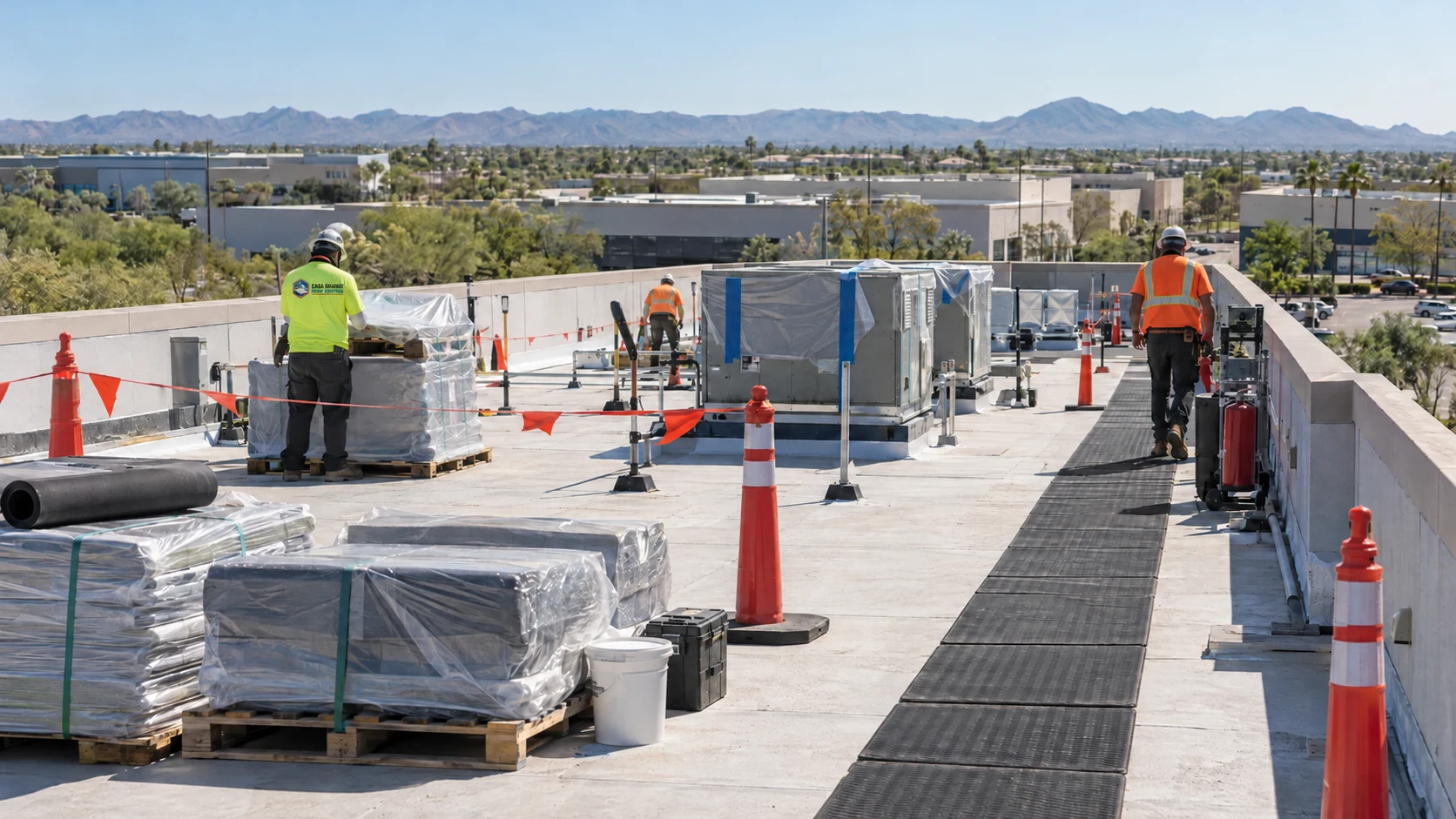
A Stanfield roof-coating plan should account for access before material selection. Delivery routes, lift positions, roof entry points, equipment clearances, and occupied areas can change the practical shape of the work. Those details belong in the initial conversation because a coating project has to function on the ground as well as on the roof.
Start by identifying the route that materials and equipment would take from the property entrance to the work zone. Note turning areas, gates, overhead conflicts, loading locations, and surfaces that should remain available for tenants, customers, emergency response, or routine deliveries. A route that looks simple on a drawing may become difficult when a lift, staging area, or protective barrier is added.
Rooftop equipment adds another layer of planning. Heating and cooling units, vents, conduits, roof hatches, piping, and service clearances need to remain identifiable during preparation and coating. The roof scope should preserve access for future maintenance. Work-zone boundaries can also keep overspray, debris, foot traffic, and stored materials away from sensitive equipment.
The county review context matters when the proposed work, site arrangement, or related improvements require review. Pinal County Building Safety and county site plan review resources can help identify the right review path, but the jurisdiction makes the project-specific determination. Confirm that determination before work is scheduled, and keep the roof plan consistent with any required access or site information.
What To Check Before Coating
A commercial roof is a coating candidate only after its surface, moisture condition, details, and drainage have been evaluated. The review should document what the coating can address and what must be repaired, isolated, or referred for another roof decision.
A useful pre-coating review considers:
- Surface condition: Identify loose, chalking, brittle, blistered, or poorly bonded existing coating. A new layer needs a suitable surface beneath it.
- Leaks and wet areas: Trace active leaks and investigate suspicious areas before covering them. Wet insulation or concealed moisture can remain a problem under a new finish.
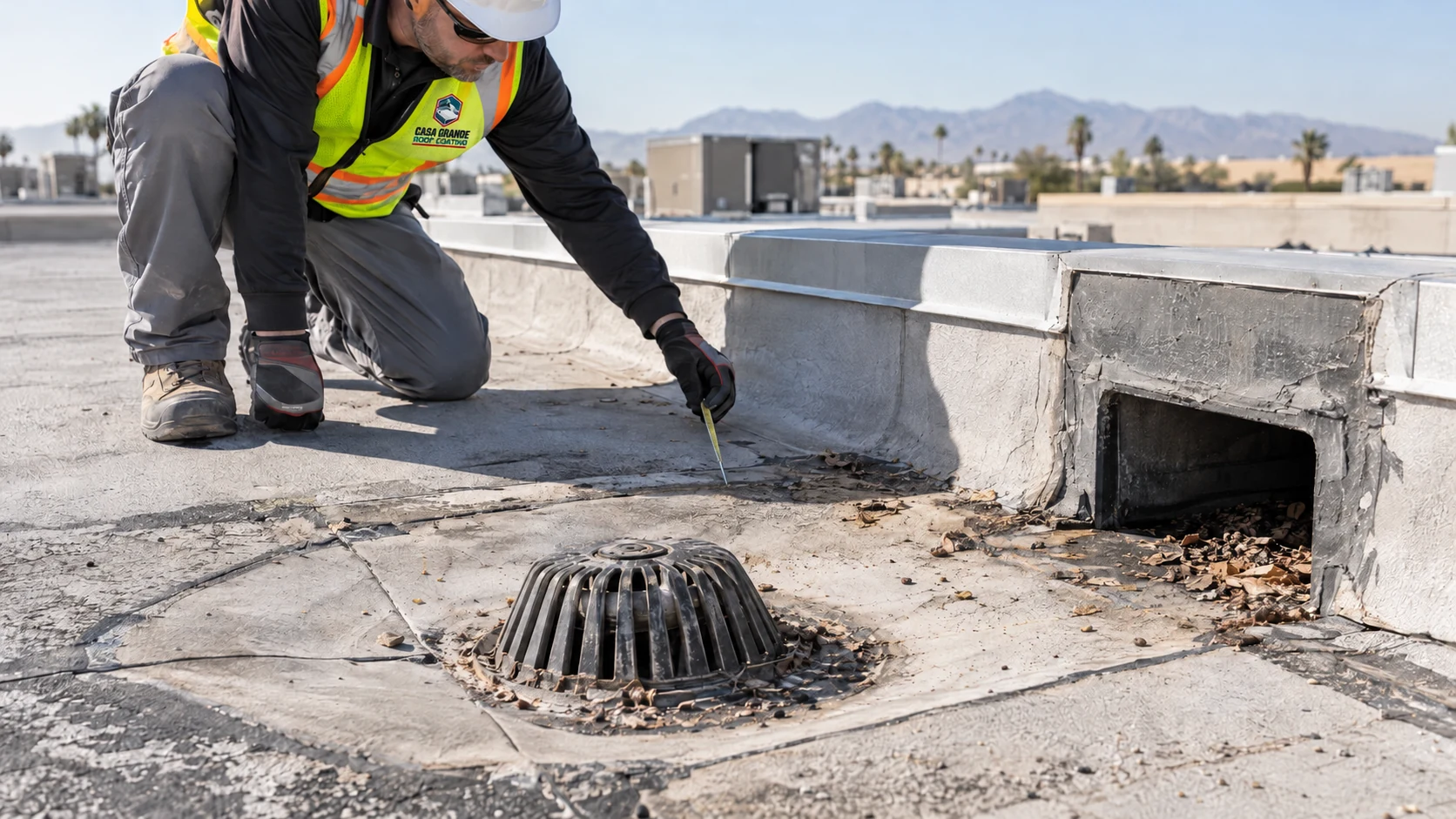
- Seams and penetrations: Examine laps, fasteners, vents, curbs, edge metal, drains, and pipe penetrations. Small details often control the water-shedding performance of a larger roof field.
- Ponding: Record low areas where water remains after normal drainage time. Coating can protect a prepared surface, but it does not replace a drainage correction.
- Access and safety: Map roof hatches, ladders, walk paths, fragile areas, equipment clearances, and locations where ground activity could conflict with roof work.
- Preparation needs: Determine where cleaning, removal, rust treatment, seam reinforcement, patching, or detail work is needed before the coating is applied.
Prior repair history is useful evidence. Patches, incompatible materials, recurring leak locations, and areas with several layers can affect adhesion and the sequence of work. A clear roof record also helps a property manager explain the scope to ownership, maintenance personnel, tenants, and any reviewing jurisdiction.
Benefits of Coating Your Roof
A properly selected and prepared coating can create a continuous protective layer over eligible roof areas while giving a commercial owner a defined maintenance and inspection plan. The benefit depends on roof condition, substrate readiness, system compatibility, drainage, and application conditions.
Coating may help a commercial property manager:
- Protect prepared roof surfaces from routine weather exposure.
- Seal or reinforce suitable seams, fasteners, and detail transitions as part of the specified preparation.
- Reduce the amount of exposed aging surface that requires repeated spot attention.
- Keep roof condition records organized around repairs, access, drainage, and future inspections.
- Coordinate a restoration scope with rooftop equipment and operational requirements.
- Make a measured decision between coating, repair, and more extensive roof work.
The practical value comes from matching the coating to the roof rather than treating every surface the same. A low-slope roof with aging seams has different preparation needs from a metal roof with panel movement. A surface with moisture below the membrane has a different boundary from a dry, well-adhered roof field. The review should make those differences visible.
A coating also creates a reason to revisit the roof on a planned basis. Inspections can track detail areas, drainage paths, equipment work, and changes in traffic. That record supports maintenance decisions and helps identify new concerns before they spread across a larger area.
Commercial Roof Coating Options for Stanfield
The right commercial roof coating option depends on the existing roof system, surface condition, moisture findings, drainage, and the work window available at the property. Stanfield planning should treat system choice and jobsite coordination as connected decisions.
Silicone Roof Coating
Silicone can be considered for suitable low-slope roof surfaces after moisture, adhesion, seams, penetrations, and drainage have been investigated. Its selection should follow a review of the existing coating or membrane and the details that will receive preparation. Ponding areas need particular attention because a coating does not correct a low spot or blocked drain.
A silicone-oriented scope should identify wet areas, repair locations, walkway needs, curbs, roof edges, and equipment clearances. It should also state how the substrate will be cleaned and prepared. See Silicone Roof Coating for the low-slope decision factors that belong in that discussion.
Acrylic Roof Coating
Acrylic coating can fit certain prepared roof surfaces when the substrate is dry, compatible, and ready for a water-based application. The work window matters. Surface moisture, forecast conditions, nighttime temperature changes, and access interruptions can affect when preparation and coating should occur.
The assessment should look for worn acrylic, detail failures, flashing cracks, bleed-through, and areas that need repair before a new layer. A property manager can use Acrylic Roof Coating to review application-window planning without assuming that every commercial roof is suitable.
Spray Foam Roofing
Spray foam roofing is a separate roof-system path for properties where a prepared, dry, secure surface and controlled work zone can support the process. Rooftop equipment, overspray-sensitive areas, wind exposure, drains, curbs, and access routes need clear controls before this option is considered.
Foam may be evaluated where the roof profile, insulation concerns, or uneven surface make another restoration approach worth discussing. The protective topcoat and later maintenance plan also belong in the scope. Review Spray Foam Roofing when the property needs a more detailed comparison of equipment protection and work-zone controls.
Plan County Review And Site Access
Confirm the project-specific county review path before committing to dates, delivery arrangements, or a final scope. Pinal County Building Safety provides the relevant code and building-safety context, while county site plan review information can help frame access and site-organization questions. The county or other applicable jurisdiction determines what the actual project requires.
Gather the property information needed for that conversation. Include the roof areas under consideration, visible repairs, rooftop equipment, proposed staging, delivery entry, lift location, temporary barriers, and any changes to circulation. A simple marked plan can show where vehicles enter, where materials are unloaded, and how people move around the work zone.
Access planning should account for the full workday. Ask where a delivery vehicle can wait without blocking routine traffic. Identify gates that must stay clear, surfaces that may need protection, and areas where a lift could interfere with customers or tenants. If the roof includes several buildings, separate their access routes so one phase does not disrupt every operation at once.
Review questions may include whether the scope changes site circulation, whether a lift needs a particular setup area, how temporary materials will be stored, and whether the proposed work intersects with other permitted improvements. These questions do not create a permit requirement on their own. They help the property manager present a complete picture when the jurisdiction evaluates the scope.
A Practical Roof Coating Process
A clear process moves from roof condition to preparation, access, weather timing, application, and review. Each stage should produce information that the next stage can use.
Inspect Your Roof
Begin with a roof and site review. Document roof type, coating layers, seams, penetrations, curbs, drains, ponding, equipment, access points, visible damage, and areas that feel different underfoot. Look at the ground route as well as the roof. Delivery and lift planning starts at the property boundary.
Record active leaks and the conditions under which they appear. Note stained areas, interior reports, recurring patches, and locations where water may travel before it becomes visible. A roof surface can look uniform while moisture or detail failure is concentrated in a few locations.
Define Repairs And Preparation
Use the inspection record to separate coating work from repairs. Remove or secure loose material, address compatible detail repairs, and investigate moisture before the roof field is covered. Preparation may include cleaning, surface testing, rust treatment, seam work, flashing repairs, or other steps appropriate to the existing roof.
The scope should identify exclusions and decision points in plain language. If an area needs a structural review, drainage correction, membrane repair, or replacement discussion, keep that area visible instead of folding it into a general coating allowance.
Map Delivery And Work Zones
Set the delivery path, lift position, staging area, roof entry point, and protected equipment zones. Keep fire lanes, gates, tenant routes, service access, and required clearances in the plan. Mark fragile roof areas and walk paths so workers and maintenance personnel have a common reference.
A workable route can reduce unnecessary handling and help keep materials where they belong. It can also make daily cleanup easier. The plan should state how barriers, tools, containers, and unused materials will be managed while the property remains active.
Schedule Surface Work Around Conditions
Check the current Stanfield forecast before each moisture-sensitive phase. Weather can affect cleaning, drying, adhesion, cure, visibility, wind exposure, and the safety of people moving through the work zone. A forecast check belongs close to the planned work date because conditions change.
Build room for a pause when the substrate is not ready or the work area cannot remain protected. Rushing surface preparation to preserve a calendar date can create a larger quality problem. A short weather review gives the property manager a practical decision point for access, deliveries, and tenant communication.
Apply And Review
Apply the selected system only to areas that meet the agreed preparation and condition requirements. Keep equipment, drains, edges, seams, and other details visible during the work. Review the finished surface for missed areas, holidays, detail transitions, overspray concerns, and access impacts before the work zone is released.
Create a simple closeout record with the areas completed, repair items left open, equipment access considerations, and suggested inspection points. That record gives maintenance staff a starting reference for future roof observations.
Protect Operations Around Rooftop Work
Commercial roof work should be staged so building operations remain understandable and usable during each phase. The specific controls depend on the property, but the planning questions stay concrete.
Coordinate with the people who know the building’s daily rhythm. Ask when deliveries arrive, which entrances receive the most traffic, when rooftop equipment is serviced, and where tenants need uninterrupted access. Use that information to position barriers and schedule disruptive movements away from peak activity when feasible.
Keep rooftop equipment service paths identifiable. A coating plan should distinguish equipment bases, vents, drains, hatches, and walk paths from general roof field areas. Covering or blocking a detail without a maintenance plan can create trouble for the next person who needs to reach it.
Ground-level circulation deserves the same attention. Protect loading areas, separate pedestrians from moving equipment, and keep materials away from drainage paths. If a lift or delivery vehicle needs a temporary position, communicate the location before the move occurs. Clear instructions reduce last-minute changes that can affect the roof schedule.
Weather exposure can change the work zone quickly. Wind may affect lightweight materials, barriers, and overspray controls. Rain can affect a surface that appeared ready earlier in the day. The current forecast and direct site observation should guide the decision to continue, pause, or protect the area.
Stanfield Roof Coating Questions
These answers set practical boundaries for commercial roof coating in Stanfield and identify the information needed before a scope is chosen.
Can Roof Coating Fix A Drainage Problem?
Coating does not correct a blocked drain, inadequate slope, or persistent ponding area by itself. The roof review should document where water remains, check drainage paths, and identify whether a correction is needed before coating. Suitable dry areas may be evaluated separately from areas that need drainage work.
How Does Rooftop Equipment Affect The Scope?
Equipment affects access, detail preparation, staging, and future maintenance. The plan should identify units, curbs, vents, piping, hatches, and service clearances. Work-zone controls should protect equipment and preserve practical paths for later service.
Should The County Review Be Confirmed Before Scheduling?
Yes. Pinal County Building Safety and site plan review resources provide context, but the applicable jurisdiction determines project-specific requirements. Confirm the review path for the actual roof and site scope before setting firm work dates or delivery arrangements.
How Far Ahead Should Stanfield Weather Be Checked?
Check the current Stanfield forecast near each moisture-sensitive work phase, then confirm conditions again as the date approaches. Preparation, drying, application, cure, wind, and access can all be affected by changing weather. A forecast check supports a schedule decision; it does not replace an on-site surface check.
Is Every Commercial Roof Ready For Silicone Or Acrylic?
No roof system should be assigned a coating by name alone. Inspect adhesion, moisture, seams, flashings, drains, existing layers, and substrate condition first. Silicone and acrylic each require a suitable prepared surface and a workable application window.
When Is Spray Foam Worth Discussing?
Discuss spray foam when the roof’s surface, insulation concerns, profile, equipment layout, and work-zone controls make that path relevant. The assessment should address dry substrate, overspray-sensitive areas, wind exposure, drains, curbs, and a protective topcoat plan before the option advances.
What Should A Property Manager Bring To A Roof Review?
Bring leak history, repair records, roof plans if available, equipment service information, access restrictions, delivery constraints, and known tenant or operating schedules. Photos of recurring problem areas can help organize the conversation. The roof and site inspection will determine which details matter to the final scope.