Getting Started With Commercial Roof Coating
Start with the roof condition, the building’s operating needs, and the questions that determine whether coating belongs in the next scope.
01What Kinds of Commercial Roofs Do You Work On in Casa Grande?
We work with commercial and industrial roof systems that may be suitable for coating or restoration. That can include metal roofs, low-slope membrane roofs, spray foam systems, and other compatible commercial roofing surfaces. The first step is identifying what is on the building and checking whether the existing assembly is still suitable for restoration.
02Do I Need to Know What Type of Roof I Have Before Calling?
No. If you are not sure whether the roof is metal, TPO, modified bitumen, spray foam, or another material, that is fine. Provide the property address and describe the problems you have noticed. The roof system can then be identified and reviewed before a coating path is considered.
03Can You Look at a Roof That Has Had Years of Small Repairs?
Yes. Repeated patching is a reason to inspect the full roof instead of reviewing one repair at a time. The review should check whether old repairs are holding, whether moisture has moved beneath them, and whether the remaining roof is dry and stable enough for coating or needs a different scope.
04Is Roof Coating Only Worth Considering When a Roof Starts Leaking?
No. An aging but sound roof can be worth reviewing before active leaks become a regular problem. Coating may help protect a prepared surface and extend the useful role of an existing assembly when the roof is compatible. Waiting until large areas are damaged can reduce the available restoration options.
Inspecting Your Roof
Inspection looks past a single leak or worn spot so seams, penetrations, moisture, drains, and access limits stay in the same decision.
05What Are You Checking During a Commercial Roof Inspection?
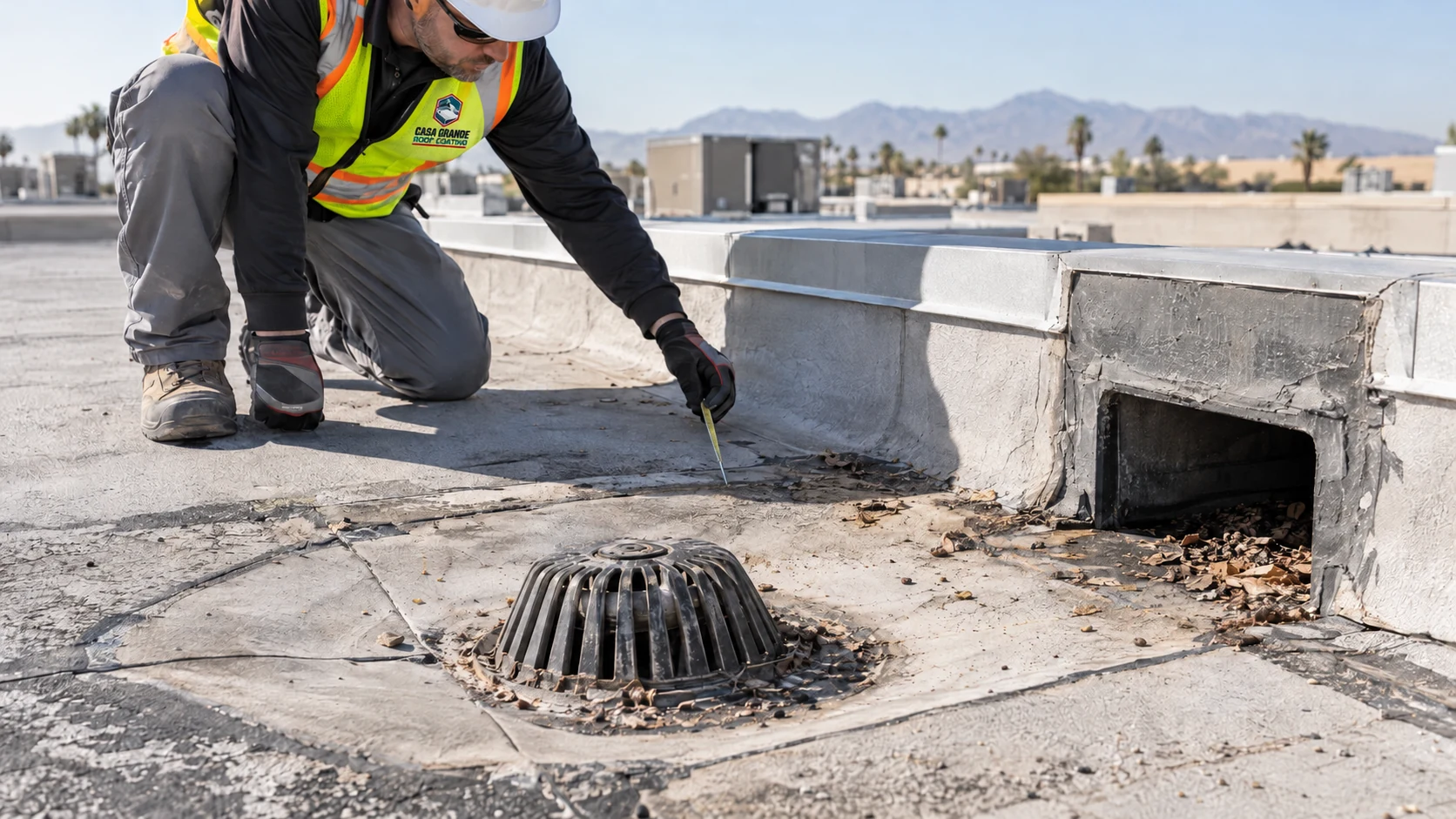
The inspection covers the main roof surface, seams, flashing, drains, edges, penetrations, equipment curbs, and previous repairs. It also looks for cracks, loose material, rust, soft areas, standing water, and conditions that could affect adhesion or water control. Access routes and rooftop equipment are part of the review too.
06What Does a Soft Spot on a Commercial Roof Mean?
A soft spot can point to damaged insulation, trapped moisture, or a problem with the roof deck below. It should be investigated before coating. Applying a coating over a soft area does not correct the cause, and the section may need drying, removal, repair, or another roofing decision.
07Can a Roof Still Be Coated if Only One Section Is in Bad Shape?
Sometimes. A damaged section may be repaired or replaced while the rest of the roof is restored. That approach depends on the size of the damaged area, the condition of the surrounding roof, moisture findings, drainage, and whether the remaining assembly can support preparation and adhesion.
08What If the Roof Looks Worn but Has Never Leaked?
Visible wear can still deserve a roof review. Cracking, faded coating, loose seams, exposed foam, corrosion, or failed detail work may develop before water reaches the inside of the building. Inspection can separate routine maintenance from repairs, coating, or replacement planning.
Commercial Roof Coating Options for Casa Grande
Metal, silicone, acrylic, foam, and shingle systems each require a different compatibility and preparation review.
09How Do You Choose the Right Roof Coating for a Building?
The choice follows the existing roof material, drainage, previous coatings, weather exposure, moisture condition, and repairs needed first. Silicone and acrylic systems do not behave the same way, and metal, spray foam, and shingle roofs have different preparation requirements. The roof should be matched to a compatible system rather than treated with one default coating.
10Is Silicone Roof Coating Good for Flat Commercial Roofs?
It can be considered for compatible flat or low-slope roofs, including roofs where occasional ponding requires careful review. The roof still needs workable drainage, a sound substrate, suitable adhesion, and repair at seams and details. Silicone should not be used to hide a drainage or moisture problem. See the Casa Grande silicone roof coating service for the system-specific review.
11Is Acrylic Roof Coating a Good Choice in Casa Grande?
It can be suitable for compatible roofs that drain properly and can be prepared under appropriate drying conditions. Acrylic systems are commonly used as reflective roof surfaces, but the substrate, existing coating, detail repairs, and application window still matter. Product-specific weather and recoating requirements should be confirmed before work is scheduled.
12Can a Metal Warehouse Roof Be Coated?
Yes, if the metal remains in workable condition. The review should cover rust, loose fasteners, panel movement, failed sealant, open seams, penetrations, and areas with section loss. Panels that are rusted through or unstable may need repair or replacement before coating. See the Casa Grande metal roof coating service for the panel and detail questions.
Heat, Sun, and Dust
Casa Grande heat and dust affect surface preparation, work windows, roof access, and the way a coating plan is evaluated.
13How Does Casa Grande Heat Affect a Commercial Roof?
Strong sun and high roof temperatures can increase wear on exposed roofing materials. Seams, old repairs, fasteners, and surface coatings can take stress from repeated heating and cooling. A condition review looks for cracking, loss of adhesion, brittle details, corrosion, and other signs that affect whether preparation and restoration are practical.
14Can a White Roof Coating Help With Heat?
A reflective coating can reduce the solar heat absorbed by the roof surface. The effect on the building depends on insulation, HVAC performance, roof assembly, weather, and how the property is used. A reflective coating should not be presented as a guaranteed reduction in energy bills or indoor temperature.
15Does Dust Cause Problems for Roof Coatings?
Yes, especially during installation. A coating needs to bond to the prepared roof surface, not to dust or loose debris. Cleaning and surface preparation are necessary before application. Dust that accumulates later can also make a white roof appear less reflective and can collect around drains and low areas.
16Do Commercial Roofs Need More Cleaning in Dusty Areas?
They may. Roofs near open land, construction, yards, or industrial activity can collect more dust and debris. Cleaning needs depend on the coating, the property, roof access, and the amount of material that builds up around drains, seams, equipment, and low areas. Maintenance should address buildup before it affects drainage or inspection.
Drainage and Monsoon Rain
Drainage, ponding, roof details, and seasonal rain all belong in the condition review before a coating path is selected.
17What Should We Check Before Monsoon Season?
Check drains, scuppers, seams, flashing, penetrations, and areas around rooftop equipment before heavy rain arrives. Remove debris when conditions are safe and document open seams or damaged areas before they become larger leaks. The roof should also be reviewed for access, overflow paths, and sections where water already remains after storms.
18What Does It Mean if Water Stays on the Roof After a Storm?
Water that remains after a storm may point to low areas, blocked drainage, movement, or another condition affecting water flow. Some coating systems tolerate standing water differently, but the cause still needs to be investigated. Map the affected areas and check drains, slope, seams, and the roof assembly before choosing a coating.
19Can Coating Fix Ponding Water?
Not by itself. Coating protects a prepared surface, but it usually does not change roof slope or correct a failed drainage path. Ponding may require drain work, tapered materials, repairs, or another roofing solution. A silicone roof coating review can be part of the discussion for a compatible low-slope roof, but it does not replace drainage planning.
20Should the Roof Be Checked After a Strong Monsoon Storm?
Yes, once conditions are safe. Look for blocked drains, displaced material, damaged flashing, open seams, debris, and new interior water evidence after high winds or heavy rain. Small storm damage can be easier to address before it creates a larger leak or allows moisture into insulation and other concealed layers.
Preparing the Roof for Coating
Repairs, cleaning, dry substrate, detail work, and application conditions determine whether a roof is ready for coating.
21What Has to Be Done Before Coating Starts?
The first step is Inspect Your Roof. After that, the scope may include repairs, cleaning, removal of loose material, seam treatment, flashing work, penetration repairs, and compatibility checks. Primer may be required for the selected roof and coating system. Preparation is defined by the actual assembly rather than by the coating name alone.
22Why Is Surface Cleaning So Important?
Coatings need a clean surface to bond properly. Dirt, loose coating, oil, dust, and other buildup can interfere with adhesion and hide defects that need repair. Cleaning should be followed by a condition check so the scope addresses unsound material, failed patches, seams, and details before the main coating is applied.
23Do Old Seams Need to Be Repaired Before Coating?
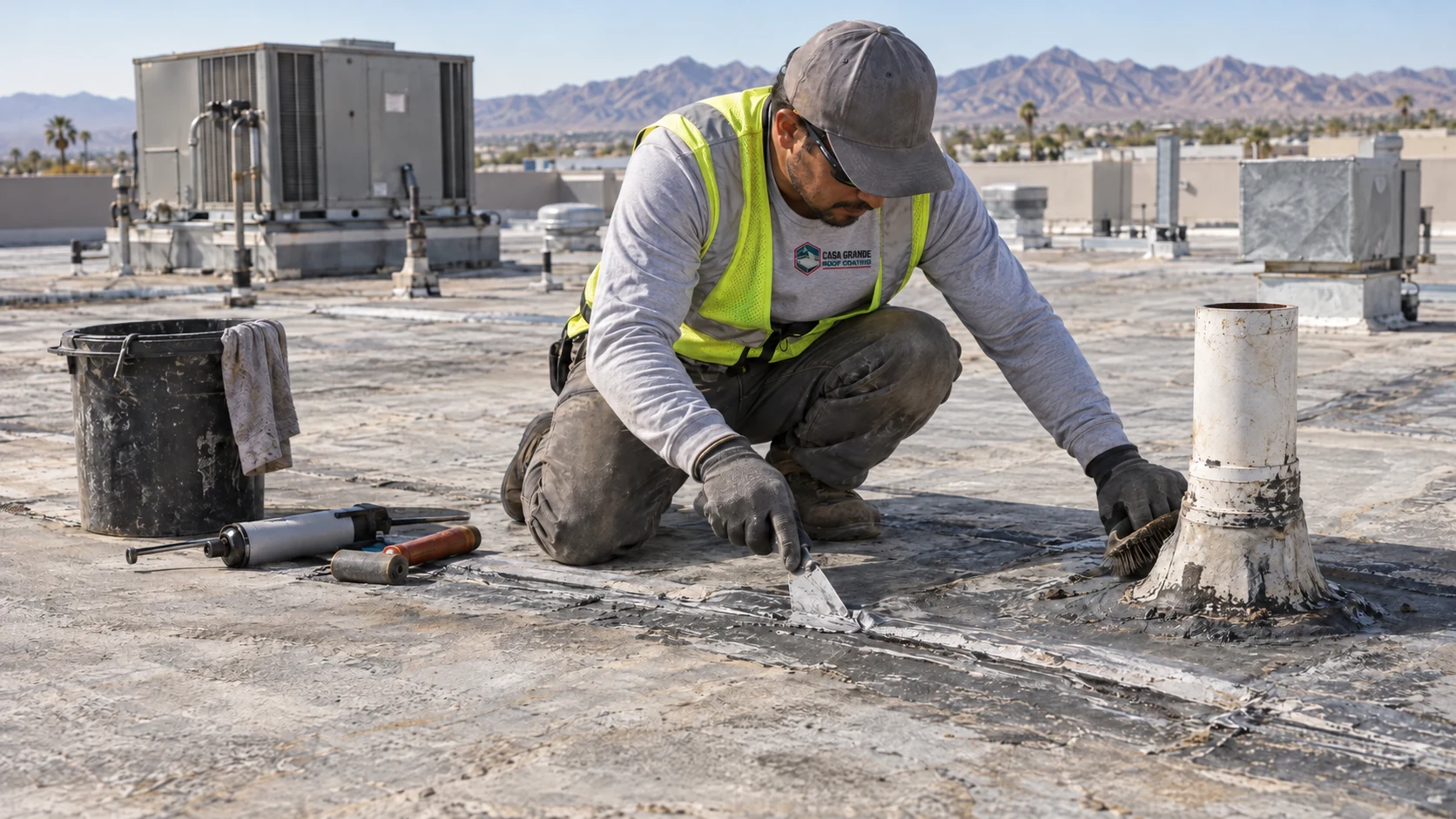
Yes, when seams are open, loose, or damaged. The main coating should not be expected to correct every seam problem by itself. Seam repairs, reinforcement, fastener work, and detail preparation usually come before the field coating so the finished system has a prepared boundary to protect.
24Can You Coat Around Rooftop Equipment?
Yes, with careful planning. Areas around HVAC curbs, pipes, vents, drains, and other equipment need inspection and preparation because they are common locations for water entry and access conflicts. The work plan should protect equipment, preserve service routes, and keep required building operations and maintenance access available.
Working Around an Active Commercial Property
Access routes, rooftop equipment, occupants, deliveries, and operating hours shape a practical commercial roofing sequence.
25Can the Building Stay Open During Roof Coating Work?
Often, yes. Many coating projects can be staged while a commercial building remains in use, but the plan must account for entrances, deliveries, parking, rooftop equipment servicing, occupants, and work zones. Access, weather, preparation, and repair needs determine which areas can remain active and when circulation must be restricted.
26Can You Work Around Warehouse or Manufacturing Operations?
Yes, when site needs are discussed before work starts. Delivery schedules, loading areas, shift changes, ventilation equipment, roof access, restricted areas, and staging locations should be mapped in advance. That information helps separate roof work from active operations and reduces avoidable conflicts during preparation and application.
27Will There Be Noise During a Roof Coating Project?
There can be noise from cleaning, repairs, equipment, and movement on the roof. Coating work may involve less tear-off than full replacement, but the actual disruption depends on the amount of preparation, repair, access equipment, and rooftop activity required. The work plan should identify sensitive areas and operating windows.
28Do We Need to Move Vehicles Away From the Building?
Sometimes. If spraying is used or work occurs near parking areas, a buffer may be needed around the building. The application method, wind conditions, building entrances, vehicle locations, and site layout determine what needs to be moved or protected. Those controls should be decided before materials are applied.
Benefits of Coating Your Roof
Coating may make sense when the roof is suitable, repairable, and able to support the required preparation and application work.
29What Are the Main Benefits of Coating a Commercial Roof?
For a roof that remains a good restoration candidate, coating may cost less than full replacement, involve less tear-off, create less waste, and cause less disruption to the building. It may also support future recoating when the system is maintained and the roof remains compatible. These benefits depend on condition, preparation, and the selected system.
30Does Roof Coating Always Cost Less Than Replacement?
Not always. Extensive damage, wet insulation, structural problems, severe corrosion, failed drainage, or major repair needs can make restoration a poor fit. Coating offers the most value when the existing roof is still worth keeping and the preparation boundary is clear. A roof record should compare repair, restoration, and replacement conditions.
31Can Coating Help Extend the Life of an Existing Roof?
Yes, when the roof is suitable and the coating is installed over a properly prepared surface. The system can help protect the roof from weather exposure, but it does not remove the need for inspections and maintenance. Future service life depends on the existing assembly, preparation, application, weather exposure, and upkeep.
32Does Coating Reduce Tear-Off Waste?
It can when the existing roof can remain in place and the selected restoration system is suitable. Keeping sound roof materials in place can reduce the amount removed and hauled away compared with full replacement. The roof still needs repair, moisture, structural, and compatibility review before reduced tear-off is treated as a realistic benefit.
Permits and Commercial Roof Work in Casa Grande
Permit questions depend on the property, scope, jurisdiction, and current City requirements rather than a generic roofing rule.
33Does Commercial Roof Work in Casa Grande Need a Permit?
It can. The City of Casa Grande Building Division says permits apply to many types of construction, alteration, and repair work, while the actual requirement depends on the project scope. The owner or project representative should confirm the current requirement with the City before scheduling work.
34Who Decides Whether a Roof Coating Project Needs a Permit?
The City of Casa Grande Building Division makes the project-specific determination. If the scope includes repairs, alterations, or other work covered by the City’s permit rules, a permit or inspection may be required before work begins. The roof condition and proposed work should be documented so the question can be reviewed accurately.
35Should Permit Requirements Be Checked Before Work Starts?
Yes. If a permit is required, the work should not begin until the applicable approval has been issued. Confirming the requirement early can affect documents, inspection timing, access planning, staging, and the order of preparation and application. Do not assume that a coating scope follows the same permit path as another roof project.
36Can Commercial Roof Work Require Inspections?
Yes, depending on the permitted work and the City’s review. Casa Grande’s Building Division handles permitting and inspection for commercial and industrial construction. The owner or project representative should confirm which inspections, documents, and access conditions apply to the actual roofing scope rather than relying on a general assumption.
Maintenance After Coating
A coated roof still needs inspection, drainage attention, detail checks, and maintenance planning after the work is complete.
37How Often Should a Coated Commercial Roof Be Inspected?
A good maintenance plan includes regular inspections and additional checks after major storms or rooftop work. Drains, seams, penetrations, flashings, equipment areas, and heavily used walk paths deserve particular attention. The correct interval depends on the roof, coating system, exposure, access, and maintenance conditions documented after application.
38What Happens if an HVAC Contractor Damages the Coating?
The damaged area should be repaired promptly with materials compatible with the existing coating system. Cuts, punctures, exposed seams, and damaged details can allow weather into the roof assembly if they remain open. Coordinate roof access with the HVAC contractor and document the repair area before maintenance work is finished.
39Can We Use Any Sealant for Small Roof Repairs?
No. Sealants do not bond equally to every roof coating, membrane, metal surface, or repair material. The repair product should be compatible with the existing system and applied to a properly prepared area. When the coating or substrate is unknown, identify the existing materials before choosing a sealant.
40When Should a Commercial Roof Be Recoated?
Recoating should be based on the condition of the existing coating, not only its age. Review wear, adhesion, surface damage, seams, penetrations, drains, and the roof underneath. If the system remains sound and compatible, recoating may help keep it in service longer. If moisture, structural deterioration, or widespread failure dominates, another scope may be needed.