Arizona City Commercial Roof Coating Starts With Jurisdiction
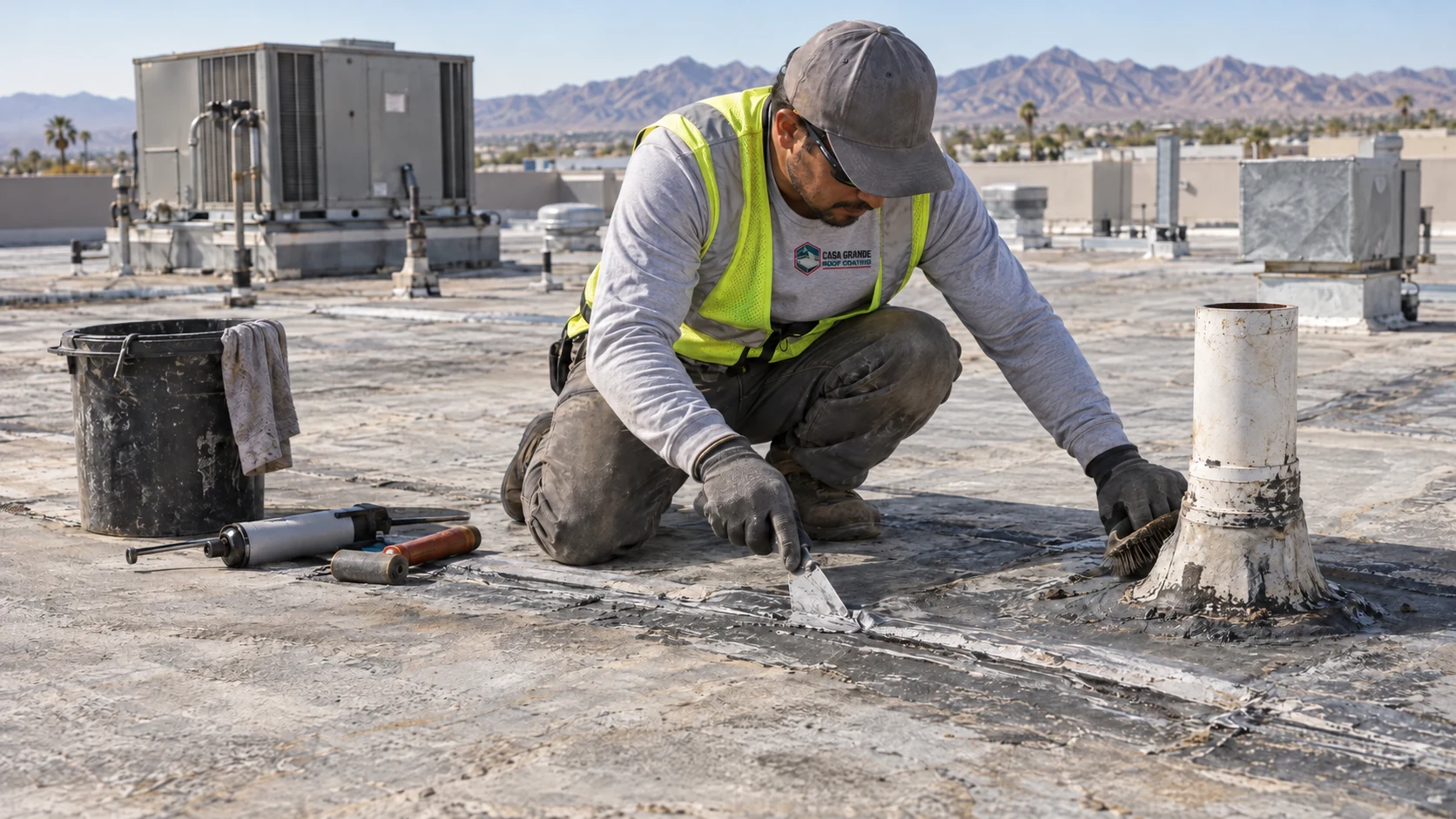
A roof-coating plan for an Arizona City building should account for Pinal County review before materials or work dates are selected. Pinal County Building Safety provides building-code and safety information, while the applicable requirements for a particular parcel depend on the actual scope and jurisdiction. Treat that review as an early planning step rather than assuming that every coating project follows the same path.
The practical starting point is to identify the property, describe the roof work accurately, and ask which review or permit decisions apply. A coating scope can include preparation, repairs, flashing work, penetrations, drainage-related corrections, or other building changes. Those details matter. A project-specific determination is made by the relevant jurisdiction, not by a general statement about roof coating.
This jurisdiction check also helps a facility manager set realistic expectations for access, documentation, and scheduling. Keep roof plans, prior repair information, photographs, equipment locations, and known leak areas together. If the county requests additional information, a well-organized condition record makes the next conversation more useful. Pinal County context belongs in the early scope review because the property’s location affects who may evaluate the work.
Build A Condition Record Before Choosing A System
The right coating option depends on what the roof can support after preparation. A useful Arizona City condition record identifies where moisture may be present, how many patch layers cover previous repairs, whether flashings remain sound, how water moves toward drainage points, and which metal details need attention. Coating is a treatment for a prepared roof surface, not a substitute for investigating concealed or unresolved conditions.
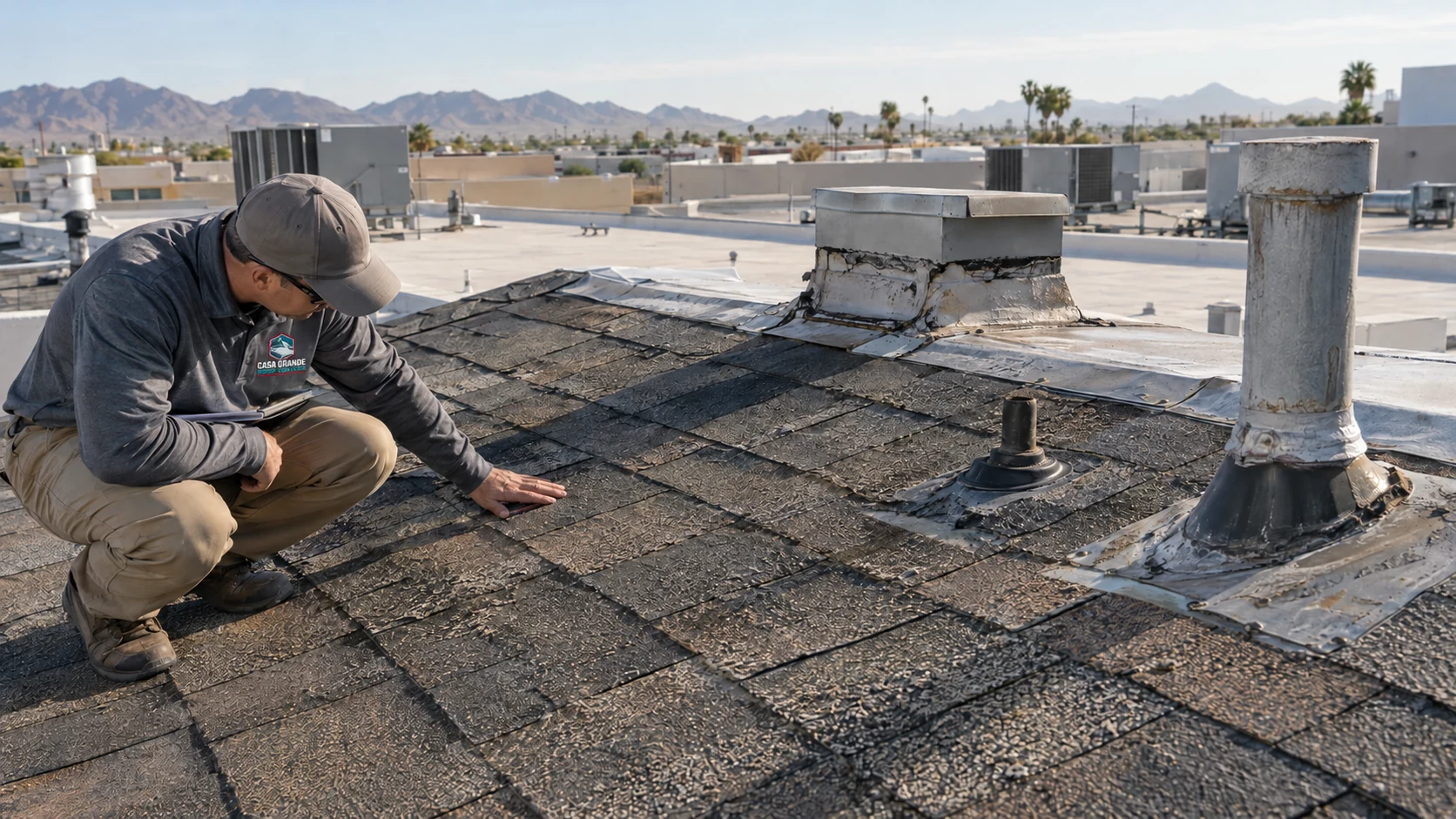
Start with visible evidence. Note open seams, cracked detail work, loose or deteriorated flashing, exposed fasteners, corrosion, worn coating, blisters, soft areas, and locations that retain water. Record the relationship between those conditions and rooftop equipment, curbs, penetrations, walk paths, and access points. A roof plan marked with photographs can distinguish an isolated detail repair from a widespread substrate concern.
Moisture deserves a separate decision. Wet insulation or trapped moisture can undermine a coating assembly even when the surface looks reasonably intact. A roof review should determine whether moisture is suspected, where testing is appropriate, and which areas need removal or repair rather than encapsulation. The same discipline applies to old patch layers. Multiple repairs may hide movement or failed adhesion, so adding another layer without understanding the existing build-up can create a short-lived result.
Drainage paths also require a boundary. A coating may protect a prepared surface, but it does not correct a drainage problem simply because it is applied. Confirm that drains, scuppers, outlets, crickets, and flow paths are understood before accepting a coating scope. If water movement remains unresolved, the roof plan should identify that work separately.
Benefits of Coating Your Roof
A coating can be a practical restoration choice when the existing roof surface is sufficiently sound, dry, attached, and repairable. Its benefits come from a complete system of condition review, preparation, detail work, application, and maintenance planning. The coating itself cannot correct structural defects, wet insulation, unstable materials, or blocked drainage.
For a suitable roof, a coating scope may provide these qualified benefits:
- A defined restoration boundary: The review can show which areas are ready for coating and which require repair or another solution first.
- Protection for prepared details: Properly addressed seams, fasteners, penetrations, and flashing can receive a continuous protective treatment appropriate to the selected system.
- Less disruption than an unrestricted replacement discussion: Restoration planning may focus work on serviceable roof areas while isolating conditions that need more extensive attention.
- A clearer maintenance baseline: Documented repairs, coating condition, drainage observations, and access concerns give facility teams a reference for future inspections.
- Better coordination with building operations: A phased scope can identify equipment, walk paths, tenant activity, and restricted areas before roof work begins.
- More disciplined system selection: Comparing metal, low-slope, and shingle conditions prevents a coating material from being treated as a universal answer.
These benefits depend on the roof’s actual condition and the selected assembly. They are reasons to investigate coating, not promises that every Arizona City roof will qualify. A roof with structural movement, significant wet materials, failing attachment, or unresolved drainage may need repairs or replacement planning before a coating can be considered.
Commercial Roof Coating Options for Arizona City
Arizona City commercial roof coating options should be matched to the roof assembly and the condition record. The main decision is not which product sounds broadest; it is whether the roof has a prepared, compatible surface and whether the proposed system addresses the details that are actually failing.
Metal Roof Coating
Metal roof coating begins with panel movement, corrosion, fasteners, seams, and penetration flashing. Rust treatment, replacement or tightening decisions, and detail preparation must be established before a coating is selected. Panels that continue to move, leak at unresolved laps, or carry deteriorated flashing need focused repairs. Review the related Metal Roof Coating guidance when the building has exposed metal panels or standing-seam details.
Silicone Roof Coating
Silicone may be considered for a low-slope roof only after adhesion, moisture, seam, and drainage conditions are reviewed. Existing coating layers can affect preparation and compatibility. Ponding areas deserve specific investigation because a coating does not make inadequate drainage disappear. For a low-slope condition record, compare the considerations in Silicone Roof Coating before defining the scope.
Shingle Roof Coating
Shingle coating is a narrow compatibility decision for a commercial property. The review should consider shingle condition, granule loss, curling, exposed fasteners, flashing, moisture signs, and current manufacturer compatibility information. If the shingles or underlying materials are failing, coating may be unsuitable. The Shingle Roof Coating discussion can help frame that screening without assuming approval.
Repairs And Preparation Set The Boundary
Preparation determines whether coating work has a reliable surface to bond to and protect. Remove or stabilize loose material, address failed seams and penetrations, and define how corrosion, old patches, cracked flashing, and surface contamination will be handled. The exact preparation plan depends on the roof assembly and the condition found during review.
Repairs should be described separately from coating. A roof may contain sections that can be cleaned and prepared, sections that need detail repairs, and sections where the substrate or assembly is too compromised for a coating approach. Separating those categories helps the owner compare a focused restoration scope with a broader roof project.
Pay attention to transitions. Curbs, equipment supports, edge metal, wall intersections, drains, and penetrations often need more detail than an open field area. A coating plan that describes only the broad surface can leave the most important water-entry points undefined. Mark each transition, describe the visible issue, and confirm how the completed detail will be inspected.
Access is part of preparation as well. Protect rooftop equipment, keep safe paths available, identify staging limits, and coordinate areas where business activity continues below. These steps are especially important when a facility cannot simply stop receiving deliveries or supporting daily operations. The scope should show how people, materials, equipment, and roof access will be managed without treating those arrangements as an afterthought.
Plan Access Around Building Operations
A commercial roof review should fit the building’s operating needs. Before work begins, identify occupied areas, delivery routes, rooftop units, exhaust points, stored materials, pedestrian paths, and doors or loading zones near the work area. This information helps determine where inspections can occur, which surfaces need protection, and how work zones should be communicated.
Ask the facility team to provide roof access rules, contact information for building operations, and any known restrictions. Confirm where keys, escorts, shutdown coordination, or equipment clearances may be needed. Keep the planning conversation focused on the specific property rather than assuming that a nearby building has the same conditions.
Weather-sensitive preparation and application also require current planning. The correct work window depends on the selected system, substrate condition, access, and current conditions. Avoid setting a date from a generic seasonal assumption. Confirm the product requirements and project conditions close to the planned work, then adjust the sequence when the roof is not ready.
A Practical Roof Review Process
A useful Arizona City roof review moves from jurisdiction and evidence to system fit and a defined scope. The process below keeps decisions visible for owners and facility managers.
Inspect Your Roof
Walk the accessible roof areas and review available records. Photograph field surfaces, seams, flashing, penetrations, drains, curbs, equipment, prior repairs, and any visible moisture indicators. Note areas that cannot be safely accessed so they are not mistaken for inspected areas.
Map Moisture And Prior Patch Layers
Separate suspected moisture, wet insulation concerns, blistering, and soft materials from ordinary surface wear. Mark prior patches and note whether they are bonded, cracked, loose, or layered over older repairs. Further investigation may be needed before a coating boundary is set.
Review Flashing And Drainage Paths
Trace how water reaches drains, scuppers, outlets, or other collection points. Inspect edge conditions, wall transitions, curbs, and penetrations. Record any location where flashing is damaged or where water can remain after ordinary drainage.
Match Areas To A Roof System
Use the condition record to compare metal, silicone, acrylic, spray foam, shingle, repair, or replacement paths as appropriate to the building. Do not force every roof area into one option. A mixed scope may be more accurate when roof assemblies or levels differ.
Confirm Jurisdiction And Scope Questions
Because Arizona City is an unincorporated Pinal County community, confirm the parcel-specific jurisdiction and project-specific requirements with the appropriate Pinal County Building Safety process before work is scheduled. Keep the scope description aligned with the actual work proposed.
Document The Work Boundary
Create a written scope that distinguishes preparation, repairs, coating areas, exclusions, access arrangements, equipment protection, and follow-up observations. Clear boundaries make it easier to evaluate options and reduce confusion during operations.
Arizona City Roof Coating Questions
Can Every Commercial Roof In Arizona City Be Coated?
No. Suitability depends on attachment, substrate condition, moisture, existing patch layers, drainage, flashing, compatibility, and the roof assembly. Areas with structural defects, wet insulation, unstable materials, or unresolved drainage may need a different plan.
Why Does Pinal County Jurisdiction Matter?
Arizona City is listed as an unincorporated Pinal County community. The parcel and proposed scope determine which review path and requirements apply. Confirm project-specific building and safety questions before setting a work plan.
Does Coating Fix Ponding Water?
No. Coating can protect a prepared surface, but it does not correct an underlying drainage problem. Drainage paths should be evaluated and any needed correction should be described as separate work.
What Should A Roof Review Look For?
It should examine moisture concerns, prior patch layers, seams, flashing, penetrations, drainage paths, metal details, rooftop equipment, access conditions, and visible signs of movement or corrosion. Records and photographs help define the condition boundary.
Is Metal Roof Coating Only About Rust?
No. Corrosion is one factor. Panel movement, fasteners, seams, laps, penetrations, edge details, and flashing can all affect the coating decision. Those details should be prepared or repaired before a compatible system is applied.
When Should A Shingle Roof Be Considered For Coating?
Only after a compatibility and condition screening. Review granule loss, curling, moisture signs, flashing, exposed fasteners, and current manufacturer information. If the assembly is failing, replacement or another repair path may be more appropriate.
How Should A Facility Prepare For A Roof Review?
Gather prior repair records, note leak locations, identify roof access rules, list rooftop equipment, and describe operating constraints. Provide safe access information and identify areas where deliveries, occupants, or equipment could affect the review or work sequence.