The review also accounts for flashing, exposed fasteners, granule loss, curling shingles, roof access, and the building's daily operations. A coating may protect a properly prepared surface, but application does not correct structural defects, wet insulation, failed drainage, or an assembly that cannot accept the proposed material.
When Shingle Roof Coating Fits A Commercial Roof
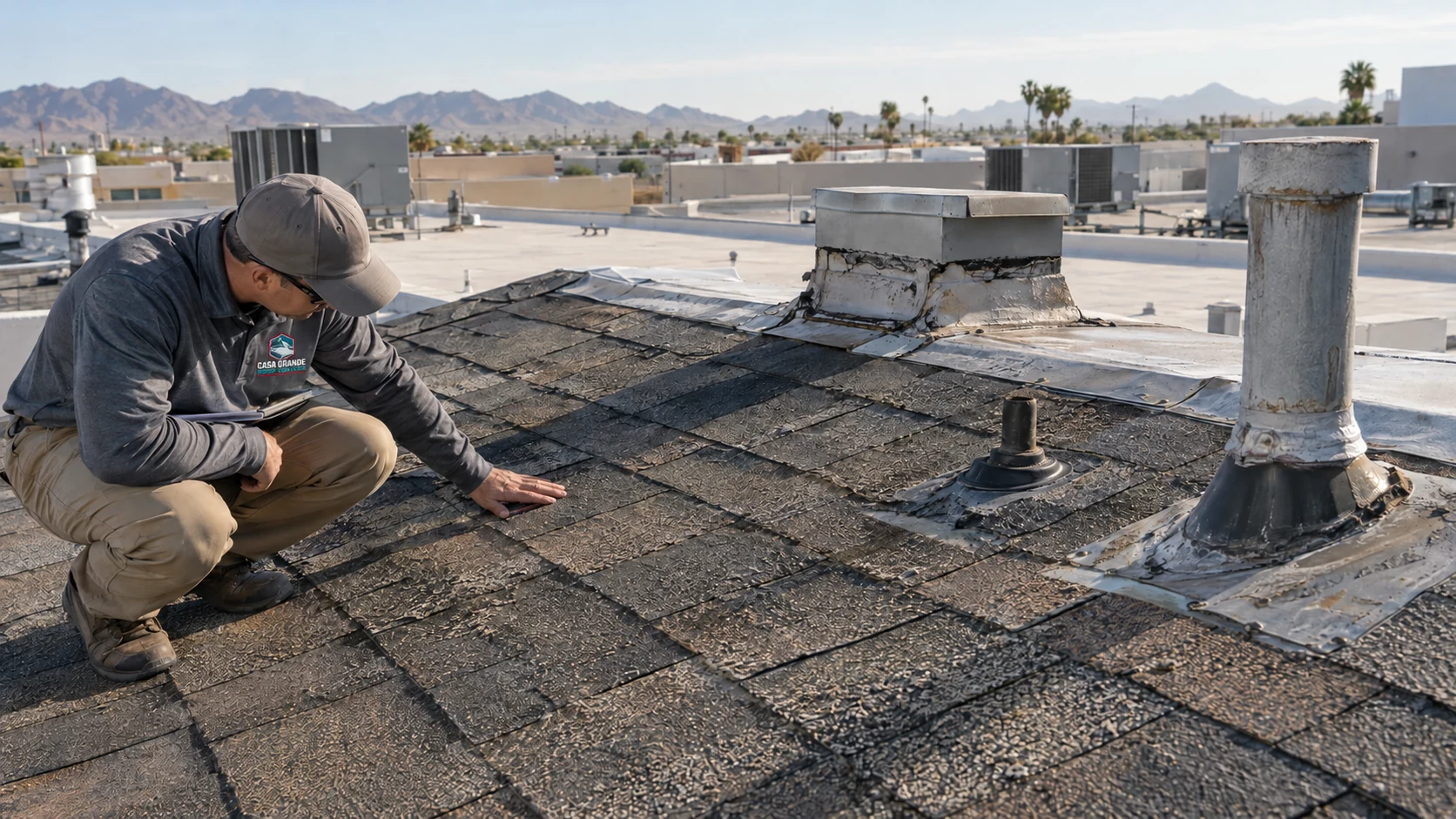
Shingle roof coating can fit a commercial roof when the shingles and underlying assembly are in a condition that supports preparation, adhesion, drainage, and future maintenance. That decision belongs to the observed roof condition and current manufacturer compatibility information, rather than the roof label alone.
A useful first review asks several practical questions:
- Are the shingles still attached and shaped well enough to receive preparation?
- Has water reached the deck, insulation, or interior finishes?
- Do flashings, valleys, curbs, and penetrations direct water correctly?
- Are granules present, or has widespread loss exposed the shingle surface?
- Are prior patches, sealants, or coatings known and compatible with the proposed system?
- Can the property provide safe, controlled access for inspection and work?
A roof with isolated detail repairs may move toward a coating discussion after those conditions are addressed. A roof with widespread curling, brittle shingles, wet materials, or unresolved movement may need a different scope. The goal is a documented decision that respects the roof's remaining service condition and the building's operational needs.
Evaluate The Shingle Assembly Before Coating
The assembly review establishes whether coating is technically sensible and where the scope must stop. It should cover the visible shingle field, edges, transitions, penetrations, flashings, drainage paths, and any signs that moisture has traveled below the surface.
Surface condition. Curling corners, lifted tabs, brittle areas, missing material, and heavy granule loss can reduce the value of surface treatment. These observations help identify repair zones and areas where coating would hide a problem instead of addressing it.
Attachment and fasteners. Exposed fasteners can point to movement, prior work, or detail failure. Each exposed point deserves attention before coating because a continuous layer cannot restore a loose attachment or correct an opening around a fastener.
Moisture evidence. Staining, soft areas, interior leaks, trapped moisture, and damp insulation change the decision. Wet materials need their own investigation and correction. A coating does not dry an enclosed roof assembly simply because the surface appears covered.
Details and drainage. Flashings, wall transitions, valleys, drains, and equipment penetrations often control how water leaves the roof. A roof field can look serviceable while a single failed transition sends water into the building. Detail work and drainage review must precede any broad application plan.
Compatibility documentation. The proposed coating must be checked against the actual shingle product, surfacing, primers, repair materials, and existing layers. Current manufacturer documentation matters. If the product identity or prior coating history is uncertain, that uncertainty should remain visible in the scope until it is resolved.
Shingle Conditions That Need A Defined Scope
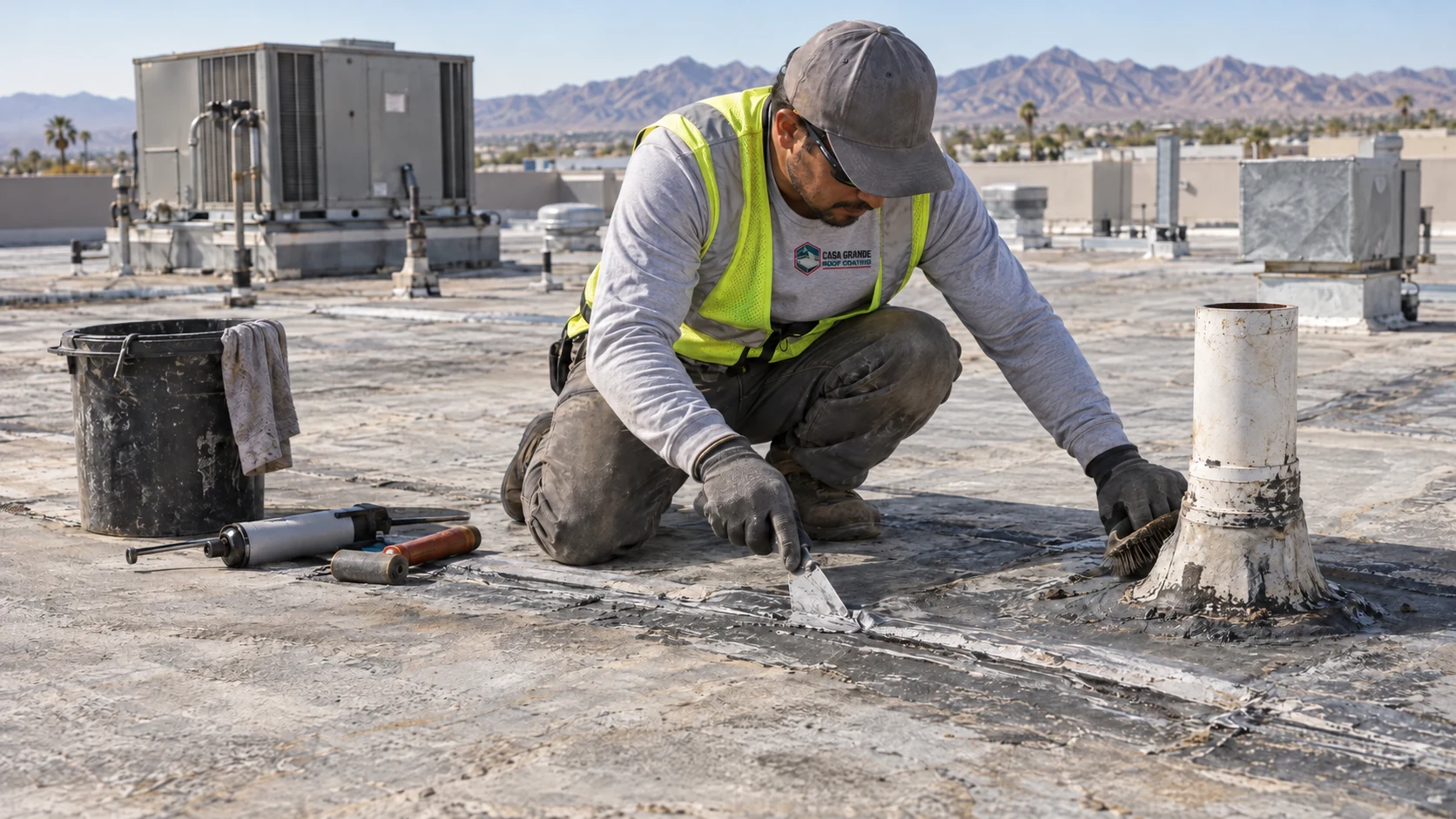
The strongest shingle roof coating plans describe what will happen to each condition before material is ordered. That makes the roof review useful even when the final recommendation includes repairs or replacement in selected areas.
Curling shingles can create raised edges and channels where water and wind act on the assembly. The review should record the extent of curling, whether the shingle can be secured or repaired, and whether the affected area remains suitable for coating.
Exposed fasteners require inspection around the penetration and the surrounding shingle. A sealant dab may be part of a repair, but it should not be treated as proof that the underlying attachment or flashing detail is sound.
Granule loss changes the surface that a coating must bond to. Light, localized loss calls for a closer look at the substrate and the source of wear. Broad loss, bald areas, or accelerated deterioration may move the recommendation toward replacement planning.
Moisture signs deserve a boundary in the work scope. Interior staining, recurring leaks, soft decking, and suspected wet insulation should be investigated before coating. The report should identify affected zones and the information still needed to decide whether they can remain in a coating scope.
Flashings and transitions must be treated as their own work items. Wall lines, eaves, valleys, penetrations, and changes in roof plane can need repair or replacement before the shingle field is considered. Coating over a failed transition leaves the original water path in place.
Benefits of Coating Your Roof
When a commercial shingle roof passes compatibility and condition review, coating can give the owner a defined maintenance path for suitable areas. The useful benefit comes from preparing and treating a sound surface, with repairs and exclusions recorded rather than covered over.
- A clearer repair boundary: The review separates shingle-field work from flashing, fastener, moisture, and drainage corrections.
- A documented maintenance surface: A compatible coating can make future observations easier by providing a defined treated area and a known preparation history.
- Less disruption than an undefined roof response: A scoped coating discussion lets the facility team plan access, staging, and work zones around the roof condition.
- Better system selection: Condition notes help determine whether shingle coating remains appropriate or whether metal, silicone, another coating route, or replacement deserves attention.
- A record for future decisions: Photos, repair notes, exclusions, and compatibility information give the next roof review a useful starting point.
These benefits depend on the roof being suitable and the application plan matching the assembly. A coating should not be presented as a universal answer for every shingle roof or as a substitute for correcting defects below the surface.
Commercial Roof Coating Options for Casa Grande
Casa Grande commercial owners have several roof-system paths, and shingle coating is the narrowest compatibility decision among them. The right comparison starts with the existing roof rather than with a preferred material.
| Roof condition or system | Discussion to have | Review boundary |
|---|---|---|
| Asphalt shingle roof with suitable, documented substrate | Shingle coating compatibility review | Confirm manufacturer support, preparation needs, moisture condition, and detail repairs |
| Metal panels, seams, or exposed metal details | Casa Grande metal roof coating | Review corrosion, fasteners, panel movement, and penetration flashing |
| Low-slope roof with aging coating or ponding concerns | Casa Grande silicone roof coating | Investigate moisture, adhesion, seams, drainage, and curb details |
| Mixed or uncertain commercial roof system | Commercial roofing services in Casa Grande | Map each roof area before selecting a system or combining scopes |
A shingle roof should not be moved into a metal or low-slope coating plan simply because another material is common on commercial buildings. Likewise, a coating designed for another substrate should not be assumed to work on asphalt shingles. The roof record, compatibility documents, condition findings, and repair boundary should support the final direction.
Prepare The Roof And Work Area
Preparation protects the value of the inspection. The work plan should identify what must be cleaned, repaired, secured, or excluded before coating begins, while also keeping people and operations clear of the active work area.
The facility team can help by providing roof history, prior repair records, known leak locations, access rules, equipment locations, and any areas that must remain operational. Those details help identify safe entry points, protected walk paths, staging limits, and times when roof access creates the least disruption.
Preparation may include surface cleaning appropriate to the shingle condition, removal of loose material, treatment of defined detail failures, and protection of adjacent equipment or finishes. The exact method depends on the shingle product and the approved system. Aggressive preparation can damage an already weathered surface, so the method should follow the observed roof condition and compatible product guidance.
Moisture-sensitive work also requires a dry, workable surface and a current plan for changing conditions. The schedule should leave room to pause when the roof cannot be prepared or coated responsibly. The owner should receive a clear account of completed preparation, remaining exclusions, and any conditions discovered during the work.
Our Commercial Shingle Roof Coating Process
A roof-first process keeps the recommendation tied to evidence and gives the facility manager a practical sequence for decisions, access, and follow-up.
Inspect Your Roof
Start with the shingle field and every water-management detail that can affect the recommendation. Record curling, granule loss, exposed fasteners, flashing condition, penetrations, transitions, drainage paths, interior leak evidence, and access constraints. Identify areas that require closer investigation before they are considered coating-ready.
Establish Compatibility And Condition Boundaries
Match the observed roof to current shingle and coating documentation when available. Record existing coatings, patch materials, uncertain product areas, and suspected moisture. Mark sections that need repair, testing, removal, or a separate replacement discussion. This step prevents an attractive surface treatment from becoming a cover for unresolved roof problems.
Define Repairs And Preparation
Set out the repair items, preparation method, protection requirements, access route, and work-zone limits. The scope should distinguish shingle repairs from flashing work, fastener treatment, moisture investigation, and other detail tasks. It should also identify areas that are excluded because their condition or compatibility remains unresolved.
Review City Requirements And Site Operations
For a Casa Grande commercial property, confirm project-specific permit, code, and inspection questions with the relevant City process before work is scheduled. The jurisdiction determines requirements for the actual scope. The facility team should also confirm roof access, tenant or customer movement, equipment protection, deliveries, and any operating windows.
Apply The Approved Scope And Record Findings
Proceed only with the defined, compatible scope and the agreed preparation conditions. Keep the work area controlled and document changes that affect the recommendation. If new moisture, damaged shingles, or failed details appear, pause the affected area and revise the decision boundary rather than extending material over an unexpected condition.
Plan Around Commercial Operations
A roof review has to work around the building below it. Facility managers should identify occupied areas, sensitive inventory, rooftop equipment, loading paths, security controls, and access points before preparation begins. A written access plan can reduce last-minute changes and help the property team communicate work zones to staff, tenants, vendors, and visitors.
Roof access also affects inspection quality. An area blocked by equipment, stored material, or an unsafe route may remain unverified. Mark those limitations in the review so an assumption does not become a hidden gap in the coating scope. The same principle applies to interior evidence: rooms with staining or recurring leaks should be included in the condition record.
The project schedule should follow the readiness of the roof, not only the desired completion date. Surface condition, moisture findings, repair completion, access, and suitable application conditions all have to align. A careful pause is more useful than covering a roof that is not ready.
Casa Grande Permit And Code Review
Casa Grande permit and code requirements depend on the actual commercial roof scope and the jurisdiction's determination. Confirm the applicable review, inspection, and safe-access questions with the City before authorizing work. The guidance does not assign a permit outcome to a coating, repair, or replacement project.
Give the reviewing authority a clear description of the proposed work when guidance is requested. The scope may include coating, shingle or flashing repairs, replacement of selected areas, access equipment, and work near rooftop systems. A precise description helps the property owner ask the right project-specific questions.
Keep the City review separate from the technical compatibility decision. A project can meet an administrative requirement and still need a roof-condition correction before coating. Conversely, a roof may be technically suitable while the property team still needs to coordinate inspection timing, access, and occupied-building controls.
Shingle Roof Coating Questions
Is Casa Grande Shingle Roof Coating Suitable For Every Commercial Shingle Roof?
No single coating is suitable for every shingle assembly. The decision depends on shingle condition, attachment, granule loss, moisture, flashing, drainage, prior materials, and current compatibility documentation. A roof with widespread deterioration or wet materials may need repair or replacement planning instead.
Can Coating Correct Curling Shingles?
Coating does not restore the shape or attachment of a curled shingle. The affected area needs inspection to determine whether a defined repair is possible and whether the remaining surface can support coating. Widespread curling can change the recommended path for the roof.
What Does Granule Loss Mean For Coating?
Granule loss changes the surface and can signal ongoing wear. The review should record how much loss exists, where it occurs, and whether the exposed surface remains appropriate for the proposed system. Broad or severe loss may support a replacement discussion rather than a coating scope.
Can A Coating Cover Exposed Fasteners?
Exposed fasteners need detail inspection and treatment before any broad application. Coating over the visible fastener does not confirm that the attachment, opening, or surrounding shingle is sound. The final scope should show how each fastener condition will be handled.
What Happens If The Roof Has Wet Insulation?
Wet insulation requires its own investigation and correction plan. Coating the top surface does not remove trapped moisture or repair damage below the shingles. The affected area should be identified and kept outside the coating scope until the condition is understood.
Does Casa Grande Require A Permit For Shingle Roof Coating?
The applicable requirements depend on the actual work and the jurisdiction's determination. Confirm the project-specific permit, code, and inspection questions with the City of Casa Grande before scheduling. Do not assume that every coating or repair scope receives the same answer.
How Should A Facility Prepare For A Roof Review?
Gather prior repair information, known leak locations, roof access rules, equipment locations, and operating constraints. Identify interior areas with water evidence and tell the reviewer about sensitive operations. These details help create a practical inspection and a scope that respects the building.